Why does the beach make you so tired?


Sun, sand, waves and relaxation. No responsibilities and little to do but have fun. However, in a way, after a whole day of nothing happiness, you find yourself completely zoned. What gives? If air membership is supposed to be restorative, why can a restful day at the beach end up feeling so tiring? There is not a single certain answer, but science offers some possibilities.
[ Related: 6 of the weirdest things to ever wash up on the beach ]
The heat is hard for the body
It is usually the summit of summer when we choose to spend our oceanide days, and it means hours in the heat. “Humans must be able to regulate our body temperature,” said Craig Crandall, physiologist and internal medicine teacher at the University of Texas Southwestern University Center Popular science. “If we didn’t do it, we would be lizards.” And unlike our scaled tetrapod counterparts, the fundamental principles of our physiology require that our internal temperature remain almost 98.6 degrees Fahrenheit. If the thermometer ticks too far, the systems that keep us alive begin to decompose.
Maintaining a coherent body temperature requires work. We know that staying cool in a hot environment requires additional energy, as people exposed to heat consume slightly more oxygen, explains Crandall. A higher oxygen consumption indicates more cellular efforts. Added for hours, this may be equal to a significant amount of effort. Then there is the effect on your heart.
One of the main methods we have to cool is to increase the amount of blood flow near the skin. Assuming that the air temperature is lower than your central temperature, the blood moving near the surface will lose heat in the air. But that means that the heart must work harder to move more blood further in the periphery of the circulatory system. “If someone has a heart rate at 60 [at room temperature]It is very possible that their heart rate could reach 100 or 110 beats per minute in an animated scenario, ”explains Crandall.
This is an important part of the reason why extreme temperatures can be so dangerous for people with heart disease, he explains. On the less consecutive side, the beach fatigue could also, in part, be a by-product of all these additional and unconscious efforts.
Do not reduce dehydration
The other major way of our body discharges heat is to sweat. And when you play or lie in the sun for a long time, you almost certainly lose a lot of water while your body sweats. Probably, you don’t drink enough liquids to follow.
“Hydration is extremely important,” says Crandall. “As we dehydrated, we will get symptoms not too different from heat exhaustion. You will start to feel tired.” Research, including at least two randomized control trials, has shown that even slight dehydration can lead to changes in mood, vigilance and cognitive performance in healthy people in good health.
Couple this dehydration with the fact that many people at the beach choose to drink alcohol on the water, and the problem is amplified. Alcohol is a diuretic, therefore – depending on the power of your drinks – the soaking can lead you to lose more liquid than you gain from each drink. The accompanying poisoning can also make it more difficult to recognize the first symptoms of dehydration and thermal stress, notes Crandall, exacerbating the ultimate accident.
[ Related: How much water should you drink in a day? ]
No more movement than you have negotiated for
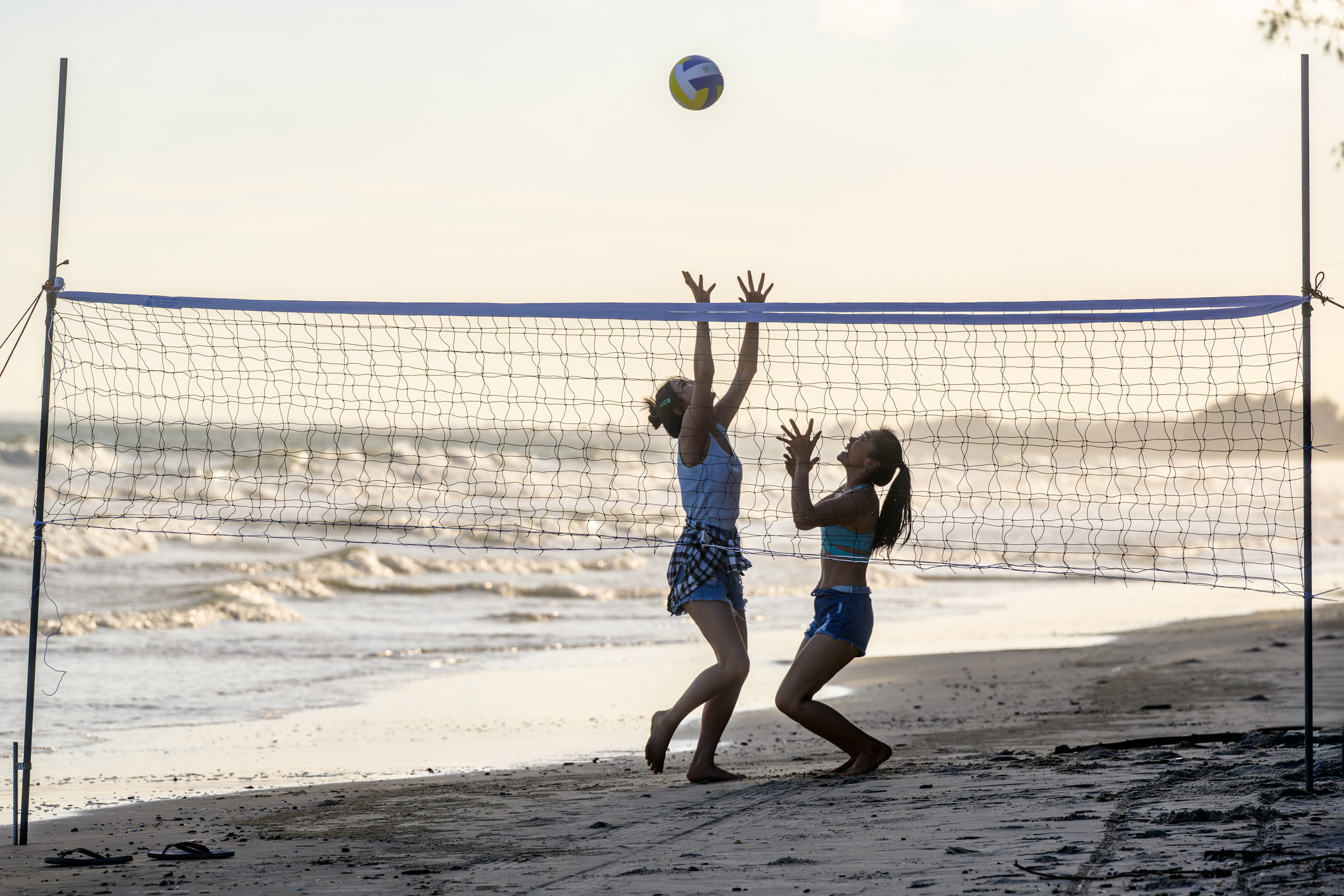
The beach can be a welcome break from your usual version. But in many cases, relaxing implies a deceptive quantity of activity. You should find a beautiful place to publish, which probably means walking on a fair distance, lugging a cooler and an umbrella behind you. In addition, you are on the sand, which makes every movement more difficult. Maybe every hour, you spend 10 minutes walk on water or wade through surfing. Maybe someone brought a frisbee, a football ball or a volleyball net. If you have children, you undoubtedly continue them.
A normal day, “I come to sit in an office in front of a computer,” said Crandall. “If I go to the beach, these are more activity orders during the hours than I do day by day,” he said, adding that he likes water and sand sports. “I expect to be more exhausted after that.”
Patchareéporn Sakoolchai / / Getty images Patchareéporn Sakoolchai
An integrated body response
Even if you remain hydrated, relaxing and take shadow breaks, drowsiness in response to the heat of the afternoon can be an ancient and pre-programmed animal response. Although people sleep better at cooler temperatures, heat can also trigger drowsiness, according to a study in 2022 of fruit flies. Research has revealed that high temperatures trigger a brain signal cascade which directly feed the circadian flush rhythm system. Basically, in response to hot temperatures, fruit flies are led to the nap – that the authors compare themselves to a Spanish nap. Although it is not yet clear if the heat does the same in the human brain.
Then there is the effect of the sun itself. If you get a sunburn, it is well established that it can cause fatigue. Sunburn triggers an inflammatory response, notes Crandall. If it is quite serious, it can cause symptoms of exhaustion of the body, as well as headaches, nausea and even fever.
Even if you quickly apply a sunscreen and avoid burning, the sun itself can always leave you slow. A 2004 study revealed that sun exposure increases mental fatigue during leisure activity. A similar article 2021 noted similar effects in outdoor workers, regardless of thermal stress. Workers have shown more slow cognition signs and other symptoms of thermal stress when their skin was exposed to the sun, compared to workers who were covered, even when temperatures were consistent.
Exactly why it happens is not well understood, but Crandall notes that the brilliant sun on our skin causes chemical reactions. Exposure to the sun triggers the production of vitamin D. It speculates that other chemical or hormonal waterfalls can be triggered by the sun.
[ Related: Learn how to take a nap because they’re really beneficial ]
Withdrawal of fatigue?
If you aim to minimize the risk of crisis after the beach, Crandall says that staying hydrated and avoiding sunburn are the two most important strategies. Shadow breaks or inner time can also help. But, assuming that you have eaten enough, drunk, enough water and applied your sunscreen, the best treatment for the fatigue of the beach may not be to fight it after all, he notes. “I would say, make a good nap”, maybe under an umbrella.
This story is part of popular sciences Ask us anything seriesWhere we answer your most bizarre and burning questions, from the ordinary to the wall. Do you have something you always wanted to know? Ask.

More offers, reviews and purchasing guides


