Why Don’t We Have More Solar Planes?



Explore
AAs you prepare for vacation flights and the many burdens they bring, your worries about agonizing delays and interactions with the law may overshadow one worrying consequence: Air travel accounts for about 3.5% of all human-caused climate change, according to a 2021 article. It may seem small, but this impact largely affects a tiny percentage of the world’s population. About 1% of the world’s population is responsible for half of all carbon dioxide emissions from commercial aviation, and the vast majority of people on our planet don’t take an international flight every year.
The aviation industry has been trying to address the emissions problem for a long time. In fact, electric planes have been in the works for a century and a half. Along the way, all sorts of high-flying experiments have aimed to transform the way we take off.
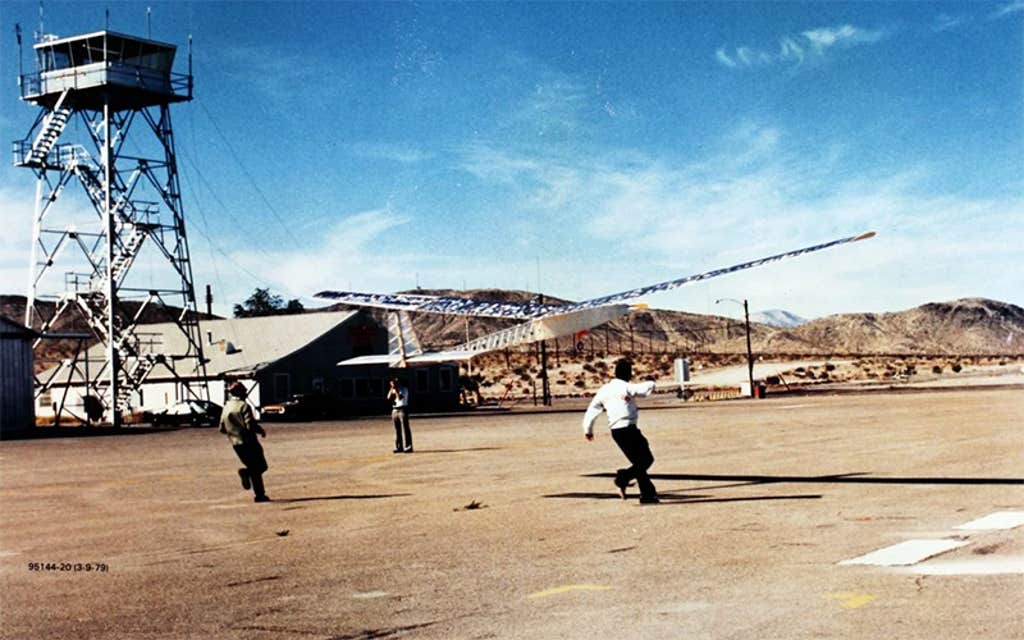
These include solar aircraft, the first of which recently celebrated its 51st birthday. On November 4, 1974, the remotely controlled Sunrise I flew for 20 minutes over California’s Mojave Desert at a maximum altitude of about 300 feet. It was a proof-of-concept monoplane – developed by the company AstroFlight under a federal government contract – which aimed to demonstrate that such an aircraft, with an “inexhaustible” power source, could “bask in the unmitigated sunshine” of the upper atmosphere.
ADVERTISEMENT
Nautilus members enjoy an ad-free experience. Log in or register now.
By sunrise, I was only about 14 feet long and weighed almost 23 pounds. Six arrays of solar cells were attached to the tops of the wings and the craft was powered by a single motor and propeller.
At the time, solar cells were about half as efficient as current technology. The AstroFlight team quickly created an improved model, Sunrise II, 13% lighter and 33% more powerful than its predecessor. During a test flight in September 1975, Sunrise II reached an altitude of 17,200 feet but suffered “severe” damage before reaching the goal of 73,000 feet.
Half a century later, why can’t solar-powered planes take us to our vacation destinations and reduce our carbon footprint? After all, in 2021, the aviation industry has decided to achieve net zero carbon emissions by 2050.
The biggest limiting factor has to do with a question President Donald Trump asked during his 2024 campaign: “What happens if the sun doesn’t shine while you’re in the air?”
ADVERTISEMENT
Nautilus members enjoy an ad-free experience. Log in or register now.
Read more: »A non-linear history of time travel»
Energy from the sun must be stored in batteries to provide continuous electricity when shooting through clouds or flying at night. But right now, scientists are still working to design batteries that are energy dense enough – but still light enough – to power planes as massive as jumbo jets on long journeys.
Current battery energy density may need to quadruple for electric planes to “play a bigger role in the decarbonization of air transport,” said Andreas Schafer, director of the Air Transport Systems Laboratory at University College London. MIT Technology Review. This may not be possible with the lithium-ion batteries that currently power electric vehicles and many consumer electronics.
This pickle makes any type of all-electric aircraft tricky, whether the electricity comes from hydrogen, solar power, or any other source. For now, electric planes remain rather small and limited to short trips with tiny manifests. For example, small models like Vermont-based Beta Technologies’ Alia CX300, which can accommodate up to five passengers, have intrigued major airlines and governments, including Norway, China and the United Arab Emirates.
ADVERTISEMENT
Nautilus members enjoy an ad-free experience. Log in or register now.
Compared to other types of electric aircraft, solar-powered models face unique obstacles. When these planes soar through the sky, the solar cells don’t always capture the energy at the optimal angle, not to mention pesky cloud shadows.
Beyond battery barriers, solar panels currently cannot provide enough power to keep giant airliners in the air on their own. Even if the wing of a Boeing 737 were covered in solar panels, it would produce 0.4 percent of the energy needed to stay aloft, according to an estimate by Rhett Allain, an associate professor of physics at Southeastern Louisiana University. “It is quite difficult to envisage any means of making a solar-powered ocean liner,” he wrote for Wired. Allain adds that he is, however, more optimistic about electric planes more generally.
Such challenges haven’t stopped daredevils from pushing these planes to their limits. Between 2015 and 2016, a plane powered by more than 17,000 solar cells circled the world in 16 legs – these individual flights lasted up to five days at a time.
And last August, Swiss pilot Raphaël Domjan took off above the Valais Alps in Europe and broke the altitude record for solar aircraft. It reached more than 31,200 feet, about the cruising altitude of commercial flights.
ADVERTISEMENT
Nautilus members enjoy an ad-free experience. Log in or register now.
While you probably won’t be flying to Thanksgiving on a solar plane this week, we could be moving toward accessible, low-emission flights within our lifetimes.
Enjoy Nautilus? Subscribe for free to our newsletter.
Main image: Ccoonnrraadd / Shutterstock


