Why Hurricane Melissa Could Be the Worst Storm to Ever Hit Jamaica


October 27, 2025
3 min reading
Why Hurricane Melissa could be the worst storm ever to hit Jamaica
The exceptional strength and slow speed of Category 5 Hurricane Melissa could make it more destructive than Hurricane Gilbert, which struck Jamaica in 1988.
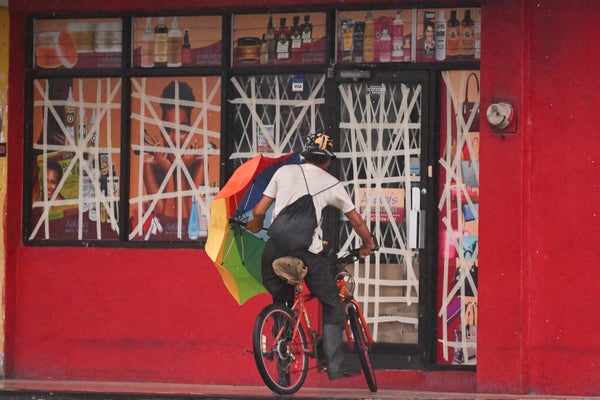
A cyclist rides to a store for shelter from Hurricane Melissa in Portmore, Jamaica, October 26, 2025.
Ricardo Makyn/AFP/Getty Images
As Category 5 Hurricane Melissa bears down on Jamaica, it is set to become the worst storm ever to hit the Caribbean island, surpassing the damage caused by Hurricane Gilbert in 1988.
Gilbert, which hit Jamaica as a Category 4 hurricane, sent a 19-foot storm surge to the island’s east coast and brought torrential rain and destructive winds. It killed 49 people, destroyed 100,000 homes and caused $700 million in damage, according to the US National Oceanic and Atmospheric Administration.
Melissa, however, is much stronger and will strike in a direction that could expose more coastline to waves. And its movement is slower, which means that Jamaica will be subject to the storm’s onslaughts, including torrential rains, for longer.
On supporting science journalism
If you enjoy this article, please consider supporting our award-winning journalism by subscription. By purchasing a subscription, you are helping to ensure the future of impactful stories about the discoveries and ideas shaping our world today.
“It’s going to be a lot worse than Gilbert,” says Phil Klotzbach, a senior research scientist at Colorado State University who studies hurricanes.
LEARN MORE: Hurricane science has a lot of jargon: here’s what it all means
Jamaica is no stranger to storms, but it has only been directly impacted by five major storms (those category 3 or higher), according to the best available historical records, dating back to the late 19th century. All of these major storms were either Category 3 or Category 4 – we don’t know of any in recorded history that hit the island as Category 5.
And Melissa is in rarefied company, even among already rare Category 5 storms – it’s unusually intense for an Atlantic basin hurricane. As of Tuesday morning, its maximum sustained winds reach 185 miles per hour, making it one of the most intense hurricanes ever measured in the Atlantic. Gilbert’s winds reached 130 mph when it collided with Jamaica.
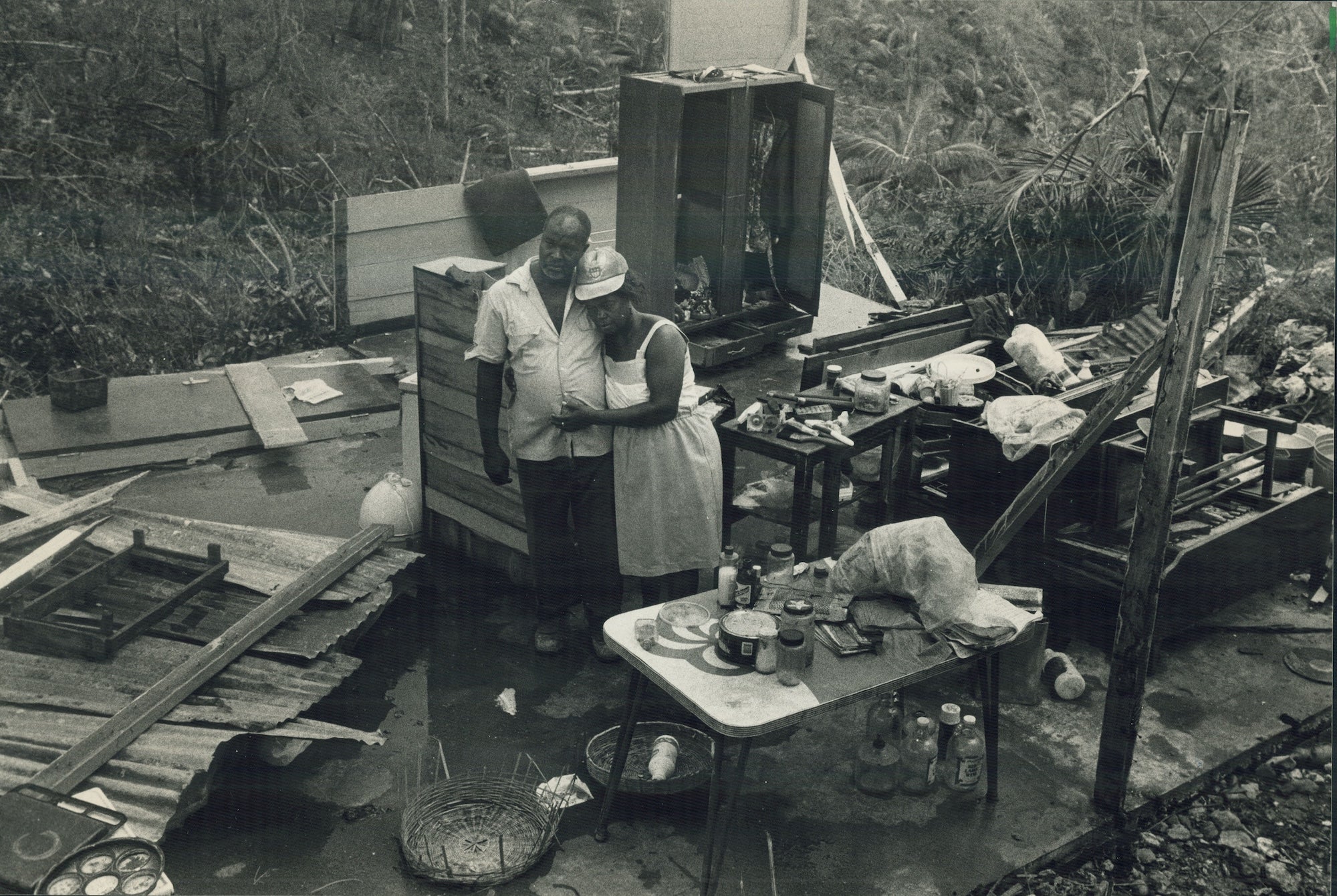
Little remained of Clarence Bryan and Mazlyn Richard’s home in St. Thomas Parish on the eastern tip of Jamaica after Hurricane Gilbert in September 1988.
Photo by Colin McConnell/Toronto Star via Getty Images
Even if Melissa weakens a bit before making landfall in Jamaica, it will still be an exceptionally strong storm, and the fact that it’s hitting from the south means it’s heading toward a longer coastline than Gilbert with its easterly approach. The national capital, Kingston, is on its southern shore.
The surge from Melissa is expected to reach 9 to 13 feet above ground level, but exactly where it will focus will depend on the storm’s exact track. Even small deviations could make a big difference in where the strongest winds and waves hit. The further Melissa drifts west before making a sharp turn northeast, the less likely it is that major populated areas in the eastern half of the country, like Kingston, will see the worst of the surge.
And then there’s the fact that Melissa moves at a pace of between 3 and 5 mph, compared to Gilbert’s more typical 12 mph. “It barely moves,” says Klotzbach, which means the winds, waves and rain will last an extremely long time. In fact, “they’ve been getting rain for days from this storm,” Klotzbach said, as the weather system has drifted toward the south of the island. Most of Jamaica is expected to receive more than a foot of rain, and a large area is expected to receive up to 30 inches of rain. Some places could see up to 40 inches. This amount of rain can be catastrophic, especially in Jamaica’s hilly terrain, where it can cause flash floods and landslides.
The Jamaican government has ordered mandatory evacuations in some flood-prone areas, according to the Jamaica Observerand utilities plan their restoration efforts once the storm passes. “A category four hurricane that could pass through the middle of our island could cause unprecedented damage to our facilities,” said Hugh Grant, general manager of the Jamaica Public Service Company (JPS), during a press briefing on Sunday, according to the Jamaica Observer. “Here at JPS it will likely be a rebuild and not just a restoration.”
Editor’s Note (10/28/25): This article was edited after publication to update Hurricane Melissa’s wind speeds.
It’s time to defend science
If you enjoyed this article, I would like to ask for your support. Scientific American has been defending science and industry for 180 years, and we are currently experiencing perhaps the most critical moment in these two centuries of history.
I was a Scientific American subscriber since the age of 12, and it helped shape the way I see the world. SciAm always educates and delights me, and inspires a sense of respect for our vast and magnificent universe. I hope this is the case for you too.
If you subscribe to Scientific Americanyou help ensure our coverage centers on meaningful research and discoveries; that we have the resources to account for decisions that threaten laboratories across the United States; and that we support budding and working scientists at a time when the value of science itself too often goes unrecognized.
In exchange, you receive essential information, captivating podcasts, brilliant infographics, newsletters not to be missed, unmissable videos, stimulating games and the best writings and reports from the scientific world. You can even offer a subscription to someone.
There has never been a more important time for us to stand up and show why science matters. I hope you will support us in this mission.


