Why it’s so hard for world leaders to bring down oil and gasoline prices : NPR


Gasoline and diesel prices are displayed at a pilot travel center March 17, 2026 in Pyote, Texas.
Brandon Bell/Getty Images North America
hide caption
toggle caption
Brandon Bell/Getty Images North America

The near-total shutdown of traffic in the Strait of Hormuz, the main waterway through which about a fifth of the world’s oil and liquefied natural gas typically passes, has created a catastrophic disruption in oil markets.
Crude oil prices have now exceeded $110 per barrel and could rise further. These higher prices have been reflected in gasoline prices in the United States.
The global energy market and U.S. policymakers have several levers they can use – and still use – to try to lower prices.
But these tools have their limits.
“The levers we have in the short term are very limited,” says Avery Ash, CEO of the energy and national security nonprofit SAFE. “The worst time to try to resolve a crisis is when you are in a crisis.”
Here’s why.
Available capacity is not in the right place
Normally, in the event of a serious oil supply shock, markets would turn to countries capable of increasing their production very quickly.
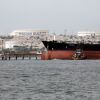
Drilling new wells would take too long to allow immediate pinching. But countries in OPEC, the Saudi-led oil cartel, voluntarily choose to produce less crude than they could, giving them much of what is called “spare capacity.”
“This is a production that is practically ready-made and they just don’t use it,” says Ellen Wald, author of Arabia, Inc., “because OPEC agreed that it would not produce as much.”
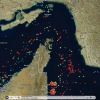
The problem is that right now the world’s spare capacity is concentrated in Saudi Arabia and the United Arab Emirates, on the Persian Gulf…and on the wrong side of the Strait of Hormuz.
“Reserve capacity is only as good as the ability to extract the oil from where it is produced,” says Wald. In this case, nothing good.
Pipelines can only transport a limited amount of crude
How about finding alternative routes for crude oil that cannot be shipped across the strait? Saudi Arabia has a pipeline that runs east-west and carries oil to the Red Sea, where it can be shipped through the Suez Canal or carried to the Mediterranean. The UAE also has a pipeline that can transport crude across the Strait of Hormuz.
But not enough. “Twenty million barrels per day are saved” by the Strait of Hormuz, explains Dan Pickering, investment director at Pickering Energy Partners. “Five million people find their way through the pipelines.”
This leaves a hole of 15 million barrels.
Stocks can only be used very quickly
The world’s major oil-consuming countries have huge stocks of crude oil that they reserve precisely for emergencies like this. And they are benefiting from it: last week, the 32 countries of the International Energy Agency agreed on their the largest outflow of reserves evermore than 400 million barrels the last announcement.

The problem ? These reserves can only be exploited very quickly. Sales must be organized, oil must flow through pipelines and onto ships. Bob McNally, founder of research and consulting firm Rapidan Energy, estimates a likely rate of around 2 million barrels per day.
Stock releases are “a good thing,” McNally says. “But they won’t solve the brutal math problem.”
Jones Act waiver has minimal effect
This week, the government announced a temporary waiver of the Jones Actthe law requiring that ships traveling between U.S. ports must be American-made, American-crewed, and sail under the American flag.
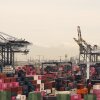
This makes it easier to transport gasoline from Gulf Coast refineries to East Coast or West Coast ports. This might help gas prices…but not by much.
“We’re talking about, you know, slowing the rise in prices at the pump by a few cents or tenths of a cent,” McNally says. “It’s a good step, but it’s not a game-changer.”
Sanctions waivers are a partial measure
The Trump administration has already lifted certain American sanctions on Russian crude in order to facilitate the arrival of these barrels on the market. Now the United States has launched the extraordinary idea to remove sanctions against Iranian oil, in the middle of the war against Iran – essentially increasing incomes on the other side – in another attempt to help alleviate the supply crisis.
The Kpler Business Intelligence Group called Russian sanctions remove a “short-term logistical buffer” for India, the main importer affected, but not enough to fully offset the blow from the Hormuz closure. Cargo tracking company Vortexa has estimated about a million barrels per day of crude oil deficit could be filled by facilitating the sale of sanctioned oil.
Export bans would hurt U.S. refineries
One idea put forward to lower prices in the United States is to block their oil exports. The United States produces more oil than it consumes; if exports were reduced, domestic supply would increase and prices could fall.
But, says Ellen Wald, “that would be a very bad idea.” Most oil produced in the United States is light, sweet crude, some of which is exported. Meanwhile, U.S. refineries have been optimized for decades to run on heavy, sour crude that they import.
“So we can’t process all the very light oil that we currently produce,” says Wald. “Our refineries just aren’t set up like that.” Isolating itself from global markets would put the United States in a difficult situation.
Eliminating Gas Taxes Could Help – and Could Backfire
The state of Georgia is considering waiving gas taxes, which if enacted would save the state’s gas consumers 33 cents per gallon. This is not enough to offset the surge in prices observed this month.
And Patrick de Haan, an oil analyst at GasBuddy, says there’s a downside. “In theory, if every state waived their gas taxes, that would probably increase demand even more,” he says. Increased demand for fuel would cause prices to rise.
Allowing more emissions could save pennies
Another possibility would be for the U.S. Environmental Protection Agency to temporarily remove requirements for “summer gasoline,” a more expensive blend designed to reduce pollution during warmer months.
De Haan estimates this could save between 10 and 30 cents per gallon, “depending on where the motorist is.”
“It’s another small lever that could make a difference,” he says, but “at the expense of emissions.”

There’s a reason summer gasoline needs exist, he says; the adjusted blend reduces health-damaging pollution when hot weather worsens gasoline evaporative emissions and when Americans drive more.
Bottom line…the hole is just too big
The problem is that no matter how many policy levers governments pull, they simply cannot replace the amount of oil stuck waiting to cross the strait.
“Fifteen million barrels a day is not easy to offset anywhere,” says Dan Pickering, chief investment officer at Pickering Energy Partners. “This is the total production in the United States, and we are the largest producer in the world. There is no easy solution.”
And there is no substitute for solving the real problem: the blocked supply from the Persian Gulf.
There is an important lever that President Trump could use to “immediately provide relief to Americans, truckers, farmers and travelers,” says Patrick de Haan. “Restore the flow of oil and other products through the Strait of Hormuz. Everything else is just a piecemeal bandage on a gaping wound.”