Why Linux can’t save you from the “Windows-first” software world


Desktop Linux is doing better than ever, partly because of Microsoft’s missteps in Windows development and partly because of the Linux community’s work over the years to make it a serious contender for everyday computer users.
But, like a nerdy slasher movie stalker, everywhere you look there’s a glimpse of Windows. No matter how much you dive into the Linux world, you can’t get away from it completely.
You can install Linux, but you can’t uninstall years of Windows muscle memory

Unless you’ve taken an atypical path in your PC journey, chances are Windows is the graphics operating system you’re most familiar with. Even when you’re using GNOME or KDE Plasma, you probably still think of the button you click to open the main menu as the “Start” button. Windows conventions still seem to be the norm, and that’s probably one of the biggest sources of friction when moving to Linux from Windows.
This is why people think Linux is more “difficult” than Windows when, objectively, they are both very similar in terms of usability for everyday computing work. If something like Ubuntu was your first experience with an operating system, it would be WIndows which seems strange and difficult in this frame of reference.
The apps you actually need still revolve around Windows

An operating system is only as good as the software it can run. After all, it’s the part of your computer that actually does the work. The operating system only exists to facilitate this. Windows is still the primary platform targeted by application developers, and while there is enough native Linux open source software for most needs, you will eventually need Windows software.
Projects like WINE allow you to run most of this Windows software on Linux, but you will never have the compatibility or stability to run this software on Windows. In some cases, a proprietary application that you need for work or for a project can only run on Windows. Ultimately, you’re back to dual-booting Linux and Windows, or running Windows in a virtual machine.
The game reminds you who really owns the PC

Video games are an important factor in the success of Linux and Windows. Many people who otherwise would have abandoned Windows for something like Zorin OS stayed because they also love PC gaming, and Windows is by far the most supported gaming platform on PC.
This is rapidly evolving thanks to the efforts of the community and PC gaming giant Valve. The Proton compatibility layer allows a huge number of Windows games to run flawlessly on Linux, and that number is growing every day.
Linux-based PCs like the Steamdeck have proven successful and some desktop gamers are moving to Linux, but Linux gaming is far from ready for prime time. Multiplayer gamers who rely on kernel-level anti-cheat software still have no viable way to run under something like Proton, and a significant percentage of Windows PC games still don’t run at all.
Then there’s the issue of support for gaming hardware. Gaming on Linux can be great if your hardware has good drivers, but (for example) NVIDIA GPU owners aren’t as successful as AMD users, largely due to a difference in driver maturity and support.
Hardware support always follows the market leader
Hardware support isn’t just an issue for gaming on Linux. For all intents and purposes, all PC hardware comes with WIndows drivers and that’s where the effort goes. If there is a Linux driver for your webcam, printer, GPU, or other common PC hardware device, it’s either a late think or the Linux community simply created a driver without OEM involvement.
Basically, if you’re building a Linux PC, you need to carefully check that everything from your motherboard chipset and its components to your USB devices is well supported. When it comes to laptops, things can be even more dire because you’re largely stuck with the components you get. This is why Linux-certified laptops are becoming a growing niche.
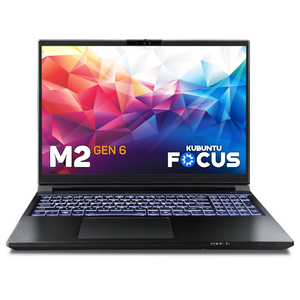

8/10
- Operating system
-
Kubuntu 24.04 LTS
- Processor
-
Intel Core Ultra 9 275HX (2.7 GHz up to 5.4 GHz)
- GPU
-
NVIDIA GeForce RTX 5070 Ti (dGPU), Intel Graphics (iGPU)
- RAM
-
32 GB 262-pin dual-channel DDR5 SODIMM (5600 MHz)
Additionally, for those of us fortunate enough to still have jobs in this economy, it is clear that Microsoft, and by extension, Windows, has its claws deeply ingrained in the business world. So even if you use Linux on everything you own, at work you’ll probably be forced to use Windows. There is simply no escaping it.