Why OEMs Are Sticking to Tried-and-True Looks


You have probably noticed a trend with the launches of recent smartphones that not everyone likes. The new Google Pixel 10 series seems almost identical to the Pixel 9 series last year, and the Samsung Galaxy S25 series seemed very, very similar to the Galaxy S24 series last year. I don’t think it’s a big problem, I explained myself.
The problem: smartphone design innovation blocked

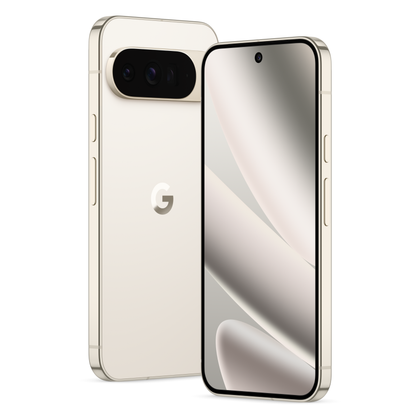
New phones look like their predecessors, and this is a trend with almost all the main OEMs at this stage. The Pixel 10 announced just annual has the same bump and curves of the camera as the Pixel 9, the only major notable difference being the addition of an additional camera sensor in the basic pixel 10 – we have gone by two, because it now has a camera configuration similar to that of the Pixel 10 Pro. Sometimes you don’t even understand that. The Samsung Galaxy S25 is visually completely unchanged from the Galaxy S24, and you can barely notice changes, and barely with the Ultra S25, which has slightly rounded corners compared to the pointed edges of Galaxy S24 Ultra.
This is not a unique problem on the Android side. As I mentioned earlier, this is something that Apple has been doing for some time, because new iPhones tend to have very minor external design changes and to respect internal material modifications, camera upgrades and some minor additions such as the action button and a camera control cursor.
It brings me to my next point. Why change it if it already goes?
-

- Brand
-
Google
- Sock
-
Google Tensor G5
- Display
-
Super news of 6.3 inch, 20: 9
- RAM
-
16 GB of Aries
- Storage
-
128 GB / 256 GB / 512 GB with UFS Zoné / 1 TO With UFS Zoné
- Battery
-
4870mAh
The Pixel 10 PRO offers an upgrade on the basic model with the powerful Google Tensor G5 chip, more RAM and more storage (if you need it).
-
- Brand
-
Google
- Sock
-
Google Tensor G5
- Display
-
Super news of 6.8 inch, 20: 9
- RAM
-
16 GB of Aries
- Storage
-
128 GB / 256 GB / 512 GB with UFS Zoné / 1 TO With UFS Zoné
- Battery
-
5200MAH
Need a larger phone? The Pixel 10 Pro XL offers exactly that. Although you get the same experience as the 10 pro, you will get a larger screen and a larger battery – so you will not miss anything on the 10 standard size pro.
OEMs perfected their conception
This is the problem I have with some OEMs, like OnePlus, who like to make wild design changes each year. Personally, I see him as changing things to change them. If you have a design that works, does not seem obsolete, and it is not something that users do not like actively, the best approach – the way I see it, at least – does not consist in devoting a lot of resources to the modification each time. You can iterate and improve, but there is not much need to change it every time.
For OEMs, it is probably cheaper to reuse the same framework and the same design for their new smartphones. In this way, they can really make changes that really matter for users, more about this later. And for users, they can already settle with a design they already know, and they will feel at home, especially if they upgrade their direct predecessor or a few generations later. It is essentially the same phone, except more quickly.
In many cases, you can even reuse the same accessories as you already have, including cases, chargers and other things. I say “a lot” and not “all” because some make the smallest design changes so that the phone is changed enough for it to look like the same phone, but you cannot reuse the cases due to always small design changes – that look at you, Apple.
They give you upgrades where it really matters

The fact that many OEMs do not make design changes have an advantage, and this is the fact that the company can devote more resources to internal changes. New generation phones are often delivered with more specific SOCs, more powerful batteries, better internal features and software capabilities, and, overall, better performance.
Of course, several times, an upgrade is not worth one year to another, because it is essentially an upgrade of the minor SoC and perhaps one or two modifications of the camera or the battery. But if you wait two or three years, then upgrade, you will be in what is essentially a very improved version of the phone you already have. Even if the difference is not immediately noticeable when you unpack the phone, you will feel the difference once you look like it and start using it. A change of design makes it more obvious than you get an improved phone, but that does not mean that you do not get an upgrade nevertheless.
And I’m not saying the OEMs of smartphones should not Make design changes. I am absolutely for modern phones, and I am absolutely for phones that update their design over time so that they continue to appear modern each year. But it’s one thing to do that, and that’s another thing not to be satisfied with a design language and to change the design of your flagship phone each year. It is expensive, and in my opinion, it is ultimately useless.
Do not turn on smartphones improvements simply because they look alike. You will be surprised to see that the new phone could pack many more modifications you expect.


