Why Pope Leo XIV’s Lebanon visit matters amid Israeli bombardment

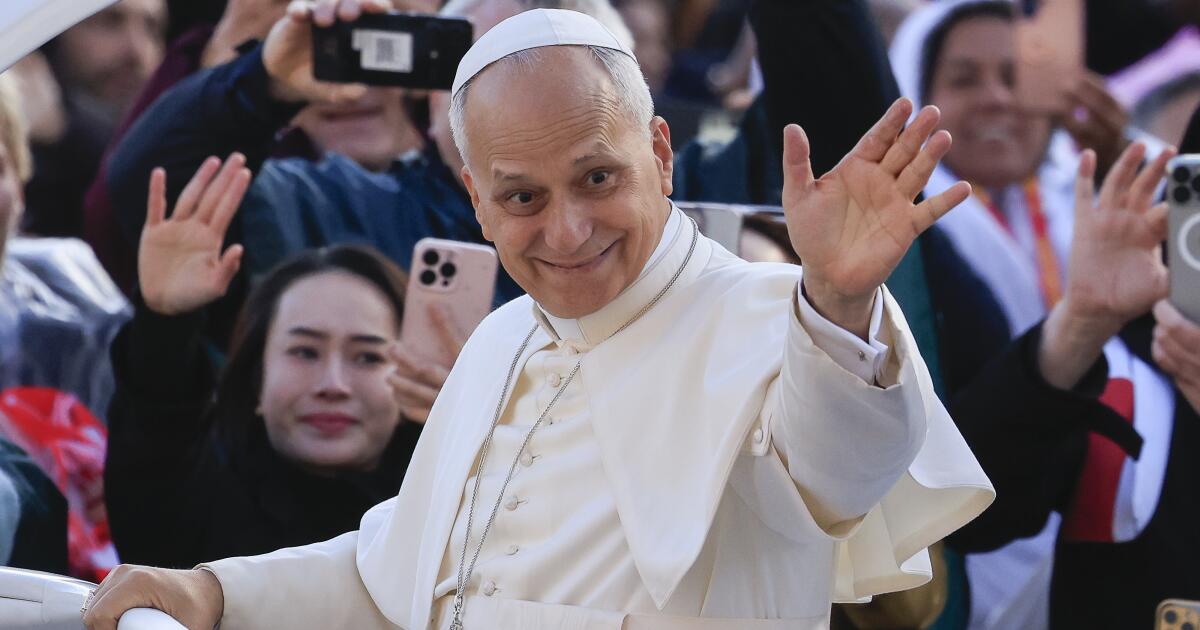
BEIRUT — When Pope Leo
In his first international trip since assuming the papacy in May, the Chicago-born pope will travel to Turkey on Thursday, where he will mark the 1,700th anniversary of the Council of Nicea, where the Nicene Creed – a foundational statement of Christian belief and unity – was written in 325 AD.
But perhaps the real test of Leo’s international debut comes in Lebanon. His arrival fulfills a promise to visit the country made by his boldly charismatic predecessor, Pope Francis, who raised the papacy’s international profile with dozens of foreign visits and a propensity for candor in his comments that endeared him to the faithful, particularly in the Middle East.
But Christians – estimated at around 30% of the Lebanese population – are not the only ones eagerly awaiting Leo’s arrival.

A view of the Sultan Ahmed Mosque in Istanbul, which Pope Leo XIV will see during his visit to Türkiye, which begins November 27, 2025.
(Arif Hudaverdi Yaman/Anadolu/Getty Images)
Many here hope his visit will be an omen of peace, drawing attention to this small Mediterranean nation as it grapples with a succession of Job-like crises: first the economy, which collapsed in 2019, bringing down the banking system and the currency with it; then the port explosion in 2020; and the war between the Lebanese Shiite militant group Hezbollah and Israel, which erupted in 2023 before escalating late last year and leaving thousands dead and pulverizing large swathes of southern and eastern Lebanon.
Despite a ceasefire negotiated last November, Israel has launched near-daily attacks against its northern neighbor, justifying its strikes as an attempt to prevent Hezbollah from reconstituting itself, even as the United Nations has documented more than 10,000 air and ground violations on Lebanese territory and 127 civilians killed in the past year since the ceasefire took effect.
Israeli attacks have also crippled reconstruction efforts, meaning that most residents of Lebanese border towns – whether dominated by Christians, Muslims or Druze – have been unable to rebuild their pre-war lives. The UN human rights office says around 64,000 Lebanese remain displaced.

The Israeli army launched more than ten airstrikes on the town of al-Musaylih in southern Lebanon on October 11, causing significant damage.
(Houssam Shbaro/Anadolu via Getty Images)
Concerns about the pope’s security have been at the top of people’s minds for months. In October, in what appeared to be a hot mic moment, Queen Rania of Jordan asked the pope during a photo opportunity at the Vatican whether it was safe to travel to Lebanon. “Well, here we go,” Leo replied gruffly.
Alarms were raised again this weekend when Israel bombed the southern suburbs of Beirut, barely three kilometers from where the pope was due to land on Sunday. The attack, the first in months near the capital, killed Hezbollah’s top military commander and coincided with a general increase in Israeli strikes and drone activity in recent weeks – all indicators, observers say, of an imminent all-out attack.
Nonetheless, the trip is still underway, Lebanese officials say.
For Oumayma Farah, development director of the Order of Malta Lebanon, which helps communities of all religions and nationalities through humanitarian projects, it is a “sign of courage and resilience for the Lebanese population and Christians in the region as a whole”.
“Whatever happens, the pope will come,” Farah said.
“The Church teaches us not to be afraid, so that’s the first example.”

A woman walks her dog in front of a billboard in Beirut touting Pope Leo’s upcoming visit to Lebanon.
(Anwar Amro / AFP/Getty Images)
As in most countries where Christianity first took hold, wars and economic lethargy – not to mention a relatively easier route of emigration – have diminished Lebanon’s Christian population over the decades.
In the Middle East, the number of Christians has fallen from 20% of the population to just 5%; Lebanon remains the Arab country with the highest proportion, with Christians making up about 30 percent of the population, according to estimates by various research groups and the U.S. State Department.
The pope’s insistence on coming to Lebanon, Farah said, “refocuses the importance of this country” and is a “wake-up call” to its politicians. After spending three days in Türkiye, the pope will arrive in Lebanon on Sunday and leave on Tuesday.
In the Lebanese capital, Beirut, and other areas along the pope’s route, signs abound of furious logistical activity and preparations: police and security personnel have stepped up their presence. A two-day holiday was announced to allow participation in public prayer events, even as parishes and schools across the country were involved in bringing the faithful to attend Mass near the site of the Beirut port explosion, believed to be an accident caused by negligence, and elsewhere.
Meanwhile, road works and maintenance, virtually canceled in recent years due to the government’s financial difficulties, are in full swing. The joke going around town is that people want another papal visit, if only so the government can finish repaving all the pothole-ridden streets in the country. A bitter corollary is another joke that the renovated roads will only last until the pope leaves – because they will be destroyed in a new Israeli campaign.

In addition to visiting the Sultan Ahmed Mosque in Istanbul, Pope Leo will visit the Turkish city of Iznik, ancient Nicaea, to mark the 1700th anniversary of the Council of Nicaea.
(Arif Hudaverdi Yaman/Anadolu/Getty Images)
The gallows humor reflects the uncertainty of the moment, with the United States and Israel pushing the Lebanese army to completely disarm Hezbollah, even though the group insists it will only disarm in the south of the country.
The Lebanese government, in turn, says it cannot persuade Hezbollah to surrender its arms while Israel continues to occupy Lebanese territory, and that doing so by force would lead to civil war.
The hope is that the pontiff can help break the impasse. But even if few people expect such a rapid change, the visit remains important, said Maronite parish priest Father Tony Elias of Rmeish, a village just across the border from Israel.
“When the pope visits a country that has suffered for so long, it really is enough to ease that pain,” Elias said.
Rmeish, which maintained a resolutely neutral stance during the war, is relatively unscathed, an exception in this desert that has become Lebanon’s border area after years of Israeli bombardment.
Elias said he would have wanted the pope to go south, but he was not disappointed, as he and about 200 others from the village would travel to Beirut and join the pontiff.
“If he can’t come south, we can come to him,” Elias said.


