Cannabis reclassification could ‘open the floodgates’ for research, scientists say

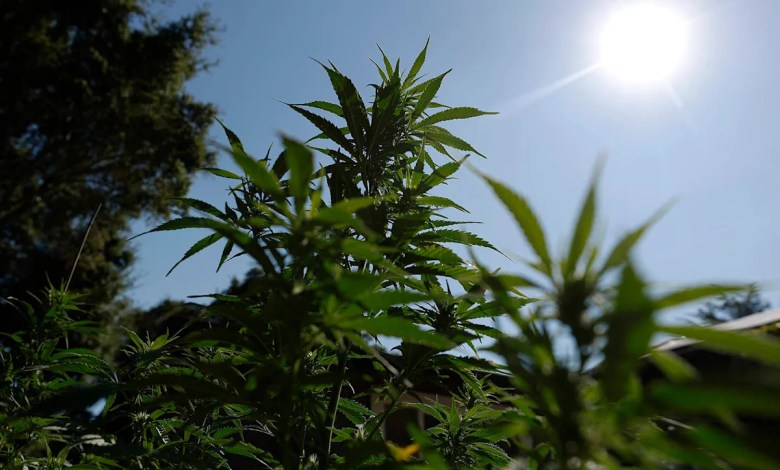
A long-awaited change in drug policy could bring scientists closer to understanding the harms and benefits of marijuana, the most commonly used illegal substance at the federal level.
On Thursday, President Donald Trump signed an executive order to reclassify cannabis from a Schedule I substance to a Schedule III substance, following a regulatory change first pushed under the Biden administration.
“Decades of federal drug control policy have neglected the medical uses of marijuana,” the order states. “This oversight has limited the ability of scientists and manufacturers to conduct necessary safety and effectiveness research to inform doctors and patients.”
Although the reclassification is intended to strengthen medical marijuana research and will not legalize cannabis at the federal level, the move comes at a time when consumption in the United States is at a high level. Gallup data from 2023 and 2024 estimates that 15% of adults smoke marijuana, up from 7% in 2013.
The survey, which does not distinguish between medical and recreational use, shows that the highest consumption (19%) is observed among young adults aged 18 to 34, a group for whom studies have shown that cannabis has harmful psychiatric effects. For example, a study published Tuesday in the journal Pediatrics found that using marijuana just once or twice a month was linked to emotional distress and poorer academic performance in adolescents.
Medical marijuana is typically prescribed to relieve chronic pain; control nausea and vomiting, often in people receiving chemotherapy for cancer; and stimulate appetite in people with certain medical conditions. It is unclear whether rescheduling cannabis will affect funding for recreational marijuana research.
Scientists like Ziva Cooper hope this reclassification could revolutionize public health through further research into marijuana.
“It is extremely difficult to study cannabis, aka marijuana, for both its potential adverse effects and its therapeutic effects,” said Cooper, director of the Center for Cannabis and Cannabinoids at the University of California, Los Angeles. “The industry is growing at a very rapid pace, and so consumer behavior is evolving alongside this industry.
“It’s very difficult for us, as scientists and as people interested in public health, to keep up with the pace of change, in part because research is difficult. »
Schedule I is the strictest of the five categories of controlled substances recognized by the Drug Enforcement Administration, reserved for drugs with “no currently accepted medical use and a high potential for abuse,” including ecstasy, heroin, LSD, and peyote. Schedule III drugs, which include ketamine, testosterone and anabolic steroids, have “moderate to low potential for physical and psychological dependence,” according to the agency.
Although she works in a cannabis-friendly state, Cooper said she faces the same research hurdles as her peers in states like Idaho, where no marijuana use is allowed.
“Researchers can’t test what’s readily available on the market, just basic questions about what’s in the products available in the dispensary that I can see outside my lab window, for example,” Cooper said. “It also means that there are some restrictions on where we can obtain our cannabis that we are researching.”
The Harms and Benefits of Marijuana Need Further Study
Last year, the National Institutes of Health allocated $75 million for therapeutic cannabinoid research, up from $70 million in 2023. Additionally, $217 million was dedicated to cannabinoids, or cannabis compounds, and $53 million to cannabidiol, or CBD, a non-psychoactive cannabinoid.
However, red tape means that cannabis studies are often observational, compared to the rigorous clinical trials required by pharmaceutical research, said Dr. Brooke Worster, medical director of the MS in Medical Cannabis Science and Business program at Thomas Jefferson University in Philadelphia. Their findings were mixed.
For example, a 2024 study published in the journal Current Alzheimer Research found that recreational cannabis use among adults aged 45 and older was associated with a 96% lower risk of subjective cognitive decline, compared to non-users. Yet a 2025 study published in JAMA Network Open found that among adults ages 22 to 36, heavy cannabis users had impaired working memory.
Research published this year in the journal Biomedicines suggests cannabinoids are a “promising” alternative to opioids for chronic pain management, but highlights the urgent need for large-scale randomized controlled trials. Meanwhile, a study published last year in JAMA Network Open found that older adults with Medicare insurance had increased rates of healthcare visits involving cannabis-related disorders from 2017 to 2022.
The reclassification will allow researchers to distribute and study specific formulations of marijuana, Worster said. Today, even in states with medical marijuana programs, the quality and potency of cannabis products can vary widely from dispensary to dispensary.
“We can actively track immediate symptoms or blood levels of things, as well as long-term effects,” she said. “All the things you would want to do when you study a drug, all the things the federal government requires us to do to study a drug.”
Although marijuana may have some medical benefits for some people, Jonathan Caulkins, H. Guyford Stever Professor of Operations Research and Public Policy at Carnegie Mellon University in Pittsburgh, denied that administrative hurdles have prevented cannabis from curing illnesses such as cancer or Alzheimer’s.
“They don’t restrict research to Canada, France or Israel,” Caulkins said. “I don’t think we should imagine that the only reason cannabis hasn’t become the wonder drug is because of U.S. legislation, because we’re not the only country in the world that has a pharmaceutical industry and research base.”
Still, this change brings new responsibility to the medical community, Worster said, because smoked and inhaled products, regardless of their concentration or formulation, are not safe for everyone.
“What remains to be understood is how do we provide the right patient with the right medication and the right advice? she said. “The products available are often unregulated. There are real mental health risks, with young people using them too regularly, and certainly some cardiovascular effects that we need to pay more attention to.”
Cannabis policy to be revised after 55 years
The regulatory hurdles researchers face date back more than half a century. During the Nixon administration, the Controlled Substances Act of 1970 established cannabis as a Schedule I drug.
Nearly 60 years later, much of marijuana’s medical potential, or rather lack thereof, remains unknown. In the eyes of the law, Worster said, “it’s simply a drug of abuse.”
Susan Ferguson, director of the Institute of Drug Abuse, Substance Abuse and Alcohol at the University of Washington School of Medicine, predicts that scientists will soon have an easier time acquiring cannabis research licenses. Currently, she said, researchers can obtain a broad license to study any drug in Schedules II through V. Those who want to study a Schedule I drug must obtain a separate license for each substance.
“This involves the extensive writing of protocols,” she said. “This involves DEA agents coming to inspect the lab and telling me about the research and the proposed experiments. It gets very, very complicated.”
Reclassifying marijuana, Ferguson said, would “open the floodgates” to clinical research. For starters, people may be more inclined to enroll in studies of Schedule III drugs rather than Schedule I drugs.
Ferguson compared cannabis to alcohol and tobacco – common but not harmless products. Medical research is the reason their harms are well known.
“We haven’t done research on cannabis,” Ferguson said. “It will be able to tell people what the risks are, what the benefits are, and just give them more information.”
This article was originally published on NBCNews.com


