Will US skies be clear for the blood moon?

When you purchase through links on our articles, Future and its syndication partners may earn a commission.

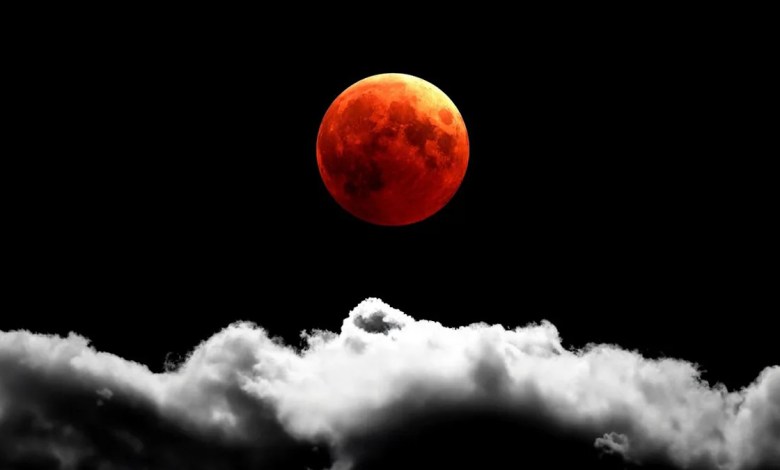
Cloud cover outlook for the total lunar eclipse – where the blood moon will be visible. | Credit: Giuliano Domenichini via Getty Images
Looking at the prospects of Total lunar eclipse on Tuesday, March 3 in the morning are affected, it appears that about half the nation will have at least some occasional views of the Moon diving through Earth’s dark shadow. The whole – aka the blood moon phase – will begin Tuesday at 6:03 a.m. Eastern Time, which is 3:03 a.m. Pacific Time. The whole thing will last 58 minutes.
The areas of the country that will likely have the best overall weather conditions for the lunar show will be southeastern New England, much of the Florida peninsula, the northern Rockies, the deserts of the Southwest, Nevada, and most of California.
On the other hand, several weather disturbances will induce considerable cloud cover, mainly over the central and eastern states. A quasi-stationary front extending across the Central Plains through the Upper Midwest to the Mid-Atlantic region will be accompanied by a broad band of clouds and humid weather, with the heaviest rain falling over parts of eastern Kansas, northeast Missouri, central Illinois, and west-central Indiana.
Other areas where eclipse conditions will be problematic will be parts of Utah, Wyoming and Colorado, where light rain and snow may fall, as well as parts of the northern Plains to the upper Great Lakes, where a cold front will move south from south-central Canada. Additionally, an inverted trough of low pressure developing near the coast of the Carolinas will induce a flow of moist air from the Atlantic Ocean that will result in widespread cloudiness in the Piedmont region of the southeastern United States.
Additionally, near and along the Pacific coast of Washington, Oregon, and California, a low-water marine layer clouds will be in place at the time of the eclipse, which could hide the moon.
As for New York, New Jersey, Pennsylvania and New England, it is unfortunate that the eclipse does not occur 12 hours earlier. Tuesday night for these locations will likely be beautifully clear and moonlit thanks to a large dome of high pressure over southeastern New York. However, as the night progresses, this protective shield of clear skies will quickly move east and over the Atlantic Ocean and allow lowering and thickening cloud cover to move in from the west, which – depending on how quickly the cloud shield advances – could partially or completely obscure the moon at the time of the eclipse. Those who want to be assured of a good view of this dodgy little celestial drama should head east to stay ahead of the clouds. The most promising locations for clear skies include eastern Massachusetts, southeastern New Hampshire and southern Maine.

NOAA Sky Coverage (%) map for March 3 from the National Numerical Forecast Database | Credit: NOAA National Weather Service
We have provided a percent cloud/sky cover map, valid for Tuesday at 7 a.m. EST, from the NOAA National Digital Database. It shows the regions where the sky conditions are the best. . . and even worse, for eclipse watchers. We can divide things into three categories:
GOOD: Cloud cover ranges from clear to scattered cloud cover; generally, sky coverage of no more than 30%.
FAIR: Cloud cover ranges from scattered to broken cloud cover; generally, from 30% to 70% maximum. Despite existing clouds, there will likely be large breaks and openings that allow periodic views of the Moon entering eclipse, especially in locations where sky coverage does not exceed 50%.
POOR: Cloud cover varies from 70% to completely overcast. At worst, a total exclusion of the eclipse. At best, maybe a few occasional views of the moon, like what the poet Alfred Noyes described in “The Highwaymen”: “The moon was a ghostly galleon launched on a cloudy sea.”
For any late updates to your local weather forecast, of course, check with your local National Weather Service forecast office. Simply click on the part of the map where you live and you will be taken to the NWS office that serves your area. There you will find all the latest weather information relating to your region.
Also, check the latest satellite images of your region using the GOES 16 weather satellite.
If you’re cloudy, the next chance to see a total lunar eclipse from the contiguous United States will be overnight June 25-26, 2029. It will be an unusually long totality, lasting 102 minutes. Later that year, on the night of August 27-28an “almost” total lunar eclipse will take place, with 93% of the Moon immersed in Earth’s dark shadow.
You can also watch all the action unfold from the comfort of your home with these free programs. Live broadcasts of the lunar eclipse and follow our lunar eclipse live update blog.


