Questions remain over mysterious death in mental health hospital


James MelleySenior Producer Social Affairs

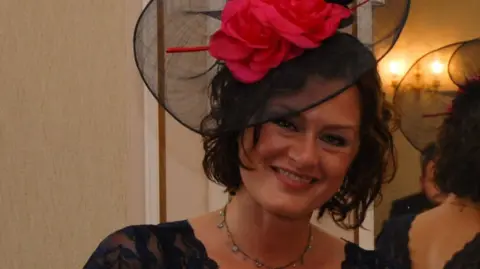 Family photo
A mental health trust says it is considering installing CCTV following the death of a patient in mysterious circumstances.
Maria Morris, 44, was found unconscious at Bethlem Hospital, south London, on September 21, 2021, with four socks in her throat and a large, unexplained bruise on her back.
She died a few hours later in hospital from a brain injury caused by a lack of oxygen. A consultant who treated her wondered if she had been assaulted.
An inquest jury at South London Coroners’ Court concluded his death was accidental, but his family say they still have questions about the cause of his death.
Big bruise on the back
The investigation revealed that Maria Morris, who worked as a teaching assistant, suffered from bipolar affective disorder.
In September 2021, her family and friends became concerned when she began acting erratically and discovered she had stopped taking her medication.
Police were called after she ran away from a friend while walking in a park. When found, she was delirious and taken to Croydon Hospital.
She was transferred to Bethlem Royal Hospital, a psychiatric hospital run by South London and Maudsley NHS Trust (SLAM), on September 18, where she was committed under the Mental Health Act.
The jury heard that while Maria was on the unit she raised a number of concerns about the way staff treated patients. She told a staff member that patients were “punished” at night.
On the evening of September 21, Maria was observed by staff in her room at 8:00 p.m., and again at 8:30 p.m. At 9:23 p.m., a staff member found her unconscious on the floor of her room, following a cardiac arrest.
During resuscitation attempts, a sock was found in his throat. When help arrived, three more socks were removed from his neck.
By the time she was transferred to Croydon University Hospital, she had suffered a hypoxic brain injury. A few hours later, she went into cardiac arrest again and died on September 22.
The jury heard that Dr Simon Wood, an intensive care doctor at Croydon Hospital who treated Maria, alerted police to a large bruise on her back.
He also said that he believed a patient could not have shoved socks down his throat without gagging. He feared this might indicate she had been assaulted.
The jury heard that no CCTV was used on wards at Bethlem Hospital and there was nothing in Maria’s notes or observations to explain the bruising.
Maria’s room was locked when she was found. The court heard that most patients had keys to their own rooms, but there was no record of who held which key.
Staff had master keys to unlock all patient rooms.
Untested blood
In a statement read to the court, DC Metropolitan Police officer Herdeep Jugdev said his investigation was hampered because Maria’s room in Bethlem was emptied and the sock thrown away before they arrived, 19 hours after her death was reported.
During their investigation, police spotted what appeared to be blood under Maria’s fingernails, although this did not appear to have been tested to determine who it belonged to.
John Taylor, south London coroner, told the jury there was not enough evidence to conclude that Maria had been assaulted on the ward or that someone else had pushed socks into her airway.
The inquest heard conflicting accounts from Bethlem staff about how often Maria was checked on the night she died.
Some documents and witnesses suggest she should have been checked four or five times an hour. Others suggested she should have been checked once an hour.
The jury concluded that Maria had pushed the socks down her own throat, but that her death was accidental. They could not reach a conclusion as to whether the lack of sightings contributed to his death, due to conflicting evidence.
“Immense pain”
In a statement, Maria’s family said she was a much-loved mother, daughter and sister, and that her death “has left a deep and lasting void in the hearts of her family and all those who loved her.”
“We thank the jury for identifying missed opportunities in communication, documentation and observations.
“As a family, the idea that we could have done more to ensure his safety causes us immense pain.”
The family also said they felt the jury was not allowed to comment on all the issues they considered important.
“As a family, we still have questions about what exactly happened that night.”
South London and Maudsley NHS Trust (SLAM) announces the rollout of CCTV across all its wards and the opening of a new CCTV control center in November.


