A history of the Internet, part 3: The rise of the user


In August 1996, Backrub was made available as a link on the Stanford website. A year later, page and strand renamed the site as “Google”. The name was an accidental fault of Googol, a term invented by the young son of a mathematician to describe a 1 with 100 zeros after. Even at the time, the pair thought great.
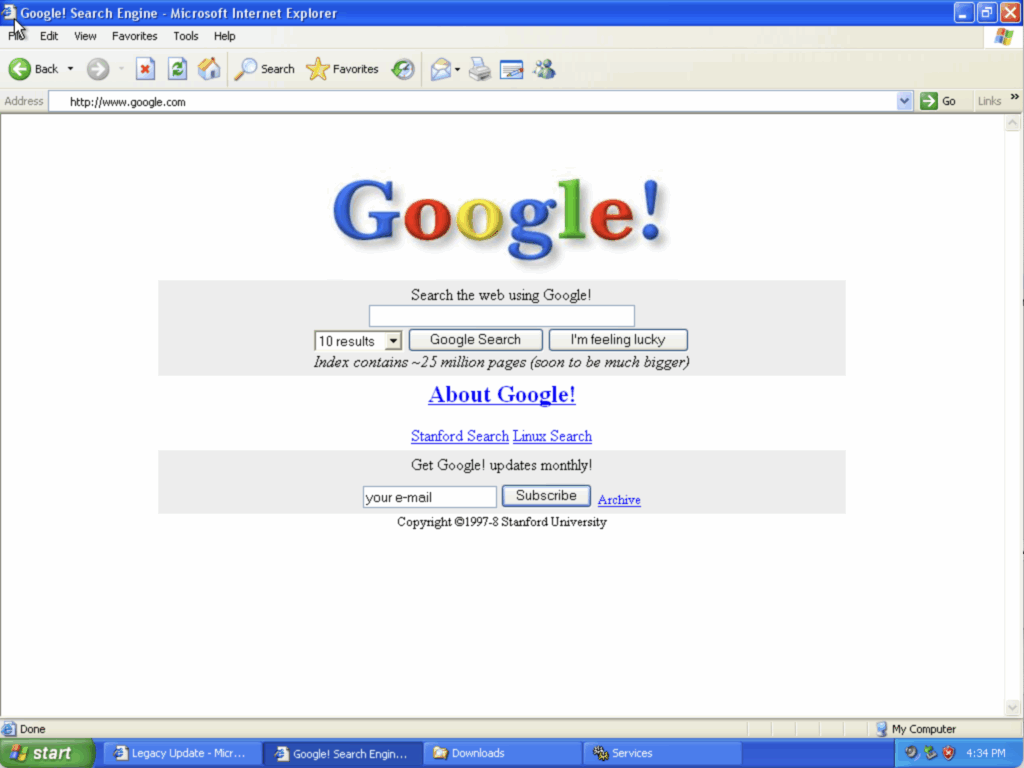
Google.com as it appeared in 1998.
Credit: Jeremy Reimer
In the middle of 1998, their prototype received more than 10,000 research per day. Page and Brin realized that they could be on something big. He was approaching the height of the Mania Dotcom, so they went to seek venture capital to start a new business.
But at the time, search engines were considered to be past. The new heat was portals, sites that had research features but strongly relied on sponsored content. After all, that’s where the big money was. Page and Brin tried to sell technology in Altavista for $ 1 million, but his parent company succeeded. The excitement also refused them, just like Yahoo.
Frustrated, they decided to comfort themselves and continue to improve their product. Brin created a colorful logo using the free gimp paint program, and they added a summary extract to each result. Finally, the pair received $ 100,000 from the providential investor Andy Bechtolsheim, who had co -founded Sun Microsystems. It was enough to take off the business.
Page and Brin paid attention to their money, even after receiving millions of other venture capital companies. They preferred cheap basic PC equipment and the free Linux operating system when they extended their system. For marketing, they mainly count on word of mouth. This allowed Google to survive the Dotcom accident which paralyzed its competitors.
However, the company finally had to find a source of income. The founders feared that if the research results were influenced by advertising, this could reduce the usefulness and precision of research. They compromised by adding short and textual announcements which were clearly labeled as “sponsored links”. To reduce costs, they have created a form so that advertisers can submit their own announcements and see them appear in a few minutes. They even added a classification system so that more popular advertisements reach the summit.


