Wolf Supermoon, Fiery Meteors, and a Planet Parade Make Early 2026 an Astronomical Feast


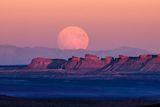
The first full moon of 2026 will light up the night sky on Saturday, January 3, giving sky watchers a bright and memorable start to the year. Known as the Wolf Moon, this full moon will reach peak illumination at 5:03 a.m. EST, meaning the best views will occur late Saturday night into the early hours of Sunday morning.
To add to the spectacle, this Wolf Moon is also a supermoon, appearing noticeably larger and brighter than an average full moon thanks to its proximity to Earth. A supermoon occurs when the Moon reaches its fullness near perigee – its closest point to Earth in its orbit – which brings out lunar features with added clarity.
January 3 marks the first of three supermoons of 2026, with the others arriving on November 24 and December 23. Fortunately, casual observers should have no trouble spotting the Super Wolf Moon, even in heavily light-polluted areas.
Why is it called the Wolf Moon?
The name Wolf Moon is often attributed to the increased noise of wolves howling during the winter. According to the Farmer’s AlmanacThe term is thought to have Celtic and Old English roots which European settlers later imported to North America. Over time, the name became linked to the idea that wolves were more active, or at least more audible, during the long, cold nights of January.
Despite persistent folklore, scientists have found no evidence that lunar phases influence wolf behavior. Living with wolves note that wolves howl to communicate, not to serenade the Moon.
Their winter vocalizations serve practical purposes such as locating pack members, strengthening social bonds, marking territory, and coordinating hunts. Wolves often raise their heads to the sky while howling because the upward projection of sound allows it to travel further through dense air – not because the Moon itself triggers the call.
Still, the haunting combination of snowy landscapes and echoing howls likely helped solidify the Wolf Moon’s place as an intriguing astrological event.
Learn more: Earth and the mysterious planet Theia were probably close neighbors before the formation of the Moon
Other Sky 2026 events not to be missed
Beyond January’s supermoon, the start of 2026 presents several astronomical highlights worth putting on the calendar.
NASA says this is a Blue Moon year, meaning there will be 13 full moons instead of the usual 12. By the most commonly used definition, a Blue Moon is the second full moon in a single calendar month. This additional full moon will arrive on May 31, 2026, an event that will only become possible when the first full moon occurs very early in the month. This pattern repeats itself about every two to three years, so if you miss this one, you’ll have to wait until 2028 for another chance.
Blue moons are not actually blue, but their origin dates back to a historical misunderstanding by amateur astronomer James Hugh Pruett. The Moon can appear blue – an extremely rare phenomenon – due to atmospheric effects such as volcanic ash, smoke or unusual cloud conditions, and has nothing to do with the calendar-based Blue Moon designation.
According to the Royal Museums Greenwich, the start of 2026 will also offer several other sky-watching pleasures. The Quadrantids meteor shower will be active from December 28, 2025 to January 12, 2026 and is known to produce particularly bright fireballs. On January 10, Jupiter will reach opposition, shining at its peak as the Sun fully illuminates its face.
February 2026 will be a privileged period for observing galaxies in the Northern Hemisphere, including the possibility of spotting the Andromeda Galaxy with binoculars, a telescope or even with the naked eye under sufficiently dark skies. This same month will also see a parade of planets, with Mercury, Venus, Saturn, Jupiter, Uranus and Neptune all visible in the night sky.
Learn more: Catch the last supermoon of 2025 with the cold moon of December
Article sources
Our Discovermagazine.com editors use peer-reviewed research and high-quality sources for our articles, and our editors review the articles for scientific accuracy and editorial standards. See the sources used below for this article:


