Workers are facing dangerous heat — even inside fast-food restaurants


Not long ago, Guillermina met a colleague in his doctor’s office. The two women work together in a McDonald’s near San Jose, California. When Guillermina asked what her colleague did to the doctor, she replied that she felt sick, adding: “You know how hot it gets in the kitchen.”
Guillermina understood. She is the director of the quarter at McDonald’s and has been working in fast food for 22 years. The air conditioning of her building is old, she said, and is not designed for the burning summer temperatures they experience today. Last year, the employees went on strike after the temperatures in the kitchen exceeded 100 degrees Fahrenheit.
According to Guillermina, she and her colleagues – mainly women, mainly Spaniards – often work through excessive heat, struggling with dizziness, headache and fatigue, to the point of vomiting.
She tried to comfort her colleague. Guillermina is a member of California Fast Food World Union, a new effort from the International Union of Service Employees, or Seiu, to organize low -wage workers and fast food. She had invited her colleague to join the union several times before, but she had always refused. At the doctor’s office, Guillermina took another chance to his land, but her colleague responded clearly: she and the other employees were afraid.
In an interview in Spanish, Guillermina shared that she also feared reprisals in the workplace for the organization. (GRIST identifies Guillermina only by her first name to protect her identity.) Twice, she had had her hours, and after she and her colleagues went on strike, her managers threatened her, saying that because of her, they were all going to be dismissed.
This month, Seiu organized a series of actions with workers like Guillermina in California, to protest against dangerous heat in fast food restaurants. In San Jose, workers from a site in El Pollo Loco came out at work and made a two -day strike after the restaurant temperatures reached 90 degrees Fahrenheit. The union’s “heat week” is the last of a new wave of work work focused on the impact of climate change. But the reasonable fear that Guillermina and his colleagues face underline the challenges to keep employers responsible for workers’ safety on a warming planet.
“I was retaliated against it,” said Guillermina, “and I’m not doing well, physically or mentally, because of this.” After the strike, when her hours were reduced, she has lagged behind payments and invoices for cars. Her husband, who suffers from diabetes and hearing problems, cannot work, and without her usual income, she could not afford the grocery store. Later, she went to the hospital with signs of cardiac arrest. “But I’m not going to be silent, and I’m not going to leave the union,” she said. “This is the only place that cares about me knowing my rights.”
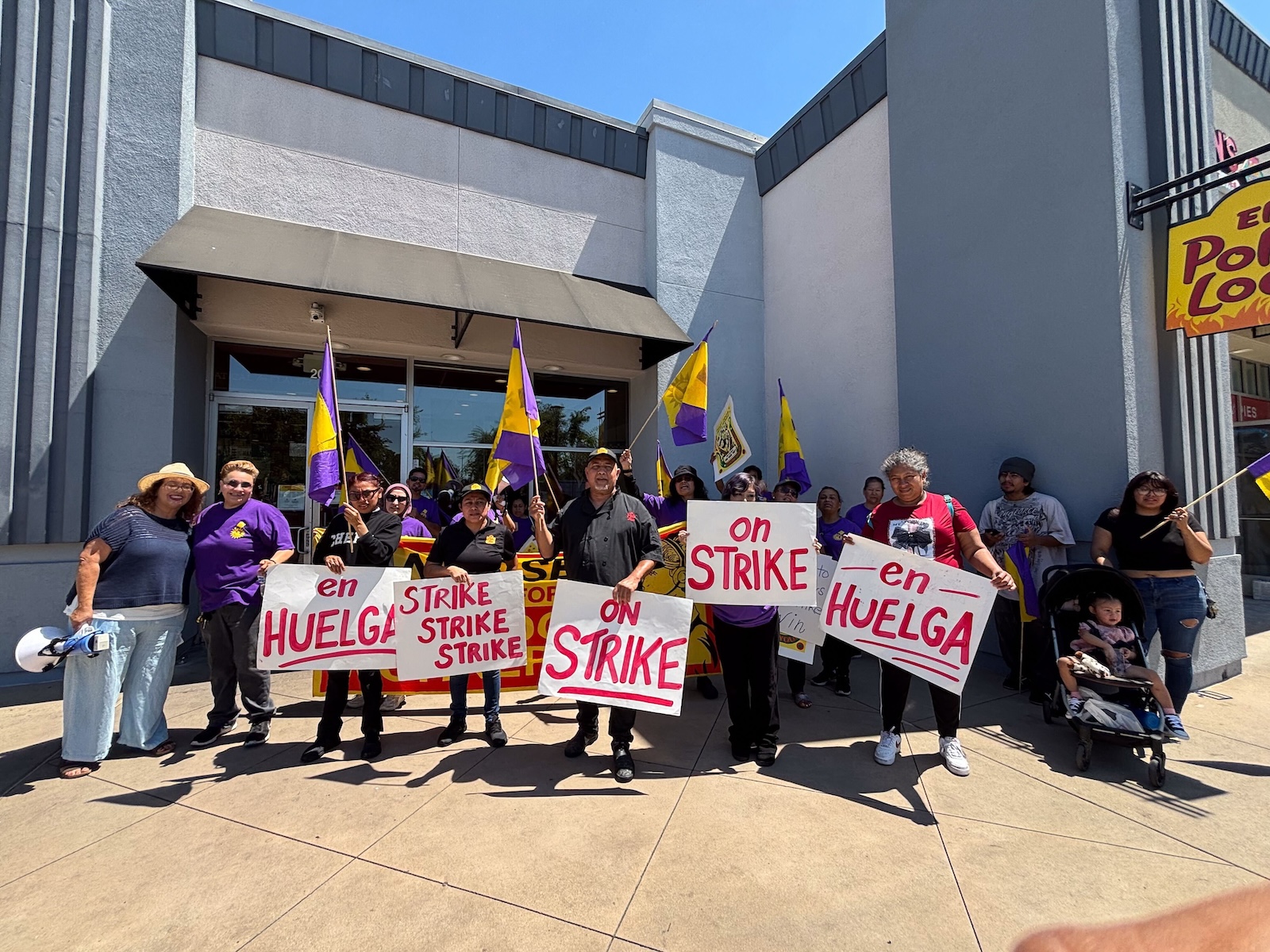
Heat is the deadliest meteorological event in the United States and for decades, fighting to protect American workforce against heat-related diseases has focused on outdoor industries, such as agriculture and construction. But more and more, the work movement, defenders of environmental justice and political decision -makers recognize that interior workers are also vulnerable to the effects of extreme heat. It is common in the fast food industry, for example, so that lobbies and seats are very climatic – but there are many heat sources in restaurant kitchens, which makes them extremely difficult to cool.
Workers who fight to level these disparities intimately understand the link between the thermal stress they experience inside and the exhausting heat outside, said Yana Kalmyka, a work organizer. Since 2023, Kalmyka volunteers with the emergency working working committee, or Ewoc, a project born of the cocovious pandemic to help workers organize themselves in response to the unforeseen public health crisis. EWOC was particularly effective in organizing restaurants and fast food workers.
These workers “believe that heat is getting worse every year. They also know that if he is really hot and that their boss pushes them to place orders in 45 seconds, that the speed with which they are forced to move to exacerbate their thermal stress, “said Kalmyka, who previously helped organize Starbucks workers in Texas.
It is not only that restaurants, coffees and chains in the event of fast fasting can lack adequate climate control – or that the work next to a hot oven is physically exhausting. If workers move to work during a heat wave, especially if they walk, cycle or count on public transport, they often start their quarters of work with a certain degree of exposure to heat. Once around the world, conditions are increasing the chances of health complications.
“Unfortunately, this problem is only getting worse,” said Kalmyka, “because climate, we do not act the types of changes that we have to bring as a company to prevent extreme heat from worsening.”
In California, employers are now required to offer water breaks and rest areas for interior workers when the temperature exceeds 82 degrees Fahrenheit. However, a new Seiu report revealed that three out of five fast food workers reported excessive heat in their restaurants and have experienced almost half of the heat -related disease symptoms.
Laura Stock, author of the preface to the Seiu report, previously sat the CAL / OSHA standards, which establishes the state of work in the workplace. When the domestic heat rule has been under development, Stock said, testimonies of workers, including those of fast food workers and restaurants, have demonstrated the need for stronger protections. “It was a great victory to pass these rules,” said the action. “But the only way it has a value is if it is applied.”
Chicago has the most lead pipes in the country. We have all mapped them.
In this way, California is a kind of test case for the United States because the federal government considers a national standard of heat for outdoor and interior workers. Last year, professional security and health, the Federal Workplace Safety Agency, shared a draft text from a proposed rule aimed at protecting workers from thermal stress and disease; It includes provisions that defenders have described as necessary and common sense, as employers who give access to drinking water and the shade, as well as the training of employees on how to identify signs of heat -related disease. The agency seems to go ahead with the finalization of the rule, although the experts fear that the Trump administration can stifle the process. It is in this context that Seiu is organized, at a time when “it is not clear if the Trump administration will cancel or move forward with the right heat standard of Biden de Biden of Biden,” said Steven Greenhouse, a former work journalist for the New York Times.
The results of the SEIU survey of fast food workers suggest that, even in the best of cases, well -written laws can be amazed without awareness, education and in -depth application. This presents a problem in California, where Cal / Osha suffers from staff shortages.
But even if the law has been perfectly followed, workers like Guillermina claim that current regulations, as well intentioned as they can be, are insufficient when employers appreciate the profits from the safety and comfort of employees. For example, California’s interior heat rule specifies that employers should provide workers with a cool place to rest when temperatures increase to 82 degrees Fahrenheit and encourage proactive breaks. But Guillermina says that rest is often a lost cause in its McDonald’s, where the kitchen has two or three women at most. “If it’s rush hour, when the restaurant is in its busiest and orders continue to come, even if workers die from heat, do you think they can stop and take a break?” She said.
When interior temperatures exceed 87 degrees Fahrenheit, California’s inner heat rule forces companies to slow down the pace of production. However, Guillermina says that workers’ health is often a reflection afterwards for the bosses. “We are only a certain number for them,” she said, “and when we make them money, it has a personal cost for our safety.” She says that what would really help is if the leadership stared at the air conditioning in their kitchen.
The Seiu report revealed that four out of five fast food workers reported problems with their air conditioning, and half the management said it was “too expensive” to permanently repair these household appliances.
If the right laws are insufficient to protect workers, then the UNUS belongs to defense of the fight to fight for change. “It is very important to act collectively,” said the action, adding: “Your rights are often easier to protect if you work in a group.” Although the Guillermina store has not participated in any shot of heat week, she hopes that her colleagues will be able to overcome their fear to increase standards at work. “We have rights, like all other workers,” she said, “and we have to know.”


