NASA is leading the way to the Moon, but the military won’t be far behind


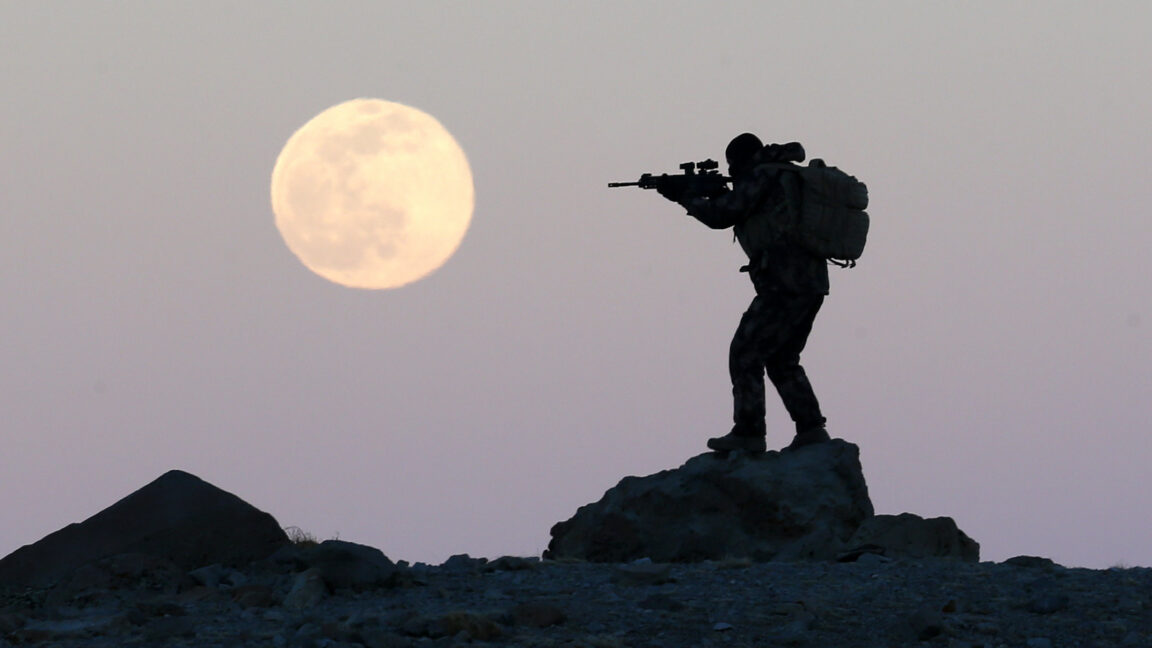
But observing objects in cislunar space from Earth is not easy. First, the Moon is a quarter of a million miles away, so spacecraft or debris will appear extremely faint to sensors near Earth. The Moon and Sun far eclipse these objects. Second, using a satellite stationed near the Moon to obtain a fix and vector for an object requires precise navigation, a capability not easily available without reliable GPS signals.
If anyone today knows exactly where a satellite around the Moon is located, it is thanks to the generosity of its operator. If they wish, spacecraft owners can provide detailed ephemeris data, revealing their location and movements, but there is no way to force an operator to publish this information. Some operators may not want to share their location to gain a competitive or strategic advantage.
There is also a risk of a satellite in lunar orbit disintegrating, which could create a space debris field. There is currently no way to track such small fragments at lunar distances, increasing the risk of damaging or destructive collisions. If a lunar satellite disintegrated, it could “compromise international scientific missions and destabilize emerging lunar economic activity,” according to a 2025 report from the Miter Corporation, a nonprofit organization that operates several federally funded research centers.
Some generals are bringing the subject of lunar military operations back to Earth. In 2024, Ars asked Space Force Maj. Gen. Anthony Mastalir, then a one-star general, about the military’s vision of the Moon. It identified a potential adversary’s use of the Moon or its orbits around it as a launching point for an attack against U.S. assets closer to Earth.
“We are not fighting for mineral deposits on an asteroid somewhere. We are not, at the moment, driving convoys to Mars,” Mastalir said. “These are terrestrial conflicts that we hope we can deter. We also don’t want them to extend into space or even start in space, although it is increasingly likely that they will spread into space.”
“Someday in the future that might change, but for now I would be more concerned about what these new orbits present, what that does to potential attack vectors for our traditional operations. [areas].”