You Might Be Misreading Your Dog



Explore
IIf you’ve ever looked deep into your pup’s eyes and felt like you were surfing the same emotional wavelength, you might be missing the point: People’s moods seem to cloud how they perceive their dogs’.
Research on people’s interpretations of canine feelings has yielded mixed results: Some work suggests we can discern them clearly via behavior or facial expressions, while other findings point to factors that may bias our interpretations. These include the animal’s environment and familiarity with dogs, the latter of which can cause people to overlook signs that dogs are unhappy.
Another element that can cloud our judgment about the dog’s emotions: our own moods. People’s feelings can shape how they perceive those of others, researchers have found. A team from Arizona State University wanted to know if this same phenomenon also applied to human perception of dogs.
ADVERTISEMENT
Nautilus members enjoy an ad-free experience. Log in or register now.
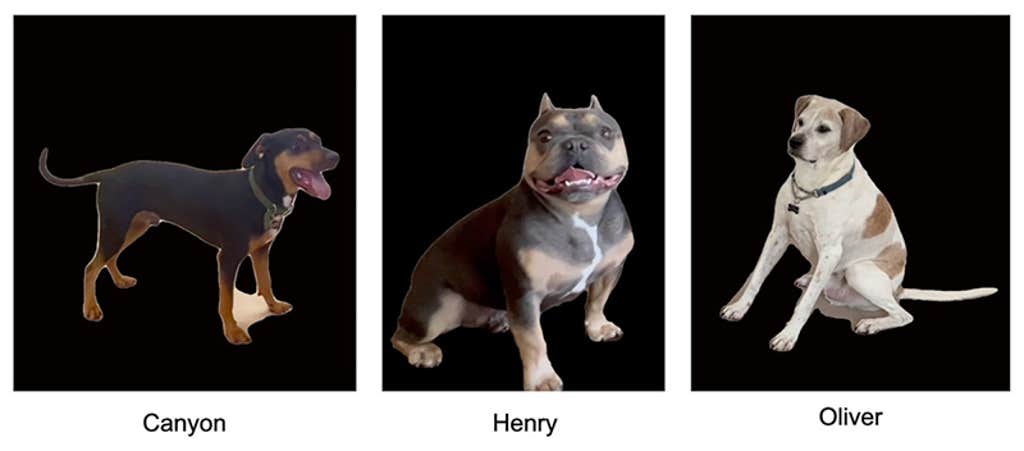
The researchers recruited 600 participants, all undergraduate psychology students, whom they interviewed in two experiments. In the first experiment, participants were divided into groups and instructed to look at images of people, landscapes, and other scenes intended to elicit positive, neutral, or negative emotions. Then they watched a series of video clips of three dogs filmed in situations that their owners believed would cause the dogs to feel positive, neutral, or negative emotions. In one survey, subjects rated how happy, sad, calm, or excited the dogs felt. Ultimately, participants’ initial mood did not significantly affect their ratings of the dogs’ moods.
In a second experiment, the researchers induced positive, neutral, or negative moods in participants by showing them photos of dogs to which other people had rated their own emotional reactions in a previous article. Then, this second group watched the same dog videos as in the first experiment and estimated the animals’ emotional states. This had an intriguing effect: participants in a good mood tended to guess that the dogs were sadder, and people in a bad mood tended to guess them as happier.
ADVERTISEMENT
Nautilus members enjoy an ad-free experience. Log in or register now.
Read more: “Why do some people look like their dogs? »
“This was a surprising discovery,” the authors write in the article published in PeerJ. The images of dogs presented at the start of the second experiment “significantly altered their emotional interpretations, but in the opposite direction to that typically observed.” The results suggest that human understanding of dogs’ moods is more likely to be influenced by dogs themselves than by other stimuli that can affect our emotions.
The researchers noted that their paper “may have uncovered new dynamics” through these cross-species observations. They also found that dog videos boosted subjects’ moods, consistent with previous research. Anecdotally, many people can attest to the power of animal clips to lift their spirits.
ADVERTISEMENT
Nautilus members enjoy an ad-free experience. Log in or register now.
A few caveats: the participants were all undergraduates, the videos only included three dogs, and their affective states were all “assumed” based on the owner’s interpretation.
In future studies, scientists hope to compare how pre-viewing images of different creatures, including domestic cats and wild animals, affects pets’ emotional perception. Ultimately, the authors write, refining our understanding of animal feelings can “have concrete implications for how we perceive, empathize with, and care for dogs and other animals.”
Enjoy Nautilus? Subscribe for free to our newsletter.
ADVERTISEMENT
Nautilus members enjoy an ad-free experience. Log in or register now.
Main image: Nancy Sticke / Pixabay


