Your Brain Has Five Ages — And They Shape How You Think for Life


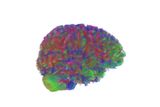
From infancy to old age, the human brain does not change in a fluid arc. Instead, it goes through a series of rewiring events that reshape the way we think, learn, and remember. Now, researchers at the University of Cambridge say these changes divide the brain’s lifespan into five major structural epochs, separated by turning points at approximately ages 9, 32, 66 and 83.
The study, published in Natural communicationsanalyzed diffusion MRI scans of 3,802 people between infancy and age 90, tracking how water moves through brain tissue to reveal how neuronal connections are organized.
“We know that the brain’s wiring is crucial for our development, but we don’t have a comprehensive idea of how it changes over the course of our lives and why,” lead author Alexa Mousley said in a press release. “This study is the first to identify the main phases of brain wiring throughout the human lifespan.”
Learn more: Brain imaging during the critical midlife window could detect cognitive decline
How the brain reorganizes itself from childhood to adolescence
The first era extends from birth to age nine, when the brain undergoes “network consolidation.” Babies start out with excessive neural connections, which are strengthened or pruned as children grow. During this period, gray and white matter develop and the outer surface of the brain stabilizes.
By the age of nine, these changes trigger a neurological change – linked to increased cognitive abilities, but also increased vulnerability to early mental health problems.
The second period – adolescence – lasts longer than many people think, extending into the early 30s. During this period, white matter continues to develop and the brain’s communication networks become more efficient.
“Neural efficiency is, as you might imagine, well connected by short paths, and the adolescent era is the only one in which this efficiency increases,” Mousley said.
Marking the brain’s biggest structural change
Researchers have identified age 32 as the most important turning point in one’s entire life – the moment when adolescent brain architecture finally gives way to adulthood.
“Around age 32, we see the greatest number of changes in wiring direction and the greatest overall change in trajectory, compared to all other turning points,” Mousley said. “While puberty provides a clear start, the end of adolescence is much more difficult to pin down scientifically. Based on neural architecture alone, we found that changes in adolescent-like brain structure end around the early 30s.”
From this point on, the brain enters its longest and most stable era: adulthood, which lasts more than three decades. Brain networks become more compartmentalized and intelligence and personality traits tend to plateau.
Subtle changes in aging – and a major turning point at 83
The next era begins at age 66, marking the start of an early aging phase. The researchers did not observe dramatic structural changes, but they detected a gradual reorganization of brain networks.
“The data suggest that a progressive reorganization of brain networks peaks in the mid-sixties,” Mousley said. “This is likely linked to aging, with further reduced connectivity as white matter begins to degenerate. This is an age when people face an increased risk of developing various health problems that can affect the brain, such as hypertension.”
Around age 83, the brain enters a final stage of aging. The defining pattern is the abandonment of global brain communication in favor of an increased reliance on localized regions as global connectivity decreases.
The health impact of brain life stages
Many conditions that affect thinking and behavior are linked to how the brain is wired, and this new map could help scientists identify times when vulnerability is highest.
“Understanding that the brain’s structural journey is not a matter of steady progression, but rather one of a few major turning points, will help us identify when and how its wiring is vulnerable to disruption,” lead author Duncan Astle said in a press release.
Learn more: How magnetic brain scans could reveal brain age
Article sources
Our writers at Discovermagazine.com use peer-reviewed studies and high-quality sources for our articles, and our editors review them for scientific accuracy and editorial standards. See the sources used below for this article:


