Your Sleep Tracker Could Be Keeping You Awake


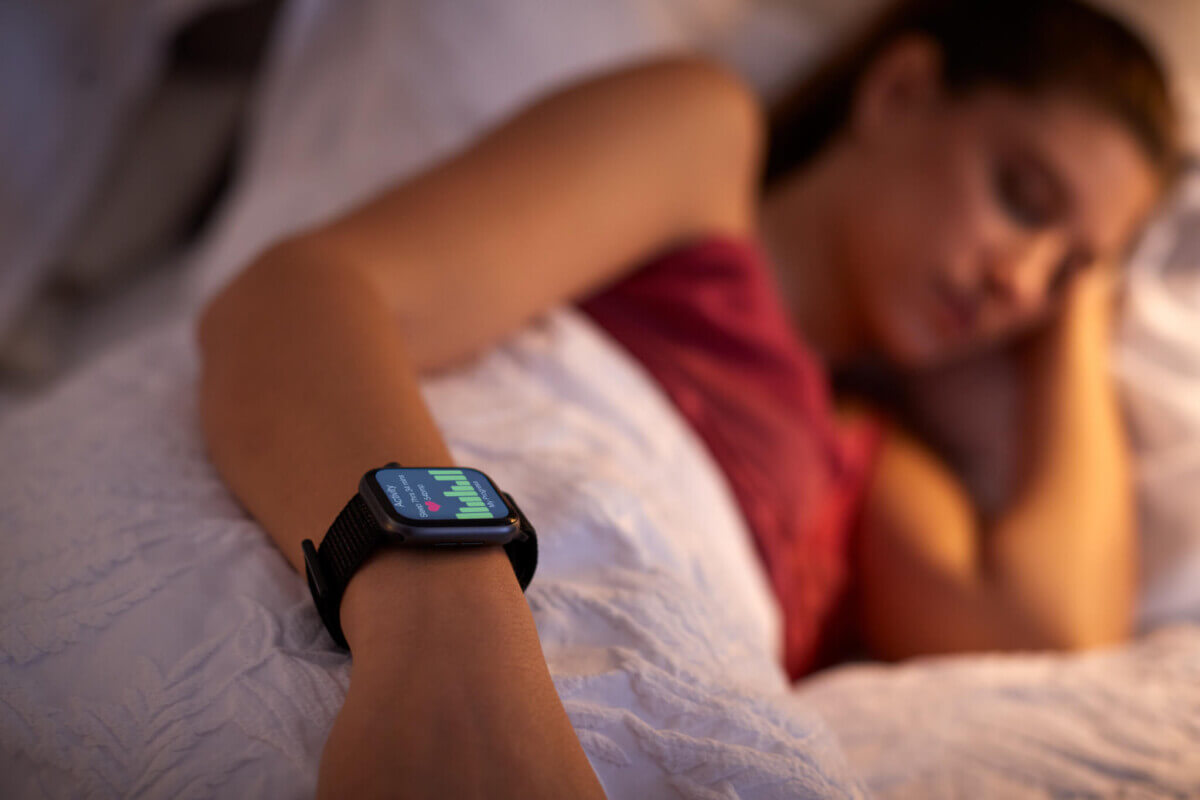
(© Monkey Business – stock.adobe.com)
In a word
- Nearly half of adults surveyed have used a sleep app, but only 15% said it actually improved their sleep.
- A notable share of users reported feeling more anxious and worried about their sleep after using a tracker, not less.
- People with insomnia were significantly more likely to experience negative effects from sleep apps, including increased worry and feeling like something was wrong with their sleep.
- Younger adults reported the strongest overall reactions, both positive and negative, and were much more likely to feel stressed by what the data showed.
Strapping on a smartwatch before bed seems like a smart way to take charge of your sleep health. Track data, spot patterns, sleep better. This is the pitch. But a new study suggests that for a growing number of people, obsessing over those late-night readings is becoming a sleep problem in itself, so the people who need the rest the most might also be the most vulnerable to its downsides.
Researchers at the University of Bergen in Norway surveyed more than 1,000 adults about their sleep app habits and found that a significant share of users said the apps made them more anxious about sleep, not less. For people already struggling with insomnia, these negative effects were even more pronounced. And although nearly half of all adults in the study had used a sleep tracker at some point, only about 15% said it actually helped them sleep better.
Sleep tracking apps and wearables, including devices like Fitbit, Apple Watch, and Oura Ring, have exploded in popularity over the past decade. They use built-in sensors to measure movement, heart rate, and other signals, then translate that data into reports on sleep duration, stages, and overall sleep scores. This seems useful in theory. But the new research, published in Frontiers of Psychologyraises a pointed question: for some users, is all this data doing more harm than good?
When sleep apps become a source of stress
There is a term to describe what happens when sleep tracking goes off track: orthosomniadefined as “excessive preoccupation with sleep.” Rather than falling asleep, some users focus on last night’s score, dreading a low result or treating normal variations in sleep data as signs that something is wrong. A well-being tool becomes a source of fear.
About 18% of sleep app users in the study said these apps made them more worried about their sleep. Another 14% said their use made them feel like something was wrong with their sleep, a concern that may or may not be justified. Only 2.3% said their sleep had actually deteriorated, but the toll on anxiety was clearly greater.
Young adults felt it the most. About 23% of users aged 18 to 35 said the apps made them stressed about sleeping, compared to just 2.4% of those 66 and older. Researchers found that young adults were more likely to report both positive and negative reactions to sleep data. One possible explanation is that younger users interact more closely with comments on apps, although the study did not directly test this.

The Insomnia Trap: Sleep Apps May Backfire on Those Who Need Help Most
For people suffering from insomnia, the situation becomes more troubling. People with chronic sleep difficulties already tend to be hypervigilant when it comes to rest, cataloging restless nights and bracing for another bad one. A nightly report of poor sleep efficiency or irregular sleep phases can reinforce precisely these patterns, potentially fueling anxiety rather than relieving it.
In the study, people with insomnia reported significantly higher levels of negative effects from using a sleep app than people who did not have the condition. They were more likely to say the apps made them feel like something was wrong with their sleep and more likely to report increased worry. The article states that “it may be wise to caution patients with sleep problems against such use.” Although some more in-depth statistical analyzes revealed that the link between insomnia and specific negative outcomes was not definitive across the board, the overall pattern was consistent enough to merit attention from doctors and patients.
This observation carries a certain irony. People suffering from insomnia are among the most motivated to find a solution to their sleep problems, and consumer sleep technologies are largely aimed at this audience. Yet these users seem most vulnerable to the anxiety that data can trigger.
Sleep apps are popular, but their benefits are modest
Of the 1,002 study participants, 46% reported using a sleep app at some point, with smartwatches being by far the most common device. Women used them more than men, and their use declined sharply with age: around 57% of adults under 50 had tried them, compared to only 18% of those aged 66 and over.
Among users, the most commonly cited benefit was learning something new about their sleep habits, reported by about 48 percent. 43% said they found the apps genuinely useful. But only 15% said their sleep had actually improved. There’s a real gap between “it was informative” and “it helped me relax.”
Part of the shortfall may be due to what these apps are designed to do. Consumer sleep trackers are not designed to replace clinical sleep tests, which can measure sleep much more accurately. This means that devices can sometimes flag normal nighttime variations as potential problems, prompting users to worry about data points that carry no real medical weight.
Sleep apps may well have their place for curious, generally healthy adults who want to get a rough idea of their sleep habits. But for those who are already losing sleep over sleep, data may be the last thing they need.
Disclaimer: This article is based on a single observational study conducted in Norway and reflects participants’ self-reported data. The results show associations and not cause and effect relationships. Readers suffering from chronic sleep problems or insomnia should consult a qualified health care provider rather than relying on consumer sleep technology for diagnosis or treatment.
Paper notes
Boundaries
The study was conducted in Norway using an online survey sent to a self-selected web panel rather than a randomly selected sample, raising the possibility of selection bias. The response rate was 19.8%, and because participants were informed in advance that the survey covered sleep and mental health, those with personal experiences in these areas may have been more likely to respond. Insomnia was assessed using a validated questionnaire rather than clinical interviews, meaning that some underlying sleep conditions may not have been fully captured. Sleep app use was measured based on lifetime use rather than current or sustained use, limiting conclusions about how frequency or duration shapes results. Because the study is cross-sectional, it can’t establish whether sleep apps cause negative effects or whether people already prone to sleep anxiety are simply more likely to report them.
Funding and disclosures
No financial support was received for this research or its publication. The authors declared no commercial or financial conflicts of interest and stated that generative AI was not used in the creation of the manuscript.
Publication details
The study, “Sleep in the Age of Technology: Use of Sleep Apps and Perceived Impact on Sleep and Sleep Patterns,” was authored by Håkon Lundekvam Berge, Karl Erik Lundekvam, Siri Waage, Bjørn Bjorvatn, Ståle Pallesen, and Ingvild West Saxvig, all affiliated with the University of Bergen, Norway; Waage, Bjorvatn and Pallesen are also affiliated with the Norwegian Competence Center for Sleep Disorders at Haukeland University Hospital. Published on March 20, 2026 in Frontiers of PsychologyVolume 17. DOI: 10.3389/fpsyg.2026.1726473.


