Your SSD is hiding extra speed. Unlock it with these 5 tweaks


Functionality
Adjustments that make the difference!

Image: Pexels: Andrey Matveev
Regarding performance adjustments, we tend to think of slight changes that we can make to our CPU or GPU parameters that will make a difference. But it is also possible to suppress more performance from your SSD. Here are some impressive ways to get more flow from your SSDs.
Keep the capacity at less than 80%
SSDs tend to slow down considerably when more than 80% capacity is used. For this reason, you will want to keep the ability lower than this limit. For example, if you have an SSD of 1 TB, I don’t have more than 800 GB of loaded files on it.
Adjust the power plan in Windows
The adjustment of the electrical plane of your PC prevents the SSD from falling asleep, removing the waiting time for it to wake up.
Part 1::
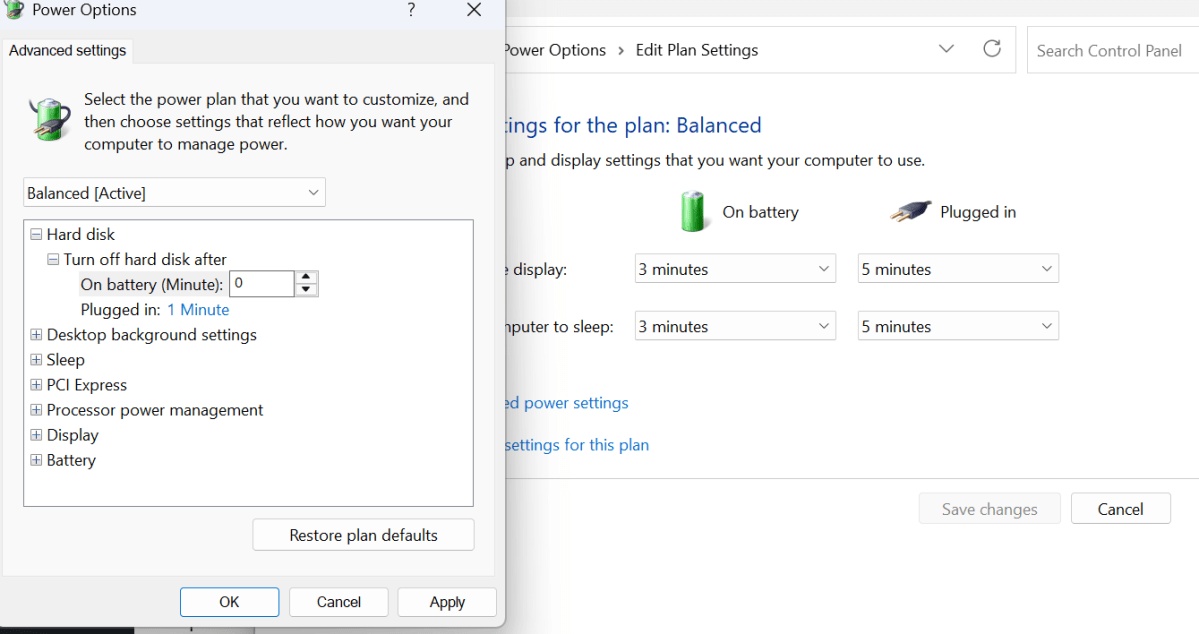
- Type Choose a power plan In the search area and click Enter. Select the upper result.
- Choose now Modify plan parameters on the right. In the next window, select Modify advanced power settings.
- Change now Disable the hard drive after at 0.
Dominic Bayley / Foundry
Part 2::
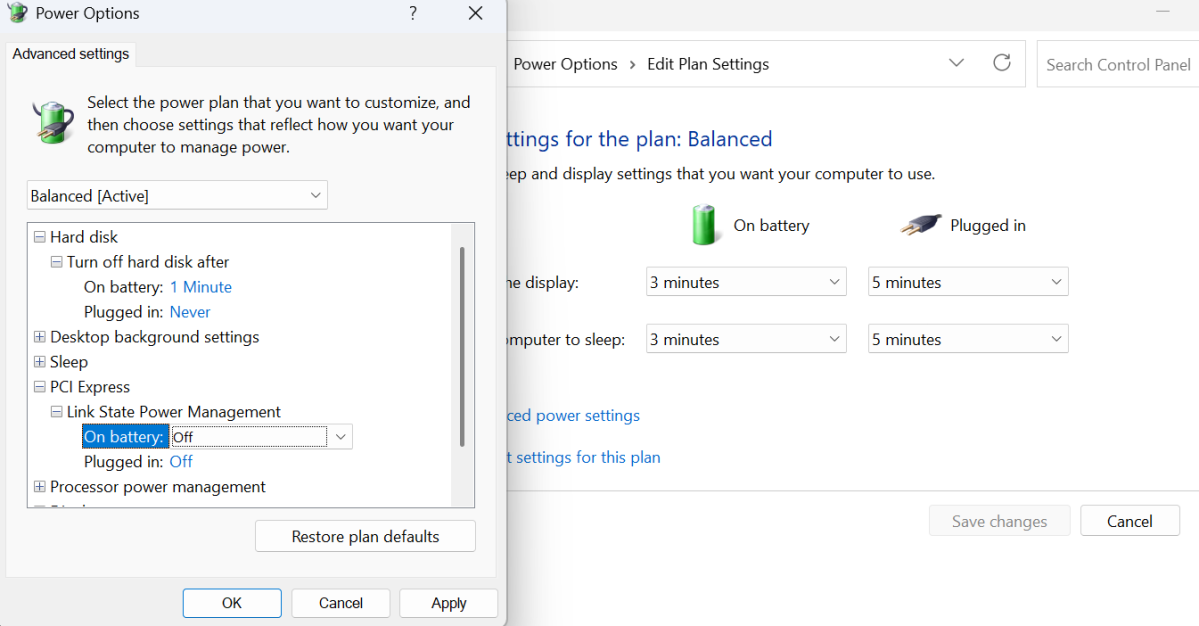
This prevents the PCIe bus from making a Down Clax, which slightly affects SSD performance.
- Below PCI Express> Link State Power Management Change the parameter from Maximum power management has Disabled.
Dominic Bayley / Foundry
Install the latest firmware update
Ows for firmware for SSD frequently treat bugs and can also provide performance updates. The classic example of this is the 5B2QGXA7 firmware for Samsung 980 Pro SSDS. This update stopped a problem where the state of health of the 980s deteriorated to the point where the SSD was unusable.
Make sure to know which public services to use to download the latest firmware updates. For Samsung SSDS, you can use the Samsung Magicic application.
Activate the garnish in the command prompt
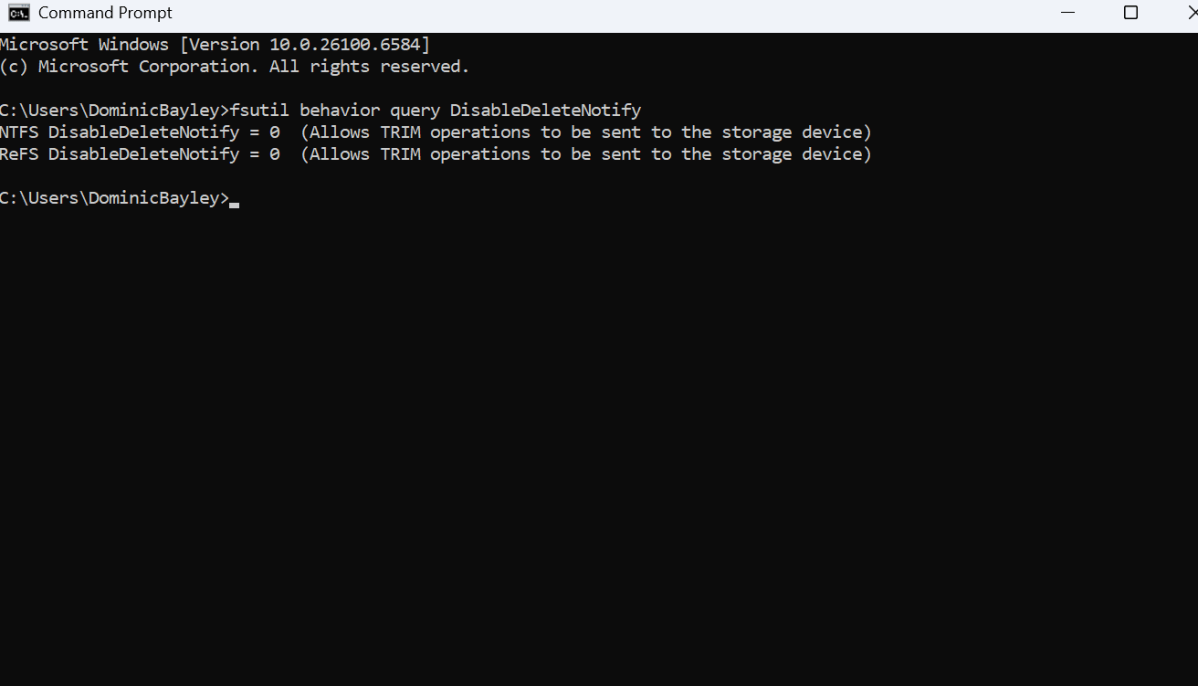
TRIM helps the SSD regularly clean up unwanted files. A clean SSD takes place naturally faster. To check if the garnish is on the type Cmd In the search bar and press Entrance to open it. Now type: Fsulil behavior of the deactivated request And click Enter. If the result is 0, the garnish is activated. If the result is 1, the garnish is deactivated and you will want to turn it on.
You can manually activate the garnish by performing the following command in the command prompt window: Fsulil releases deterification set desterification 0.
Conversely, to deactivate the garnish on SSD, enter the command: Fsulil gives off the decay 1.
Dominic Bayley / Foundry
Add a thermal dissipator
If your SSD does not have a thermal dissipator, you should get one, especially if you execute a PCIe Gen 4 or PCIe Gen 5. A thermal dissipator can siphon the heating of the SSD and keep it cooler. If your SSD is hot, this will allow it to operate again in its standard temperature range for optimal performance.
It is possible to find a name brand heat name for only $ 20; Or opt for a less known brand and get a simpler option for $ 10.


