Zombie worms have gone missing


If you’re leading a group of zombie apocalypse survivors, you don’t want to lose sight of the horde of brain-hungry creatures trying to eat you. The same can be said if the zombie worm Osedax disappears from the bottom of the ocean. Also called “the bone devourer,” the worm plays a crucial role in breaking down the bodies of larger organisms and maintaining a wealth of deep-sea biodiversity. Their loss can be a major harbinger of species loss and ecosystem decline due to climate change.
How the Zombie Worm Eats Bones
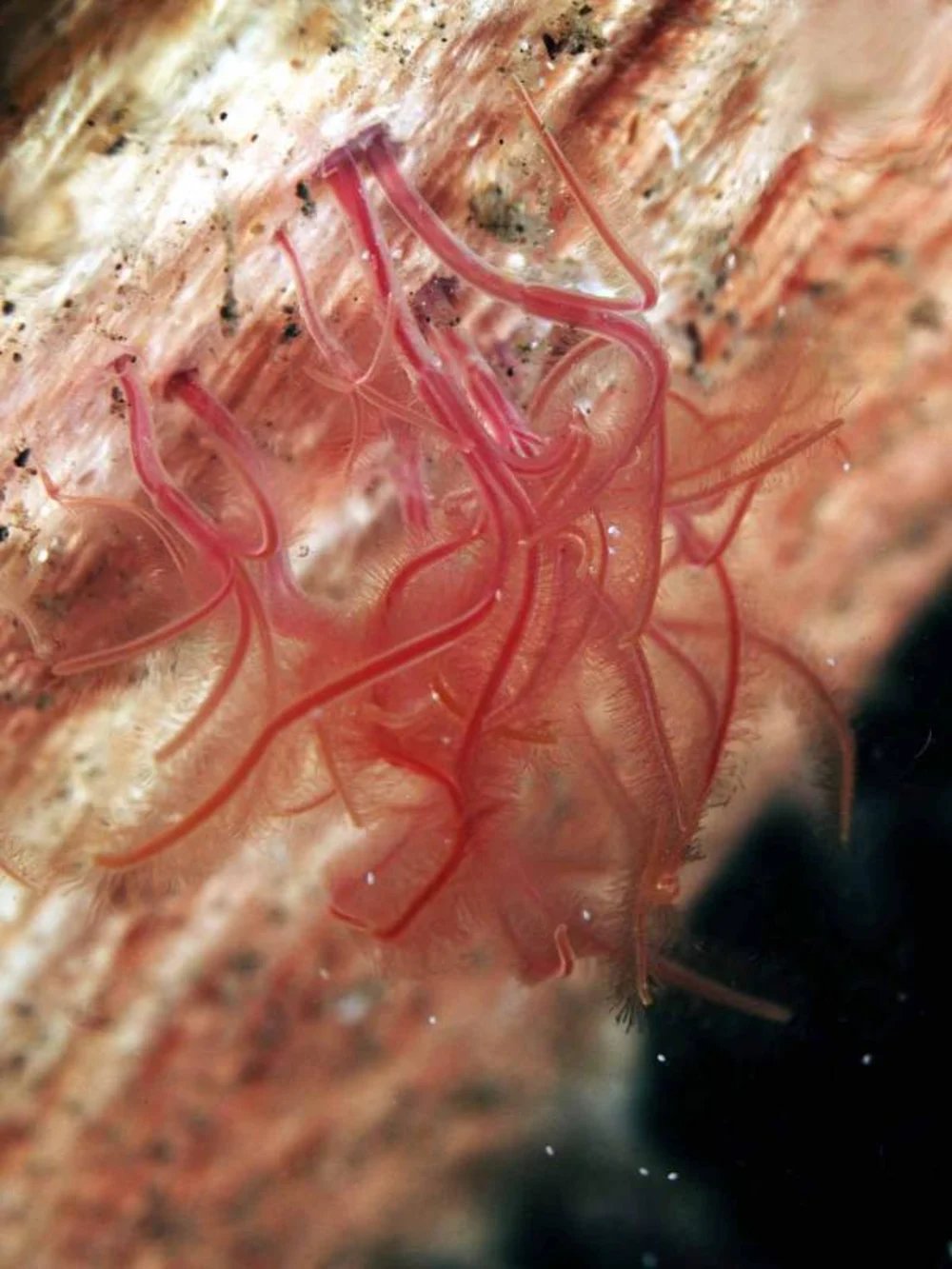
Discovered for the first time in 2002, Osedax worms are approximately one to three inches long. There are 26 known Osedax species and they are considered ecosystem engineer species.
Although they don’t have a mouth, anus, or digestive tract, their roots burrow into the bones of larger marine animals like whales. They secrete an acid from their skin that dissolves bones. Once the bone is dissolved, the fat and proteins trapped inside are released. Symbiotic bacteria living on the worms’ bodies then digest the fats and proteins. However, it is still unclear how Osedax obtains nutrients from this bacteria. It could be that they digest it or that the nutrients are somehow transferred to the worm via some mysterious mechanism.
Fall of a wormless whale
Studying the bones of humpback whales off the coast of British Columbia, University of Victoria and Oceans Networks Canada scientist Fabio De Leo found no evidence of the crucial worm. During 10 years of observation, their high-resolution cameras detected no colonization of these bones by zombie worms. This troubling result is called a negative result in scientific research and indicates that something is wrong.
“This is a remarkable observation in such a long-term experiment,” De Leo said in a statement, noting that low oxygen concentrations present at the observation site could play a role.
The whale bones were placed more than 3,000 feet below the surface of the Pacific, in Barkley Canyon. This oxygen-poor natural area is on one of the migration routes for humpback and gray whales that travel between Hawaii and Alaska. Whales that die from natural causes or human threats (collisions with ships, fishing gear, etc.) en route will sink to the bottom. This creates a food bonanza called whale falls. The remains are home to oceanic scavengers.
The absence of zombie worms on these bones suggests that the expansion of oxygen minimum zones in the northeast Pacific and elsewhere could disrupt these ecosystems more broadly. Preliminary data from other research on whale falls near another site suggests the zombie worms could also be affected elsewhere.
Connected homes
If the “bone-eating” zombie worm is not around to fulfill its ecological role, other species may be unable to colonize whale remains and utilize the essential nutrients contained in the whale carcass.
De Leo likens whale falls to islands that provide “stepping stone habitat” for worms and many other species that specialize in whale bones. Adult Osédax typically grow on whale bones and their larvae are dispersed great distances to populate other whale falls ecosystems hundreds of kilometers away.
“Basically we are talking about a potential loss of species,” De Leo said. “So that connectivity, those island habitats, will no longer be connected, and then you could start to lose a diversity of Osédax species at regional spatial scales.
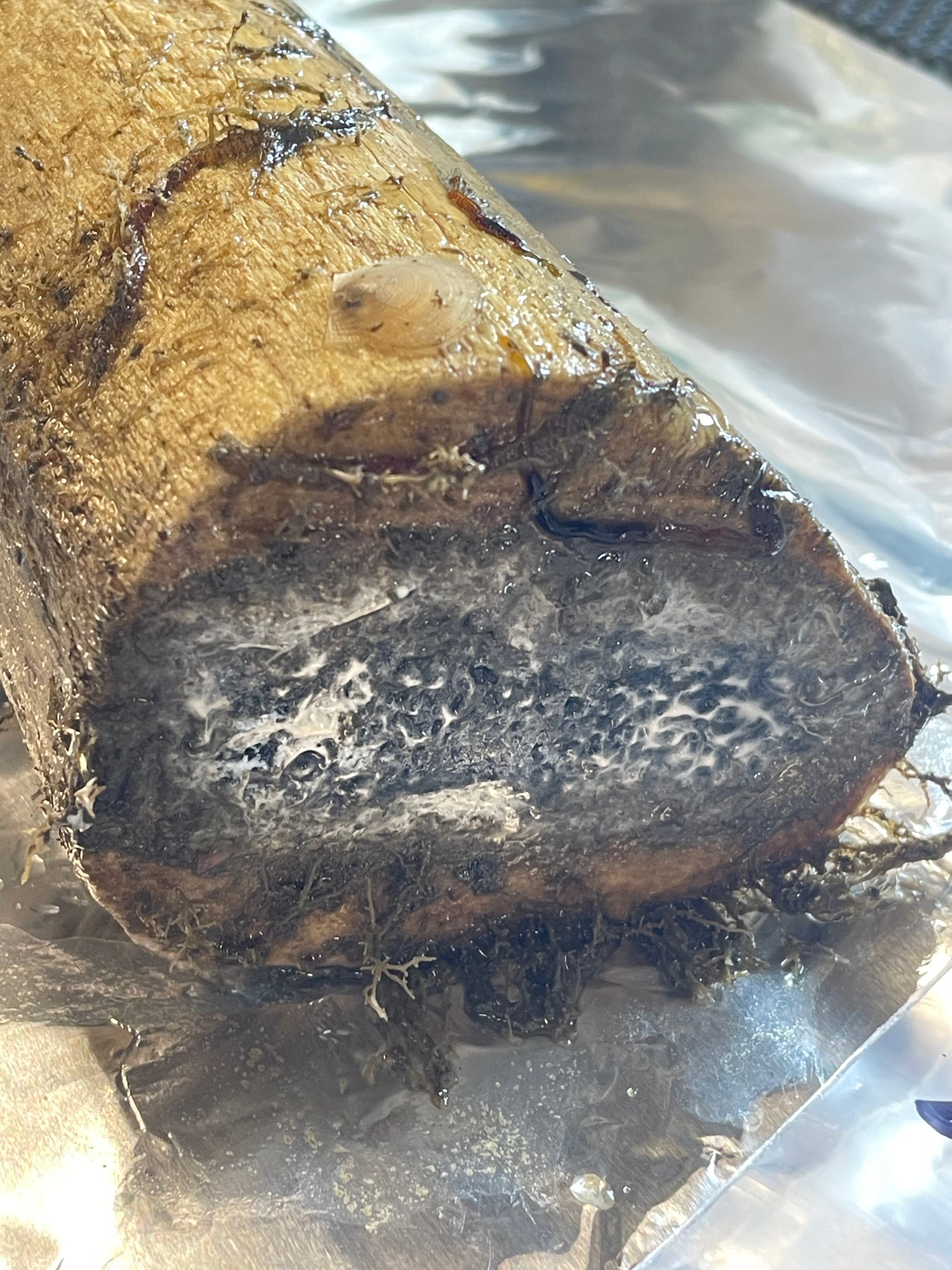
The team also discovered that another ecosystem engineer –Xylophage–also seems to be affected by stress due to lack of oxygen. These bivalves burrow into sinking wood and help it decompose. While they saw Xylophage On the experiment’s submerged wood samples, they colonized at much lower rates than in ocean areas with more oxygen.
“It looks like the OMZ [oxygen minimum zone] expansion, which is a consequence of warming oceans, will be bad news for these amazing whale-fall and wood-fall ecosystems along the northeast Pacific margin,” added University of Hawaii professor emeritus Craig Smith, who co-led the experiment.
The team will continue to monitor other sites with high-definition video and remotely operated vehicles to collect environmental data.

House of the Future Prize 2025


