10 fascinating facts about laser printers you probably didn’t know


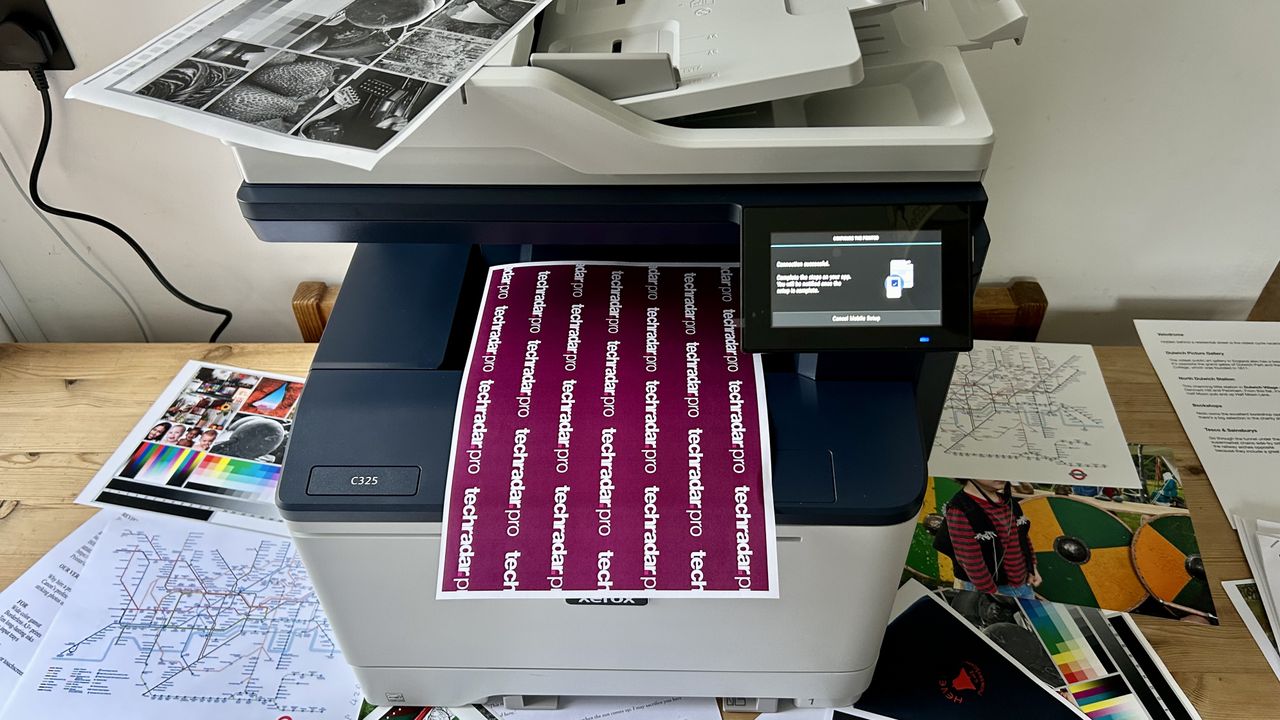
It may mean sitting in a corner of the office, printing and copying hundreds of documents for your business, but laser printers offer much more than you might expect.
Now we enjoy testing and reviewing printers of all types at TechRadar Pro – “Where would we be without them?” we wonder. And laser printers are particularly interesting (seriously!). Since the deployment of technologies that emerged in the 1960s, components that operate at searing temperatures, and ink that isn’t actually ink, there’s a surprising amount going on inside these unassuming machines.
You don’t believe us? Read on and discover ten incredible facts about laser printers – and you might look twice at your office device the next time you need to print a report.
Article continues below
1. Laser printers were invented in 1969
It’s no surprise that laser printers have a long history – after all, they’ve had time to become small, affordable and ubiquitous – but did you know that laser printers have been around since the 1960s?
The first laser printer prototype was developed by an engineer called Gary Starkweather, who worked in the product development department at Xerox.
Xerox dominated the photocopier market at the time, but it came up with the idea of using a laser beam to transplant a new design onto the copier drum, and the laser printer was born. He joined the Xerox Palo Alto Research Center in 1971, continued working on prototypes, and by 1976 the first commercial devices were in use in data centers.
2. There’s more to the story than you think
By 1982, laser printers were being produced commercially for home and business use, and Apple was reportedly involved, as Steve Jobs spotted the Canon LBP-CX while shopping for floppy disks for the upcoming Apple Macintosh computer.
Another printing pioneer, John Warnock, founded Adobe and was persuaded to license some of its technology to Apple for a new Apple-branded printer.
Therefore, the Apple LaserWriter printer was announced in 1985. Its support for PostScript and AppleTalk technologies, created by Adobe and Warnock, helped keep the costs of the new Apple printer down and ensured that it worked well with these new Apple Macintosh computers, Adobe’s software, and new design tools like Aldus PageMaker.
The result? A revolutionized desktop publishing industry that transformed the landscape of books, magazines and brochures – and a legacy of publishing using Adobe and Apple software that still dominates.
Don’t forget Gary Starkweather in all this either. The original inventor of the laser printer worked at Apple in the 1990s, where he invented color management technology.
He even consulted on the digital effects of Star Wars: A New Hope in 1977 and won a technical Oscar in 1994 for his work with Lucasfilm and Pixar.
3. The first commercial laser printer was produced for 23 years
This first high-speed commercial model, the IBM 3800, replaced archaic linear printers that connected to mainframe computers in data centers.
The 3800 produced an impressive 215 pages per minute with a relatively modest resolution of 240 dots per inch and could produce 45,000 characters per second, six times faster than the fastest printer previously available.
Surprisingly, IBM refined and updated the 3800 with faster, sharper outputs, smaller designs, and innovations such as long-life components until it was discontinued in 1999 after more than 10,000 IBM 3800s had been deployed worldwide.
4. The first HP LaserJet was outrageously expensive
The original HP LaserJet arrived in 1984 and was the first laser printer designed for consumer office use.
Given the price of printers today, you’d think the original LaserJet was just as accessible, but that’s not necessarily the case: It printed eight pages per minute, used an 8 MHz Motorola processor, and cost a whopping $3,495. This is equivalent to $10,968 in today’s money.
5. Laser printers operate at almost 400°F
Laser printers seem mundane, but inside, some components get so hot they could cause third-degree burns.
A key part of every laser printer is the fuser unit, which fuses toner powder and paper to create prints.
To do the job, the toner must be melted so that it can fuse with the paper, which means the fuser unit must operate at temperatures near 400°F. It’s as hot as an oven and hot enough to cause a serious burn to anyone unlucky enough to touch that kind of temperature, and that means the ink never smudges or bleeds. This also means that the paper must flow through the printer very quickly to avoid burning.
Have you ever wondered why laser printers produce documents that are hot to the touch? Now you know.
6. Ink? It’s not ink
If you hear someone mention toner used in laser printers, you’d be forgiven for thinking ink, but it’s actually nothing of the sort.
Toner is actually a dry powder made up of fine plastic particles, usually made of polyester resin. They are combined with pigments and other additives to produce the required colors.
Since laser printing works by heating the toner until it melts and fusing the melted particles with the paper, the ink simply wouldn’t work properly.
There are advantages to using toner, however: because it is melted and bonded to the paper, it does not smear immediately after printing in the same way as conventional ink – a factor that promotes the faster printing typically found in laser devices. The toner is also more resistant to fading than conventional ink.
7. Toner contains surprising ingredients
When laser printers first appeared, little attention was paid to the safety and environmental qualities of toner. So back in the day, you would regularly find soot and rust if you poked around in the mix – as well as iron oxide to make it magnetic.
And although things have improved since the 1970s, the average toner cartridge still contains a wide range of substances.
The vast majority of toner is made from plastic ground to an ultrafine grain: the smaller the grain, the better the print quality.
Plastic doesn’t conduct electricity, so these particles can hold the charge. This is crucial when you consider that laser printers work by manipulating toner using positive and negative electrical charges on the various drums inside.
Most toners these days are made from polyester, but several other substances come into play. Polypropylene wax is used to prevent toner from sticking to objects, and a high-quality type of soot called carbon black is often used to create the deep black tones that a good laser printer should produce.
Elsewhere, expect different pigments depending on cartridge color, tiny glass beads to improve the flow of toner onto the paper, and chemicals to further control electrical charges.
8. Lab Grown Toner
Traditionally, toner is made by combining all relevant ingredients into a single block of material and then grinding it until it reaches the required size and shape. It is then inserted into cartridges and can work in laser printers around the world.
These days, however, users demand more detail and better print quality from their laser printers. To achieve this, manufacturers must produce smaller particles with more consistent grinding quality. To achieve this level of quality, some companies now use chemical processes to grow toner particles in laboratories and factories.
The result? Smaller, more consistent shapes mean more detail, more accurate colors and more efficient toner.
9. Laser printers also use lenses and mirrors
As the name suggests, laser printers use laser beams. When you want to print, a laser turns on and off at high speed to target particular sections of a photoreceptor drum.
The drum is positively charged, but these laser shots neutralize sections of the drum with a negative charge – essentially “painting” the pattern on the drum in negatively charged spaces.
The laser works with a moving mirror and a selection of lenses to render the pattern on the drum. This means the laser does not need to move, reducing the chance of malfunction and making repairs easier.
10. Laser printing is based on xerography
Xerography is a dry copying technique invented by the American physicist Chester Carlson in 1942.
It works by creating an electrostatic image on a photoconductive surface, such as the drums found in modern laser printers. These electrostatic images attract toner particles, allowing them to be transferred to the paper and fused to the material.
The history of xerography dates back even further to the dry electrostatic printing process invented by Georg Christoph Lichtenberg in 1778.
After patenting his invention, Carlson began developing his process into a commercial product in 1946 – and a company called Haloid Photographic Company saw the potential and signed a deal to support this development.
It took almost twenty years before an automatic xerography process was developed, but this resulted in the launch of the first commercial copier and the Haloid Photographic Company changing its name to Xerox.
Fast forward to 1969, when Gary Starkweather saw the printing potential of photocopiers that relied on the old xerographic technique – and you can draw a line to the present day, where you’ll find laser printers in virtually every office.
For our top picks, check out our guides to best home printers And best laser printers.


