1,300-pound spacecraft will crash to Earth today following intense solar activity, NASA warns


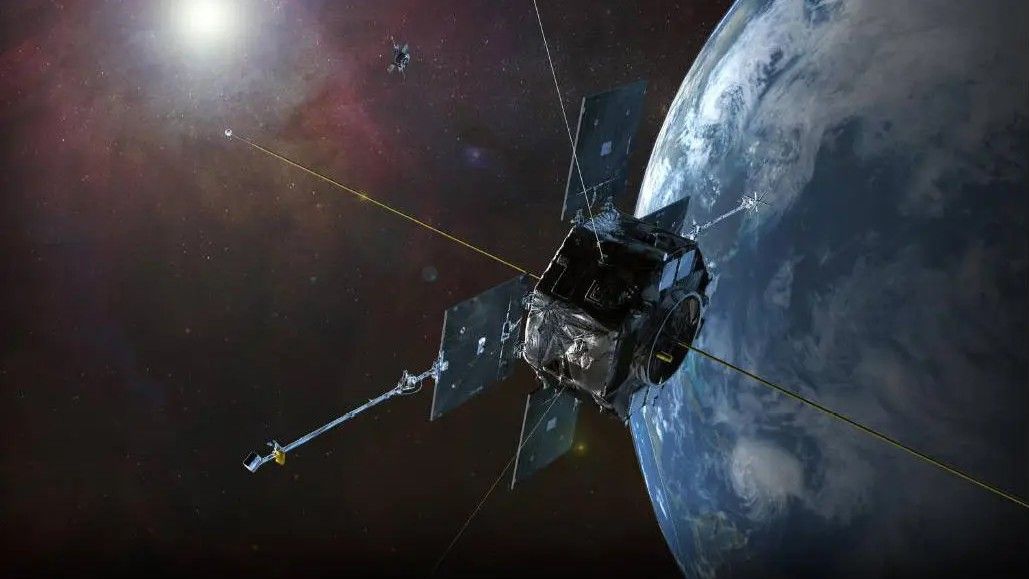
A heavy space probe falls to Earth today (March 10), eight years earlier than expected, according to NASA.
The 1,300-pound (600-kilogram) Van Allen A probe is largely expected to burn up as it enters Earth’s atmosphere, but some components are expected to remain intact. The spacecraft poses a low risk to humans, with a 1 in 4,200 chance that it will cause harm, NASA said in a statement. statement published Monday March 9.
Article continues below
Intense solar activity forces the probe to descend much earlier than initially planned. When the spacecraft ran out of fuel in 2019, NASA predicted it would remain in orbit until 2034. However, that was before the sun entered its current solar cycle in late 2019, and that cycle has been much more active — and peaked earlier – than scientists expected.
The approximately 11-year solar cycle culminates with a period of explosive activity known as solar maximumwhich triggers more intense space weather events. These events created more atmospheric drag for the fuel-less Van Allen A probe, pulling it out of orbit.
The Van Allen A probe is one of two Van Allen probes that have been in space for nearly 14 years. NASA launched the satellites in 2012 to study Earth’s two permanent radiation belts, which are named after American physicist James Van Allen.
Radiation belts are made up of charged particles trapped by the Earth’s magnetic field. They essentially act as natural shields, protecting the Earth from cosmic radiationsolar storms and solar wind.
The Van Allen probes were designed for a two-year mission, but ultimately lasted about seven years. The mission finally ended in 2019, when the probes ran out of fuel. Van Allen Probe A’s twin, Van Allen Probe B, is expected to remain in space until 2030, according to NASA.
The probes made a series of scientific discoveries during their tenure. For example, the spacecraft discovered that electrons in radiation belts can be accelerated to near the speed of light by riding the waves of plasma ejected from the sun. They also detected a third radiation belt which forms only during periods of intense solar activity.


