5 ways your smart home can monitor your health


Your smart home can do much more than just turn on your lights or control your heating. It can also help you monitor your health. Paired with the right devices, you can use your smart home to track health metrics, spot trends, and help form healthier habits.

How Smart Home Technology Can Help You Support an Elderly Parent Remotely
Safety and security for them, peace of mind for you
Tracking your sleep
Monitor sleep duration and quality

Sleep is extremely important for your health. Poor quality sleep can have a dramatic negative impact on everything from memory and reaction time to insulin sensitivity and blood pressure. It’s not always easy to know when sleep quality is poor; just because you’ve been in bed for eight hours doesn’t mean you slept well for eight hours.
This is where your smart home can help. Your smart home can help you track your sleep over time and spot any worrying trends. The key is having the right devices to monitor your sleep.
Some of the best options are wearable devices like smartwatches and smart rings that can actively measure things like your movements, heart rate, and breathing while you sleep. You can also use devices such as sleep mats, which are not only useful for monitoring key sleep indicators, but can also detect whether you are in or out of bed, which can be very useful for triggering automations.
In addition to monitoring sleep, your smart home can help improve it. You can set up automations that can help, like turning on white noise when snoring is detected to reduce the risk of waking you up, lowering the bedroom temperature if your body temperature rises, and even waking you up in the morning during light sleep, which can help you feel less groggy.


8/10
- Heart rate monitor
-
Yes
- Notification support
-
Via the app
The Oura Ring 4 is a comprehensive tracker for over 20 fitness metrics, offers optimal sleep time suggestions, nighttime SpO2 tracking, stress level monitoring, and much more.
Blood pressure monitoring
Visualize trends over time
Blood pressure measures the force of your blood pushing against the walls of your arteries. When your blood pressure is outside of usual ranges, it may be a sign of serious health problems. High blood pressure can lead to strokes, vision loss and even heart attacks, while low blood pressure can cause dizziness, heart palpitations and cognitive impairment.
You need a dedicated device to measure blood pressure, but your smart home can help you track your readings over time and spot any worrying trends. This is the real benefit of linking your blood pressure monitor to your smart home: you can save your data and use it to create visualizations that make it easy to see how your blood pressure readings are progressing.
Your smart home can also help you remember to measure your blood pressure every day. You can set up notifications that help you take your blood pressure readings more consistently at the same time.
Measuring indoor air quality
Your home contains more pollutants than you think
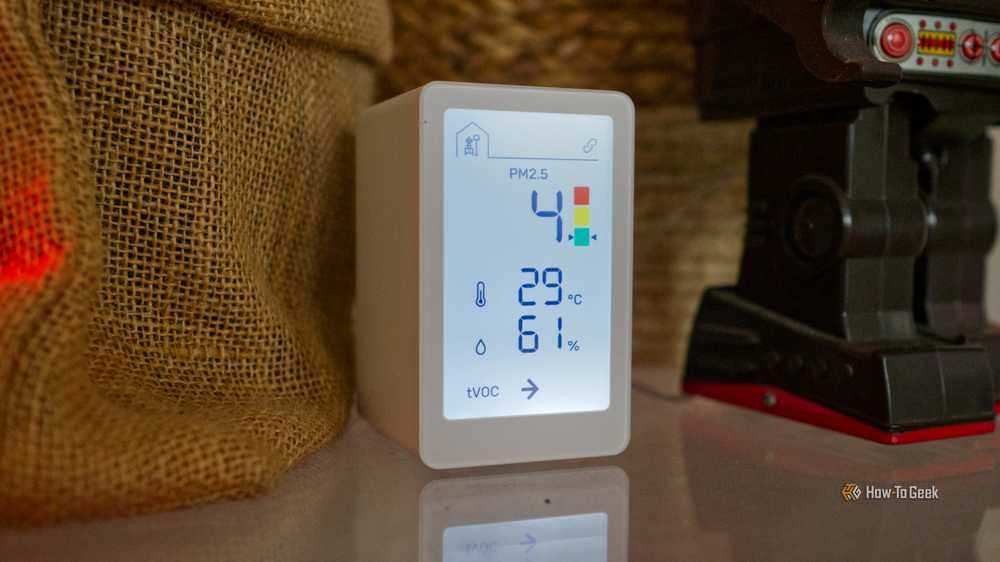
When we think of air pollution, we usually think of the air in the heart of large, traffic-clogged cities. In fact, the air in your home can sometimes be more polluted than the air outside, in some cases significantly so. Activities such as cooking, cleaning, and drying clothes indoors can increase levels of volatile organic compounds (VOCs) and fine particulate matter to levels even higher than those in outdoor air.
The problem is that you can’t see this pollution in your home and may be completely unaware that it has reached dangerous levels. This is where indoor air quality monitors can help. These devices can detect harmful pollutants such as VOCs, particulate matter, and dangerous gases such as carbon monoxide.
Your smart home can alert you when the air quality in your home deteriorates, so you can take corrective action like opening windows or turning on an air purifier. You can also track pollutants over time, helping you determine their causes.
Physical activity tracking
Avoid being too sedentary

The rise of working from home means many of us walk a few feet to our home office each morning, then sit at the desk for most of the day. This type of sedentary lifestyle can lead to serious health problems. Studies have indicated that the risks of being too sedentary could include poor cardiovascular health, muscle loss, chronic inflammation, blood sugar problems and even a higher risk of premature death.
Many devices can track your activity, such as step count and how often you get up, which are useful measures of how sedentary you are. The real power of your smart home is that it can use this data to actively remind you to get up and move around.
For example, I have a presence sensor in my home office that is accurate enough to detect when I’m sitting in my office chair. If I haven’t left my chair for more than 30 minutes, my smart speaker will remind me to get up and will continue to do so at decreasing intervals until I get up from my chair and walk around. Studies have shown that even a few minutes of walking every half hour can significantly reduce blood sugar spikes compared to sitting.
Medication and hydration tracking
Adopt healthy habits with your smart home

Besides reminding you to be active, your smart home can also help you adopt other healthy habits. For example, you can use your smart home to track your water intake and remind you to drink regularly throughout the day. It can also remind you to take any medications you might need so you don’t miss them.
I often found myself forgetting to take my daily medications, even when using popular medication reminder apps. Ultimately, I built mine using the Home Assistant smart home software to send me repeated reminders until I marked the medication as taken. Since its implementation, I have not missed a single dose.
Use your smart home to learn more
Smart homes aren’t just useful for automating or controlling your home. They can be really useful in helping you monitor your well-being. You don’t need to spend a fortune to monitor your health; even one or two simple automations using devices you may already own can make a big difference.


