87 Newly Detected Stellar Streams Map the Milky Way — And Could Illuminate Dark Matter


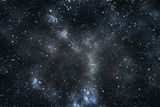
In a night sky with more space than stars, globular clusters are brilliant exceptions. These are balls of stars, apparently linked together by gravity, but which remain poorly understood.
When these clusters disappear, they leave behind characteristic “stellar streams” that astronomers can follow. Faded dwarf galaxies leave other similar streams. But much more rarely, stellar flows can be the sign of existing globular clusters.
A new study published in the Astrophysical Journal Supplement Series significantly increased the number of these rare stellar streams, adding 87 candidate streams to a list of only 18 previously discovered. Researchers hope their findings could reveal the history of our galaxy and information about the mysterious dark matter that helped form it.
Learn more: Is dark matter real? Most experts say yes, but it’s still hotly debated
A stellar algorithm
The findings were based on an algorithm developed by Yingtian “Bill” Chen, an astronomer at the University of Michigan and co-author of the new study.
A significant challenge in locating stellar streams is that they are faint and difficult to spot. As globular clusters interact with much larger groups of stars, like our own Milky Way, tidal forces can knock some stars off course.
“It’s like riding a bike with a sandbag, only the bag has a hole,” Oleg Gnedin, an astronomer at the University of Michigan and co-author of the new study, said in a statement. “These grains of sand are like stars left on their trajectory. »
Observe stellar flows
Astronomers first observed stellar streams decades ago. These streams were larger and more dispersed because they came from dwarf galaxies rather than smaller globular clusters. By studying the size and shape of streams, researchers can determine how gravitational energies shook them. They can also draw conclusions about how the mass of our own galaxy is distributed. This can lead to discoveries about dark matter, which makes up part of this mass.
Previous observations of globular cluster flows were largely chance, Gnedin said. In the new study, Chen and Gnedin approached the problem systematically. They built a physical model to predict the conditions under which streams would form. Chen then used this data to create an algorithm called StarStream. Applying this algorithm to data from the European Space Agency’s Gaia spacecraft, which operated from 2014 to 2025, the team began looking for flows.
“It turns out it’s a lot easier to find things when you have a theoretical expectation of what you’re looking for and you have a simple phenomenological picture,” Gnedin said.
The future of stellar flux research
Some of the candidates may not be stellar streams, but the new study has given powerful space telescopes plenty of new targets to check.
“Gaia is relatively old, but there will be new studies, including NASA’s Roman Space Telescope, the Vera Rubin Observatory and the Dark Energy Spectroscopic Instrument, or DESI,” Chen said.
These powerful new tools will help identify true star clusters, and Chen hopes StarStream can play a role in the years to come. “It will be very easy to adjust the algorithm for future missions,” Chen said. “Once we have the data, it will be very simple to apply it. »
Learn more: Hidden clues about dark matter emerge with new high-resolution sky map
Article sources
Our Discovermagazine.com editors use peer-reviewed research and high-quality sources for our articles, and our editors review the articles for scientific accuracy and editorial standards. See the sources used below for this article:


