Sora 2 has arrived – can the uncanny valley explain why AI images and videos feel so weird?


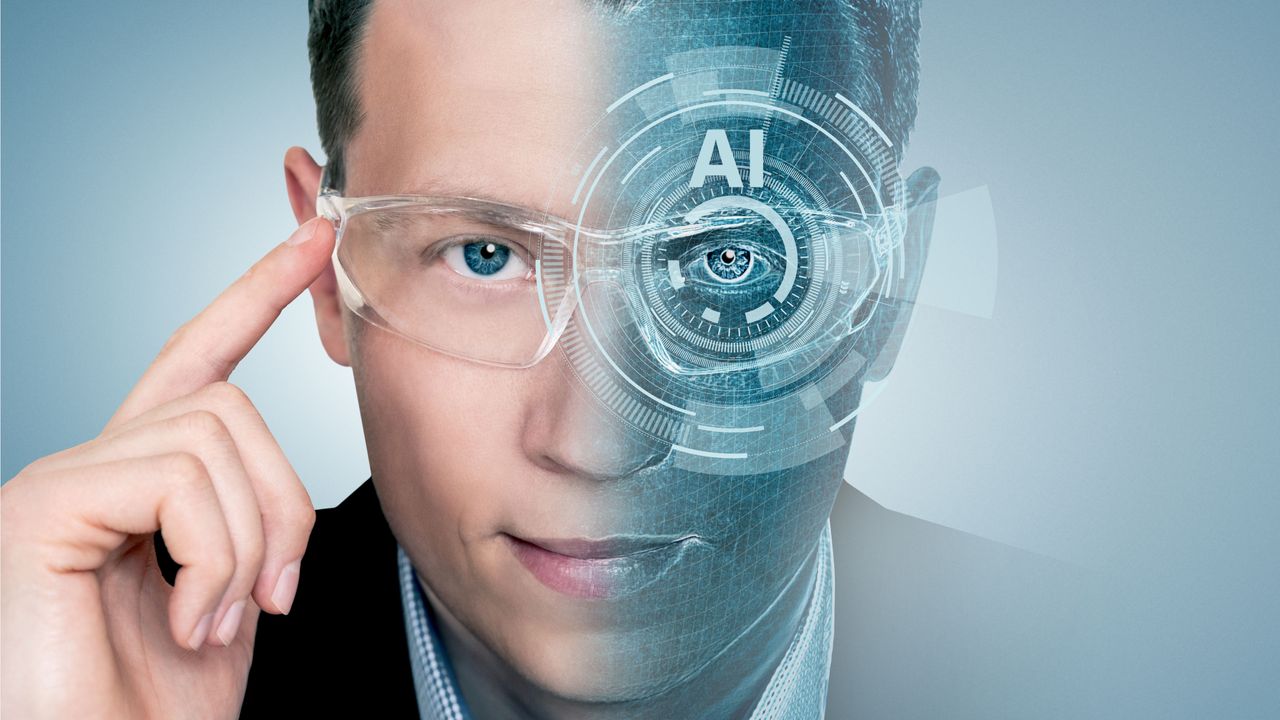
Scroll down social media, and it is almost impossible to avoid images and videos generated by AI. At first glance, they may seem realistic. But look a little longer and they often start to feel a little … disabled.
It is perhaps the lighting that does not quite make sense, the skin too smooth or the sadly famous additional fingers. These are not always obvious counterfeits, and as technology improves, it is more difficult to say it with certainty – take a look at Sora 2. But it is difficult to shake the feeling that something is often not good.
This worried feeling made me think. Is it just another version of Uncanny Valley? A concept that has existed for decades to explain why humanoid robots can bring us back. Could this also apply to the deluge of IA images and videos filling our flows?
I have already written on the rise of AI Sols and the strange ways to react to the machine manufacturing content. This time, I asked researchers who study the strange valley if its principles could also apply to the digital domain.
Welcome to the strange valley
“The Uncanny Valley effect describes how we react emotionally when things are starting to seem more and more human,” explains Dr. Steph Lay, horror writer, psychologist and strange expert.
“At the beginning, we answer positively, but it only holds up to a certain point. If something is too close to man but is still not perfect, we start to react with concern or discomfort, even disgust. Think of dolls, clowns or statues. There is something scary on the way they are almost human but not quite correct,” said Lay.
Researchers think that this sensitivity has evolving roots. Identifying small irregularities in faces and bodies may once have helped us avoid danger, detect the disease or decide to trust.
Blame the robots
The concept of the strange valley most often applies to humanoid robots. Especially the genre that you have probably seen reveal during technological conferences. But not all robots are disturbing; Our expectations play a big role.
“I did research on what people would feel to have a living robot as a companion at home, and most people have limited the idea of sharing their house with an almost human help,” said Lay. “They would feel much more comfortable with something that looked definitively artificial.”
Dr. Christoph Bartneck, professor of human-robot interaction in the Department of Computer Science and Software Engineering of the University of Canterbury, says that it is how we examine human resemblance. “More a robot or a character generated by a man aleerated human type becomes, the more our expectations are high. We do not expect a ground cleaning robot to have a biological movement. It is correct if it moves like a machine.
“But once the robot becomes human, we apply human standards,” said Bartneck. “We are sensitive to small changes in facial expressions, gestures and posture. Even the slightest irregularity in someone’s approach can discourage us.”
It is these “small changes”, the seeds barely in a movement or a smile or a walk, which makes us switch to the strange valley.
When the strange hits your flow
So what happens when the almost human figure in front of us is not a robot on a scene but an image or an online video?
“With the content generated by AI, there is often something that the algorithm is wrong,” explains Lay. “Even when the overall image looks polite and perfect, this defect gives us a look in this disturbing valley. We might not be able to explain why right away, but something feels definitively.”
Interestingly, Lay does not think that our instinct to identify these faults will fade, even if the AI improves. “I think this sensitivity will always be there. We are very closely listening to what is real and what is not, in particular with regard to faces. ”
We can adapt, but not in the way IA companies could hope. “With the current progress of generation technology of image and videos, we are in an unprecedented period for an exposure to things that are not real. Our perceptual systems are ready to learn and adapt, so I think we are just going to become more demanding over time.”
The real stakes of false faces
The strange feeling of the valley can also shape how we react to the content around us.
I was interested in knowing if people care if the things they see are real or not. “According to my experience, people absolutely care,” says Lay. “Everything comes down to the reason why the image has been generated.” She points to her own work on In the fog, A YouTube channel telling paranormal stories. Because the creators are transparent on images and videos are made in AI and which are archival, the public accepts them as part of the narration and the construction of the atmosphere.
The problem is when this same content appears in our flows without label or context. “If we are talking about the content of the AI that we meet on social networks, it does not happen to us in a neutral way, it is driven by an algorithm which has been meticulously set to show us things to which we will react,” explains Lay.
And once it lands, the effect is made up. “The effect of the echo chamber is real, but it is subtle and complex.
Identify the unreal in real time
There may be no way to get out of the strange valley. Our brains are simply too finely set to irregularities. So, we will probably feel a little … on the images and videos of the almost real AI filling our flows.
It is not a bad thing. This could keep us sharper on what is real and what is not. And if you have trouble saying it, Lay says that the old advice is still holding. “If something seems too perfect, it’s probably not real.”
She also suggests moving away for a certain perspective if you notice this strange and unstable feeling. “If something you see bothers you, then get away from the screen for a while,” recommends Lay. After all, the more time you spend almost real, the more difficult it is to see the truth.
Follow Techradar on Google News And Add us as a favorite source To get our news, criticisms and expert opinions in your flows. Be sure to click on the follow!
And of course, you can also Follow Techradar on Tiktok For news, criticism, unpacking in video form and obtain regular updates to us on Whatsapp Also.
You might also love