Woman diagnosed with breast cancer at 27 after almost ignoring warning sign: “Hard to believe”


Marissa Coreno was embracing a new life in 2021. She had just moved out of her parents’ house and was spending more time at the gym. She loved her job at a hospital in Ohio. Everything seemed fine, until she discovered a lump in her armpit.
Coreno wasn’t particularly worried at first. She was 27 years old and had no family history of cancer. But her colleagues thought she shouldn’t ignore it. An ultrasound revealed “questionable features.” This was followed by a mammographythen a biopsy.
Three days later, Coreno was diagnosed with stage II breast cancer that had spread to her lymph nodes. She said she felt like her world had been turned upside down.
“It was devastating. It took a while to process. I knew it was positive and I knew I had breast cancer, but in my head it was like, ‘No way,'” Coreno said. “You hear about these cases and you see them on TV, but it was hard to believe that this was now my life.”
Marissa Coreno 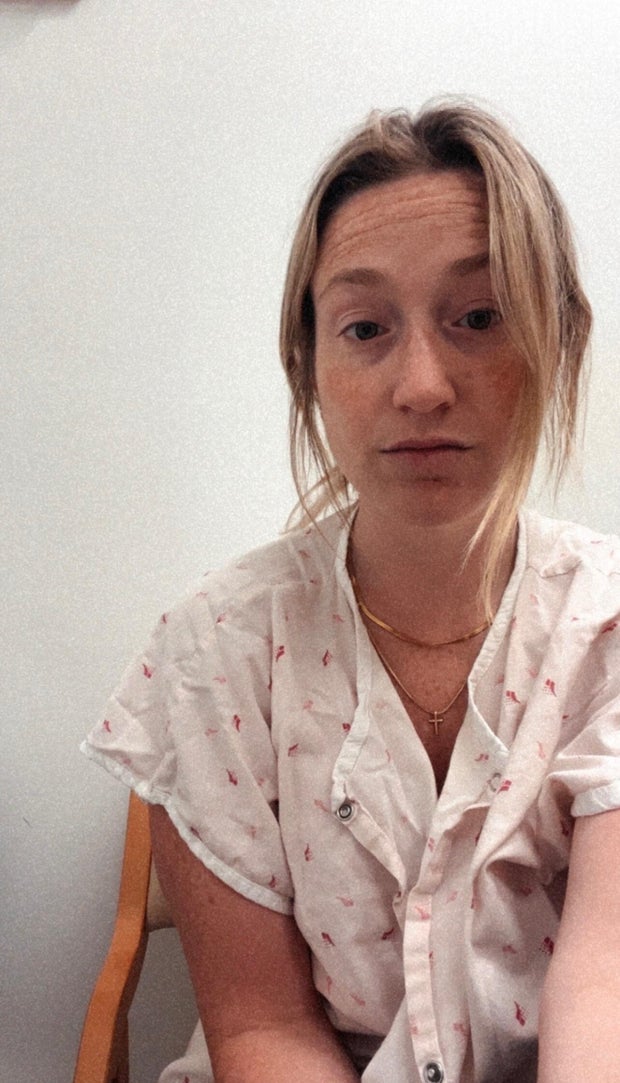
An increase in young diagnoses
Breast cancer is the leading cause of cancer death among American women ages 20 to 49, and the incidence rate of breast cancer among women under 50 has increased more rapidly than among women over 50, according to the Breast Cancer Research Foundation.
“I’ve been a physician for over 25 years. When I first started practicing, we were seeing women in their 40s and now we’re seeing women in their late 20s and early 30s more often,” said Dr. Mary Gemignani, director of the Women’s Early Cancer Program and chief of the division of breast surgery at NYU Langone, who was not involved in Coreno’s care.
Yet breast cancer diagnoses in women as young as Coreno are rare. The American Cancer Society estimates that only 1 in 1,344 women will develop breast cancer in their 20s. Younger patients are unlikely to have regular screeningssaid Gemignani, since most women not getting a mammogram up to 40 years old. Younger women also tend to have “more aggressive” tumors or be diagnosed with rarer disease subtypes, Gemignani said. There is no proven reason for the increase, she said.
Gemignani said young women tend to have unique needs, including fertility issues, making it important for them and their doctors to develop a personalized approach. treatment plan. Coreno said she found few research studies looking at outcomes for her age group, but spoke candidly with Dr. Baidehi Maiti, a medical oncologist at the Cleveland Clinic, about her best options.
“Being so young and not having a lot of research or studies or evidence, I chose the most out of all the options I had along the way,” Coreno said. “I was very protective.”
Connection amid ‘grueling’ chemotherapy
Coreno’s treatment began with four months of “grueling” chemotherapy to stop his cancer from spreading further. Her mother moved in to help care for her, while her father drove her to every appointment. Coreno said she lost her hair and could barely leave the house.
“Going from such an active life – I was in the prime of my life, I worked out regularly, I was so proud of what I had accomplished – to not even having enough energy to get off the couch was difficult,” Coreno said.
Marissa Coreno 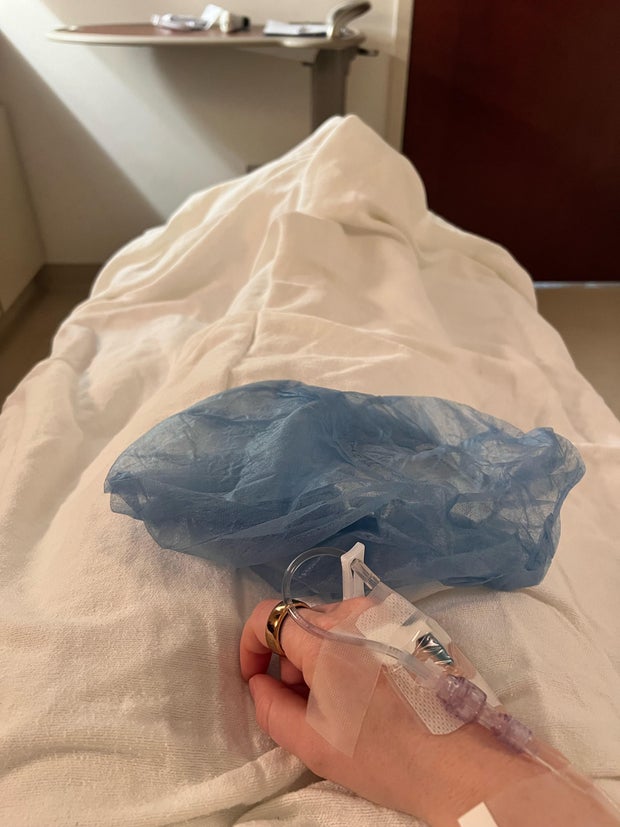
There was one bright spot: One night, Coreno decided to “eat (his) feelings” and ordered Crumbl cookies. She posted a photo of the delivery on Instagram. She received a message about the treat from Anthony, a former classmate. The two struck up a conversation and “never stopped talking.”
“It was so nice to talk to someone, have someone listen to me, have a new friend I could confide in,” Coreno said.
Eventually the two went on a date. Coreno was afraid to leave the house and was embarrassed to wear a wig, but she had fun.
“He didn’t even mention the wig. We just had a good time,” Coreno said. “It felt so natural.”
Marissa Coreno 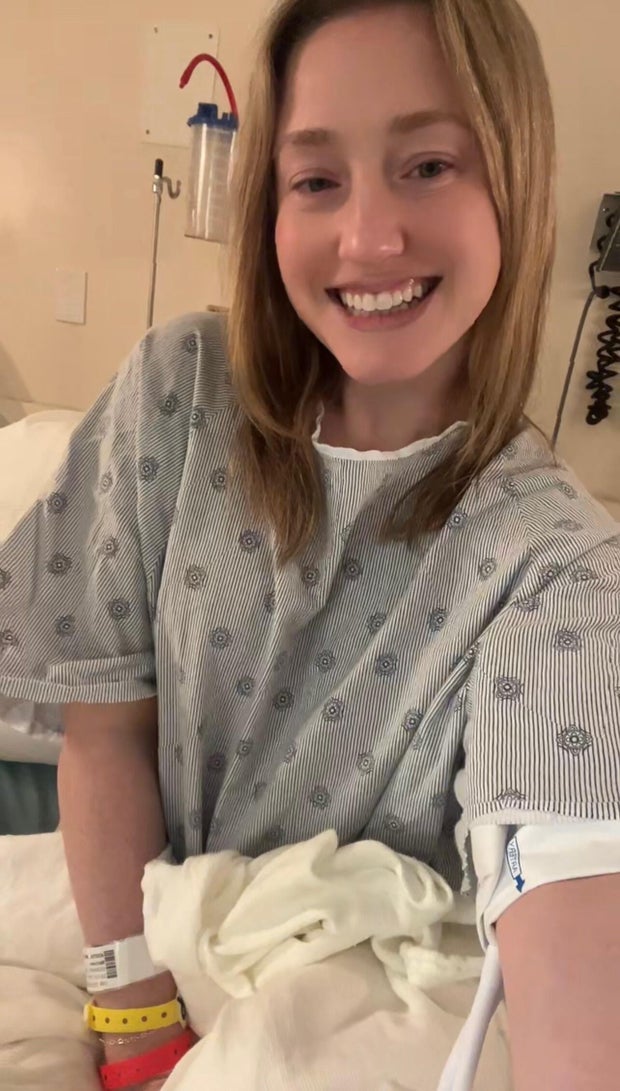
After chemotherapy, Coreno underwent double mastectomyfollowed by reconstructive surgery and 25 days of radiation therapy, Maiti said. Coreno started hormone therapy in March 2022 and will continue it until 2032. She also has regular checkups. The treatment stops his body from creating estrogen to limit the risk of the cancer coming back. Coreno is currently cancer-free, Maiti said.
“She didn’t let cancer define her life,” Maiti said. “She is thriving as a breast cancer survivor and living life to the fullest.”
“Life is beautiful”
Hormone treatment sent Coreno into menopause at age 28. Working out is harder now, she said, and she struggles with hot flashes and has trouble sleeping. It took him years to get used to the new normal.
“I thought that would be the easy part,” said Coreno, now 31. “It was after the end of the treatment that what I experienced hit me the most.”
Amid a difficult adjustment, her relationship with Anthony became more serious. They got married in August 2024 and honeymooned in Italy. Over the summer, they celebrated their anniversary in Cancun, Mexico.
Arlee Reust/Azkalynn Photography 
Coreno also hopes that sharing his story will encourage others to investigate the warning signs they are experiencing.
“I just want everyone to realize that it seems like it’s never going to be you, it’s always going to be someone else, it’s going to be a person on TV, but it can happen to you,” Coreno said. “If you’re not sure about anything, you need to speak up and get checked out. If for some reason you’re not getting the best news, there is light at the end of the tunnel. It may not seem like it. It may seem like a very long tunnel. But life is good afterward.”


