6 hip stretches for tightness and pain


You’re not getting any younger. This is not a dig, it is a call to action or, more precisely, activity. Because, even among those of us who exercise regularly, the further we advance from childhood, the more limited our ranges of movement typically become, leading to weaker muscles, more brittle bones, and less mobile joints. Especially the hips.
“We don’t move sideways as much anymore, as we get older and don’t play sports. Even if you’re running long distances, you’re just moving in one plane. [of motion]” says Patrick Suarez, OCS, SCS, a physical therapist based in Albany, New York. “We don’t prolong that much.”
The result of this abbreviated movement can be stiffness in the hips due to shortened muscles and ligaments that are not accustomed to moving through full ranges of motion. These effects can be made worse by the trappings of modern life, which involves sitting around.
“When we’re younger, we run a lot more, in terms of sprinting. So our leg gets behind us, where our glutes are the most powerful,” says Suarez. “So if we’re sitting a lot, we’re not extending our hips, we’re not using our glutes as much. If we’re not moving side to side as much, we’re not using our lateral hip muscles and trying to get those glutes to pull in that direction as well.”
If you’re feeling tightness in your hips — or pain in your back or knees (more on that below) — Suarez identified six stretches that can help them feel 19 again.
Is hip tightness causing your back or knee pain?
Except for the shoulder, the hip is your most mobile joint. It is also supported by the largest muscle in your body, the gluteus maximus. If you suffer from a deficit in the hips, for example with weak glutes or tight connective tissues, their tasks can be redistributed to neighboring anatomy.
“When you have hip problems, you’ll usually feel them in your knee or lower back,” says Suarez. “Because you’ll start using your back more in a way that it’s not meant to be used, to compensate for your lack of hip strength or mobility. And if you’re a distance runner, that knee may start to rotate a little bit, which it’s not supposed to do.”
Over time, Suarez says, repetitive maldistribution of workload across the back and knees most often manifests as lateral or anterior knee pain or lower back pain. This can even lead to injury, increasing the importance of hip mobility.
“You’ll notice it when you’re trying to come out of a deep knee bend,” says Suarez. “So if you’re bending your knee to go up a flight of stairs, especially if you’re trying to skip a step, and that knee bends a little bit, you’re basically trying to find your glute.”
This can also concern the rotation of the legs, especially internally. “From a research perspective, lack of hip internal rotation has a direct correlation with lower back pain,” says Suarez.
Try These 6 Hip Stretches for Lower Body Mobility
The hip is a complex joint with many stabilizing muscles as well as, of course, its main movers. The following movements are designed to improve hip strength and flexibility, especially with internal rotation, which has a direct correlation to lower back and knee pain.
However, if your pain is severe, seek permission from a healthcare professional before participating in any type of exercise, including these movements. Even with the green light from your doctor, you should avoid any activity that causes or worsens hip pain.
1. Shin box
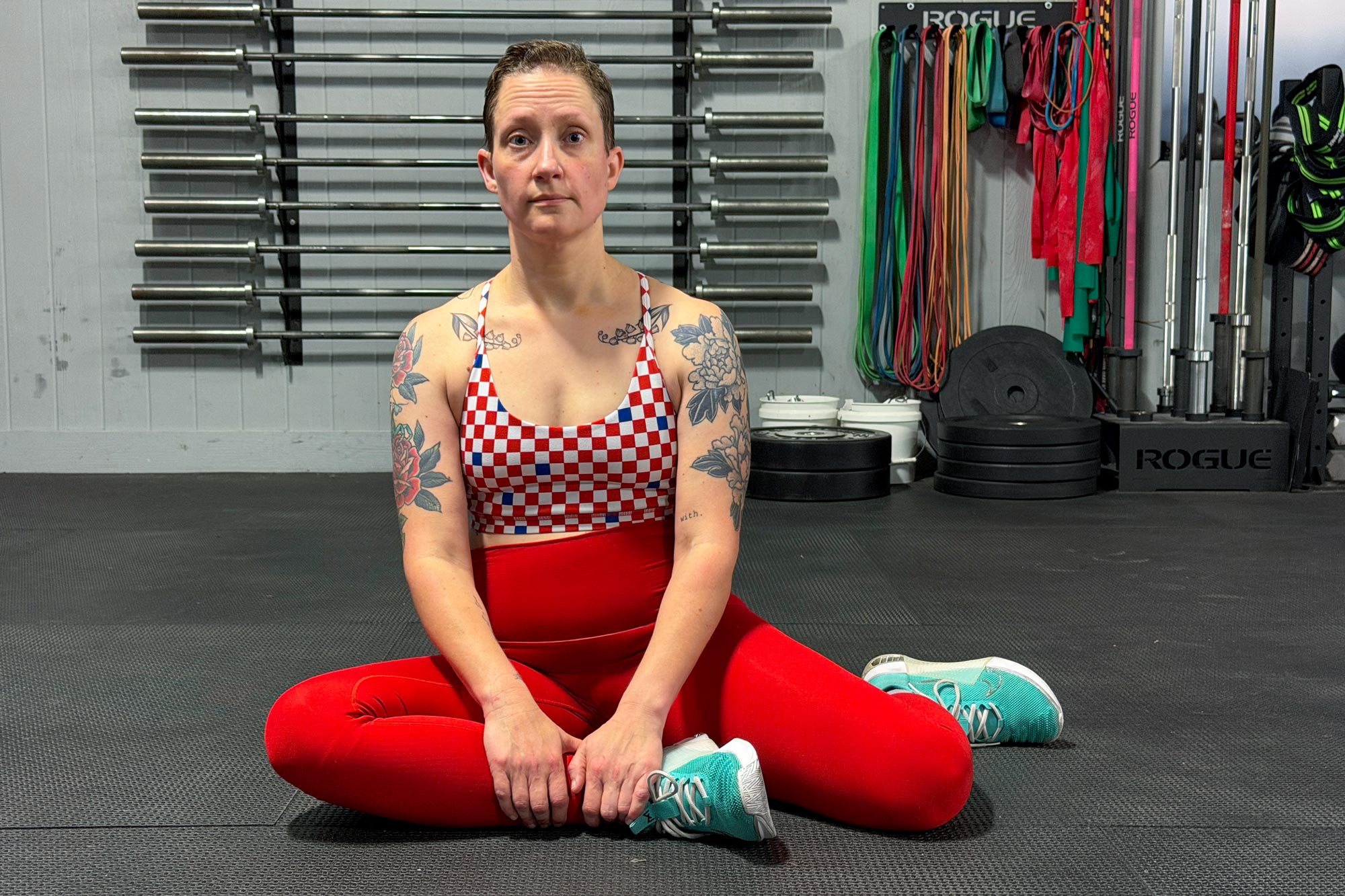
Also known as the 90/90 hip switch, this sit-up for your glutes helps you internally and externally rotate the hip to promote greater stability.
- Sit upright on a mat or rug, with your right leg in front of you and your left leg behind you, with both knees bent at 90 degrees. Your right shin should be flat on the floor and roughly parallel to the top of your mat.
- Making sure to keep your torso straight and core engaged, squeeze your glutes to drive your hips up and forward, lifting your upper body off the mat.
- With control, slowly lower your body back to the starting position. Perform an equal number of repetitions on both sides.
If you can’t fully extend at the top of the movement, Suarez says you’ll feel where your tension is, whether it’s at the front hip (external rotation) or the back hip (internal rotation).
Look at the shin box:

2. Frog Stretch with Internal Rotation
This movement combines lumbar (lower back) flexion with internal rotation of your legs at the hip for increased mobility.
- Start on all fours, with your hands on the floor directly under your shoulders, your knees more than hip-width apart, and your heels touching.
- Keeping your body engaged and your hands planted, bring your hips back toward your heels.
- As you step forward to return to the starting position, keep your chest lifted as you internally rotate your right leg so that your right foot points toward your right side. Don’t drop your right hip.
- Bring your right foot to the left and bring your hips toward your heels again.
- Repeat on the other side, performing an equal number of repetitions on each side.
Watch the frog stretch:

3. Single Leg Bridge with Knee Drive
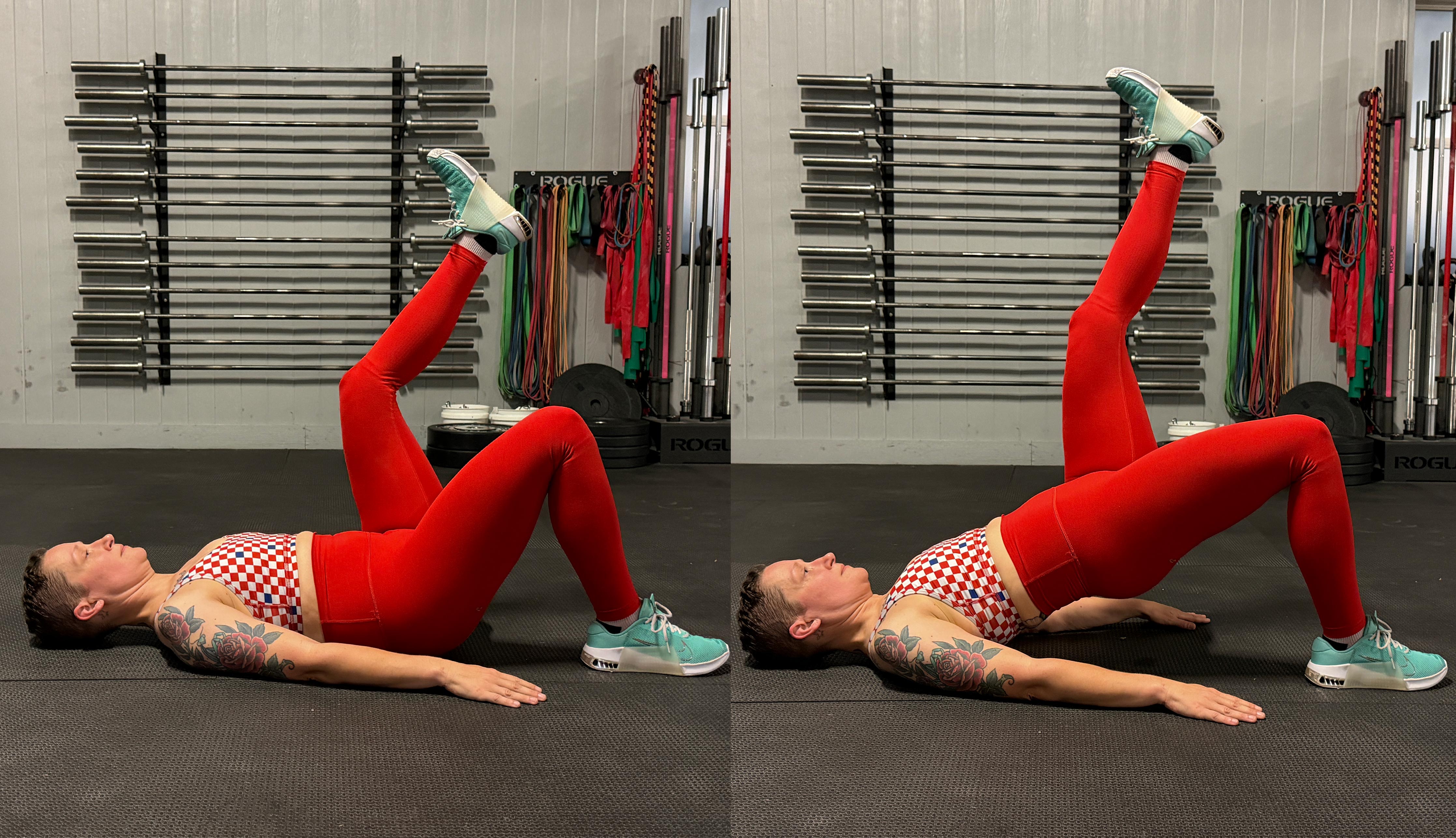
A unilateral version of the traditional hip bridge, this movement isolates one side at a time to improve hip strength, symmetry and extension.
- Lie on your back with your arms at your sides, your right foot flat on the floor and your left knee drawn toward your chest.
- Keeping your core engaged, squeeze your glutes and drive through your right heel to lift your hips off the floor.
- Hold the top of the movement for a second or two, squeezing your glutes, and slowly lower your hips to the starting position.
- Switch sides and repeat, performing an equal number of repetitions on each.
If you can’t do the movement on one leg, just do the bilateral version with both feet on the ground and work at it. “Most of daily life is one-sided: walking, running, climbing stairs,” says Suarez. “Asymmetries can potentially lead to injury, so the idea is to try to be as symmetrical as possible. The main way to do this is to do unilateral exercises.”
Watch the Single Leg Bridge with Knee Workout:

4. with balance on one leg
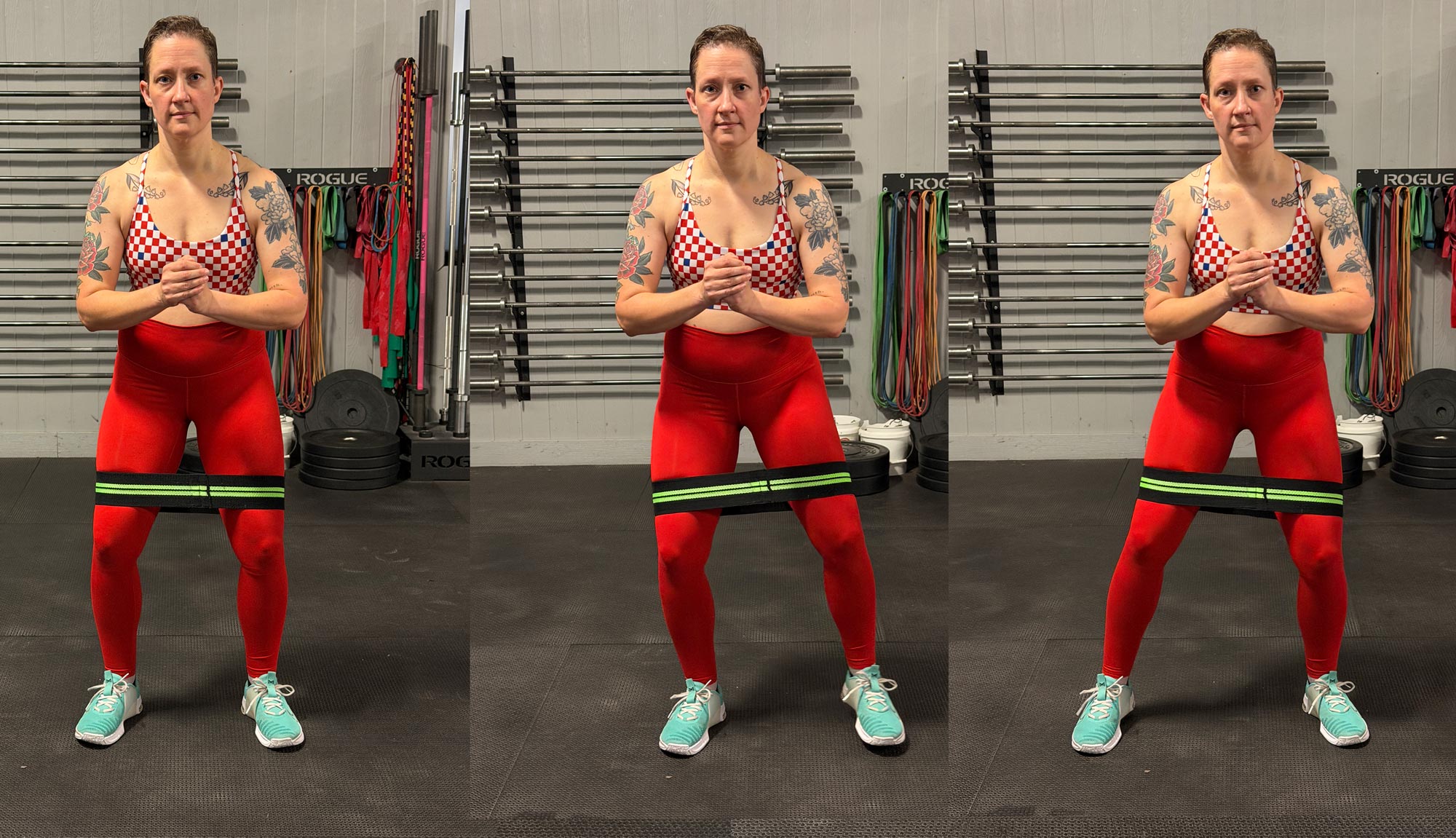
This slight variation of a very popular exercise adds a balance component and allows you to better feel the engagement of the muscles around the hip.
- Wrap an exercise band around both legs, just above your knees, and stand with your feet hip-width apart.
- Keeping your chest lifted and core engaged, do a half squat by pushing your hips back and bending your knees, shifting your weight to your heels.
- Maintain the squat form as you step your right foot to your right, following with the left foot, for three to four steps.
- On your last step, shift your weight to your right foot and pause, balancing for several seconds.
- Step your left foot out to your left and follow with the right to return to the starting position, pausing on the left foot and repeat.
Watch the sideband walk:

5. Seated Hip Internal Rotation
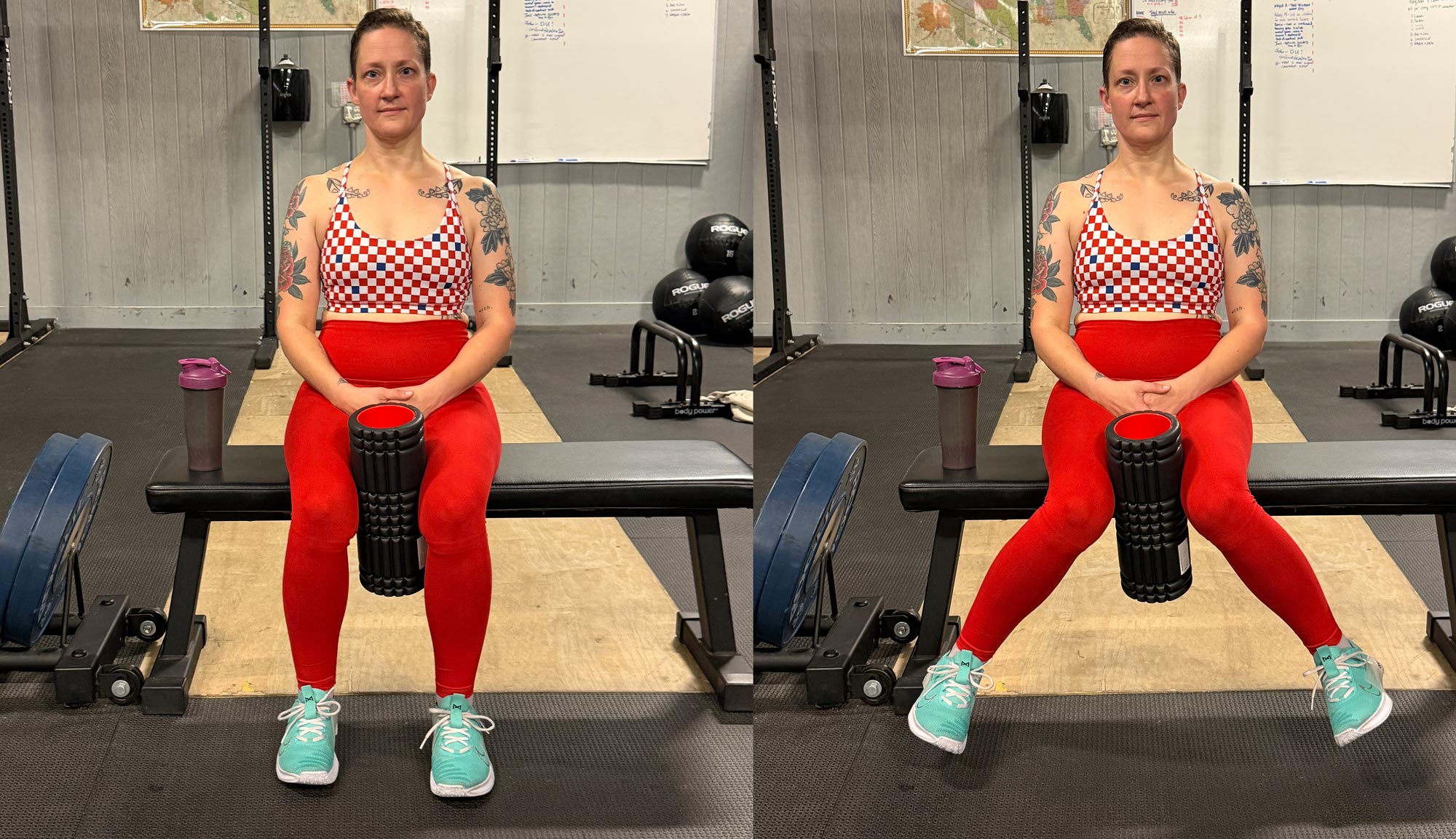
According to Suarez, the strength of your internal rotators is strongly correlated with lower back pain and decreased hip mobility. “Hip internal rotation should be part of everyone’s routine,” he says.
- Sit on a bench or box high enough that your feet are off the ground, and place a foam roller, yoga block, or equivalent standing object between your knees.
- Keeping your chest lifted and core engaged, rotate your hips inward by splaying both feet out to the sides while maintaining tension on the foam roller.
- Return your feet to the starting position and repeat.
Observe the internal rotation of the seated hip:

Suarez says many people will feel cramps from this movement because they’re not used to using their hip internal rotators, which are put under a lot of strain here.
6. Copenhagen
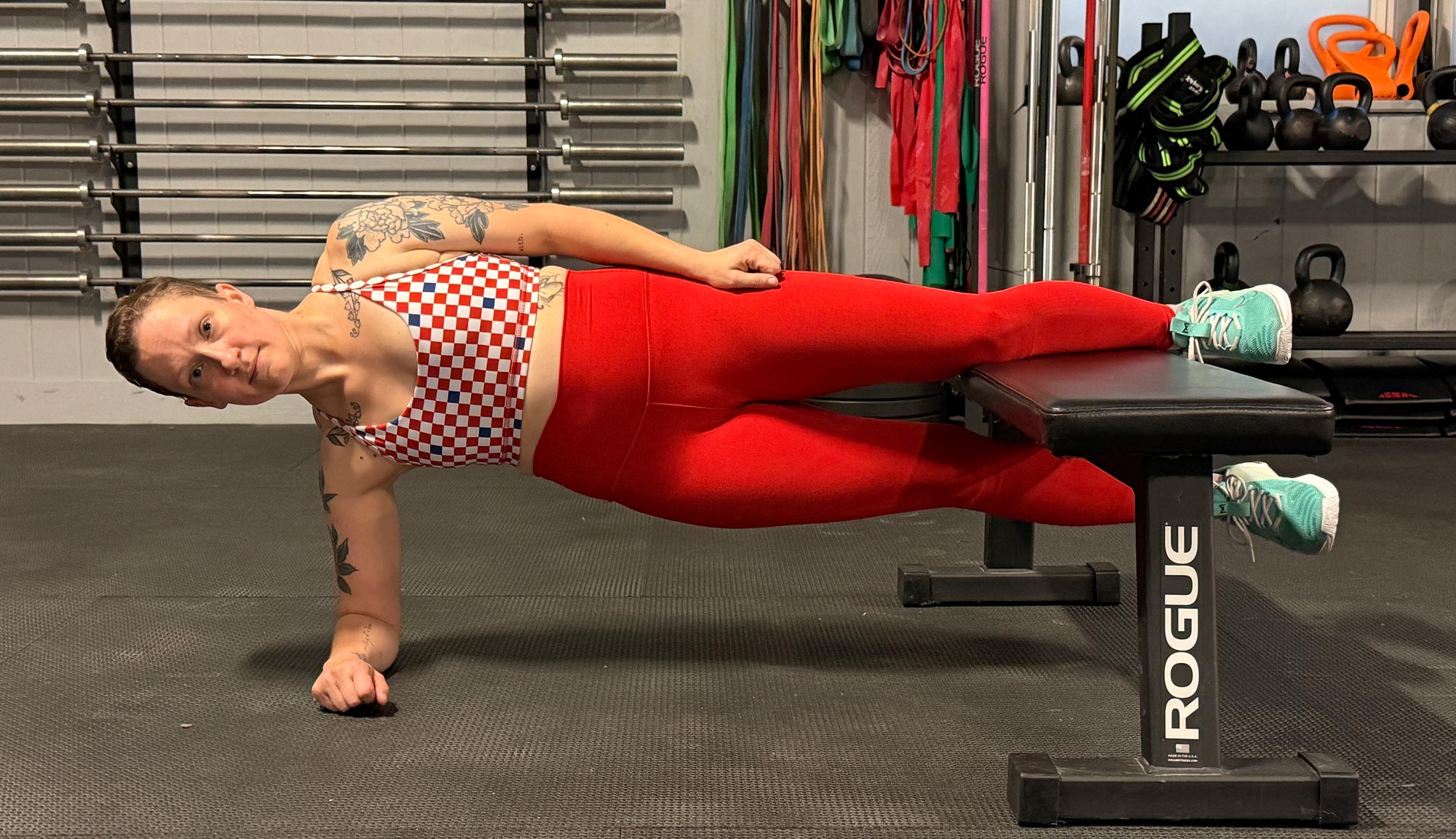
A slightly more advanced movement targeting the adductors of the inner thigh, this hip internal rotation exercise helps improve hip mobility.
- Lie on your left side, propped up on your forearm, your elbow directly under your shoulder, your hips stacked, and the inside edge of your right (top) foot on a bench, chair, or other stable object with room underneath for your extended left leg.
- Engage your core and press through your right (top) leg to lift your hips off the floor, allowing your left (bottom) leg to float underneath. Your body should form a straight line from your knee to your hip to your shoulder.
- Hold the position, then slowly lower your hips to the floor. Perform an equal number of repetitions on both sides.
Look at Copenhagen:

If you need to modify the movement, you can perform the Copenhagen plank with your lower leg on the floor and/or your upper calf or knee on the bench. This will shorten the distance between your body and the bench, thereby reducing the load.

House of the Future Prize 2025


