An 800-Year-Old Design Reveals a Lost Trojan Tale in a Roman Mosaic


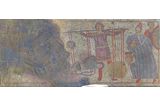
When a local resident spotted patterned tiles in a field on his family farm in Rutland, England, in 2020, he had no idea he had discovered one of the most important Roman mosaics ever found in the UK. The artwork, later unearthed from a large villa complex, depicts the clash between Achilles and Hector from the Trojan War – scenes long thought to follow Homer’s famous tale. Iliad.
But new research published in Brittany shows that the mosaic tells a different version of the story. A University of Leicester study found that its images instead align with a lesser-known account of the Trojan War attributed to the Athenian playwright Aeschylus, whose tragedy Phrygians was lost to history. The revelation suggests that the mosaic may preserve details of a dramatic tradition that circulated widely in antiquity but has survived only in fragments.
“This is exciting research, revealing how the stories of the Greek heroes Achilles and Hector were transmitted not only through texts but through a repertoire of images created by artists working in all kinds of materials, from pottery and silverware to paintings and mosaics,” Hella Eckhardt, professor of Roman archeology at the University of Reading, said in a press release.
Why this Roman mosaic does not follow Homer’s Iliad
Rutland’s scenes—Achilles’ confrontation with Hector, the treatment of Hector’s body, and his ransom—belong to a broad tradition of Trojan War imagery that circulated across the Roman world. Because the Romans knew the myth’s multiple narratives, mosaics did not always follow Homer’s Iliad precisely and individual works of art could mix elements from different versions of the story.
According to the new analysis, the Rutland mosaic reflects exactly this type of mixing. Its narrative choices and visual details are part of a broader Mediterranean artistic vocabulary, incorporating decorative motifs used for centuries in Greek, Anatolian, and Gallic crafts. The study highlights that Romano-British artists worked from catalogs of inherited models, drawing on long-established models rather than creating scenes in isolation.
Learn more: From ruins to ancient agriculture, Lidar technology helps reveal ancient societies
Connecting the Mosaic to Aeschylus’ Lost Game of Troy
Researchers have reevaluated the Rutland mosaic by examining both its narrative sequence and its decorative details. Many of the visual motifs matched designs long used on Greek pottery, silverware, coins, and other objects across the Mediterranean—evidence that the artist relied on widely distributed design models.
“In the Ketton mosaic, not only do we have scenes telling Aeschylus’ version of the story, but the top panel is actually based on a pattern used on a Greek pot that dates from the time of Aeschylus, 800 years before the mosaic was laid. Once I noticed the use of standard patterns in one panel, I discovered that other parts of the mosaic were based on patterns we can see in silverware, pieces of much older coinage and pottery, from Greece, Turkey and Gaul,” Dr Jane said. Masséglia, lead author of the study.
The researchers concluded that the mosaic mixes inherited artistic patterns with specific narrative elements taken from Aeschylus’ now-lost tragedy. Phrygiansexplaining why the artwork was initially misinterpreted.
What the mosaic reveals about Roman Britain
The results suggest that the Ketton mosaic is more than a striking piece of villa decoration. Its combination of Aeschylian narratives and inherited Mediterranean design traditions points to a Roman Britain that was far more connected to the classical world than was once thought. The mosaic offers a rare insight into how stories and artistic practices continued to circulate across the empire.
“Jane’s detailed research into the imagery of the Rutland mosaic reveals a level of cultural integration across the Roman world that we are only just beginning to appreciate. This is a fascinating and important development that suggests that Roman Britain was perhaps far more cosmopolitan than we often imagine,” said Jim Irvine, who discovered the mosaic.
Learn more: How the Mesopotamians wrote about their feelings gives us insight into their ancient world
Article sources
Our writers at Discovermagazine.com use peer-reviewed studies and high-quality sources for our articles, and our editors review them for scientific accuracy and editorial standards. See the sources used below for this article: