Ukraine lets firms deploy air defences against Russian attacks

Faced with daily barrages of Russian drones and missiles, Ukraine has invited private companies to acquire their own air defense systems in a bid to ease the burden on its military.
In an interview with AFP, a senior Ukrainian military official detailed this project, involving state authorization and integration into the Air Force coordination system, which has already attracted more than a dozen companies.
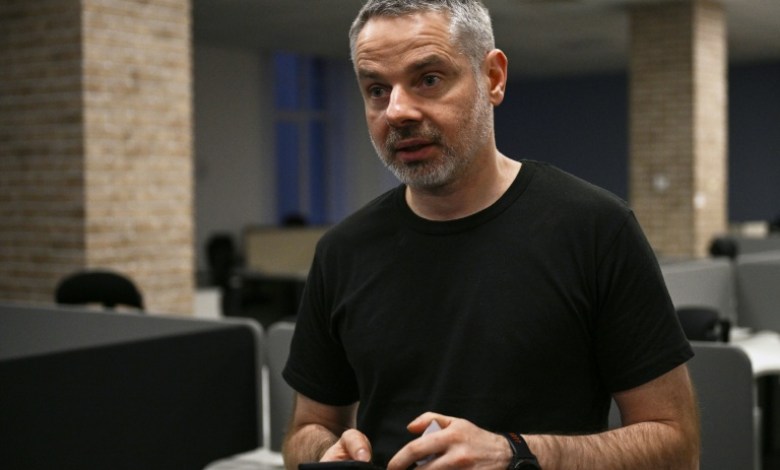
The objective is to give companies “the possibility, at their own expense and with their own employees, to protect themselves against aerial threats”, explained to AFP Yuriy Myronenko, 48, inspector general at the Ukrainian Ministry of Defense and main architect of the project.
Since its invasion in 2022, Russia has regularly launched hundreds of long-range Shahed drones into Ukraine, originally designed by Iran but now mass-produced in Russia.
Cheap but deadly, drones target residential areas and critical infrastructure, sometimes hundreds of kilometers from the front line.
The largest attack since the invasion began took place in late March, when Russia fired nearly 1,000 drones in 24 hours, along with missiles.
Ukraine’s air defense system – which includes thousands of mobile anti-drone teams – is quite effective but cannot cover the entire country.
This is why the Ministry of Defense has chosen to partly subcontract this task to private actors, notably energy companies, frequently targeted by Russian strikes, logistics companies and security groups to protect their sites.
For the moment, the Ukrainian authorities have given few details about this project.
But Myronenko told AFP that 16 companies have received the necessary authorization and that “some companies are already cutting down Shaheds.”
– Interceptors –
“I think we are the first in the world to create such a system,” Myronenko said, referring to the plan that he said was already yielding results.
“The first shootings took place two weeks ago,” adds the former lieutenant colonel who commanded a drone unit.
In the Kharkiv region in the northeast, near the front line, a company – unnamed for security reasons – used heavy machine guns mounted on remote-controlled turrets to intercept several Russian drones.
After the Defense Ministry issued a statement on the matter, “dozens” of other groups contacted authorities to inquire about the plan, Myronenko said.
“We don’t expect private air defense to solve all our problems,” he acknowledged. “We are obliged to take this step because every opportunity to take down one, two, three, four, five Shaheds is useful.”
Companies wishing to participate must undergo a special authorization procedure, notably excluding any links with Russia, before they can purchase weapons and train their staff.
They also must integrate with the Air Force’s real-time coordination system, a key part of the sophisticated network that manages thousands of air defense teams.
The special software allows commanders to see “who is shooting down what, with what systems, what teams,” and locate incoming targets, Myronenko said.
For him, the future of private air defense lies in drone interceptors, small unmanned aircraft designed to destroy incoming drones in flight.
Under the pressure of relentless attacks, Ukraine has already developed around 50 different interceptor models, an industry that barely existed a year ago.
– No limits –
Intense competition is pushing manufacturers to improve efficiency while reducing costs, sometimes to less than $1,000 per unit, making them “affordable,” Myronenko said.
In the longer term, private companies could even be allowed to acquire weapons capable of shooting down the cruise missiles that Russia frequently uses against Ukraine, such as man-portable air defense systems (MANPADS), he added.
“We are not limiting the means of protection that they can buy,” he said, adding: “because we understand that the war is going to change in three months, six months.”
The main objective set this year by Defense Minister Mykhailo Fedorov, appointed in January, is to “detect 100% of all aerial targets”, drones and missiles, and to “shoot down 95%”, compared to around 80% currently.
Myronenko called the goal “absolutely realistic,” citing increased production of interceptors, with tens of thousands now delivered to the military every month.
“We must clearly demonstrate (to Russia) that terrorizing our population and civilian infrastructure will not work.”
ant/blb/asy/mmp/rh


