Why do we have five fingers and toes?


The popular nursery rhyme This little pig is an early childhood memory for many of us. It’s a poem that involves five little pigs, each corresponding to one of our fingers or toes. Kids love it, but if you think about it, this simple rhyme raises a curious question: For what Do humans have five fingers on each of our four limbs?
The simple answer is that it’s simply the way we evolved, but determining where those fingers came from and how is another story. “When you ask why we have five fingers and toes, not six or not four, I think that’s a pretty difficult question,” says Tetsuya Nakamura, an associate professor in the department of genetics at Rutgers University. To find the answer, we have to go back millions of years.
It all starts with a common ancestor
All tetrapods, a group including amphibians, reptiles, birds and mammals, derive from a common ancestor, fish. “If you ask, ‘Where do we come from?’ Our common ancestor was fish,” explains Nakamura.
Fish initially evolved limbs for walking on land during Earth’s Devonian period, about 360 million years ago. Soon after (evolutionarily speaking), the first four-limbed creatures, which had up to eight fingers on each end, lost their extra digits. From then on, five fingers and five toes became a standard feature of the world’s first tetrapods.
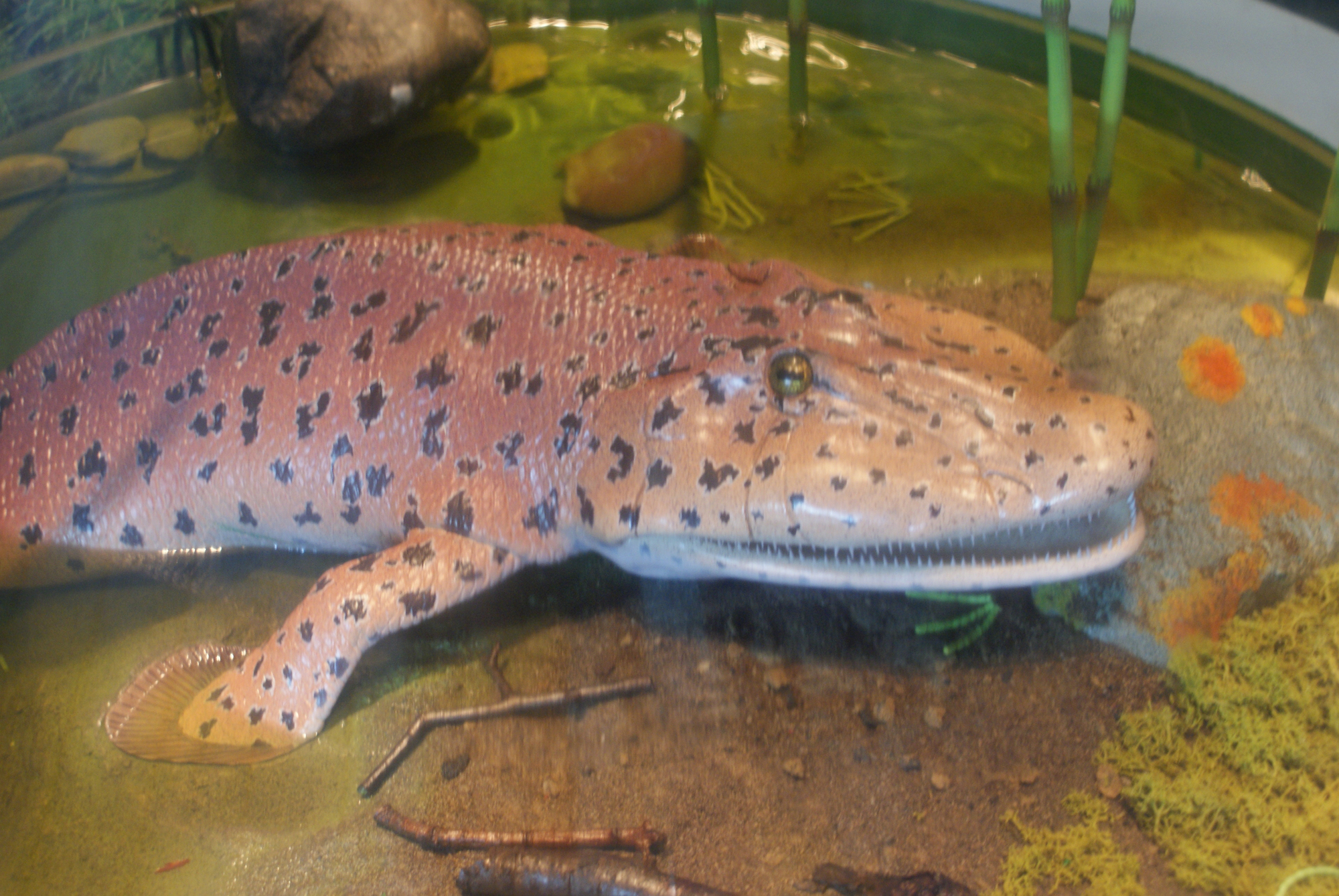
This five-digit blueprint was quickly encoded into the Hox genes of our early ancestors, a set of master control genes that act as a genetic blueprint, ensuring that body parts, organs, and limbs end up in their correct locations. These Hox genes have since determined that all of our common ancestors evolved from this five-digit pattern.
Of course, not all living vertebrates have five fingers and toes, but more than 99% of tetrapods (all terrestrial species with vertebrae) share the same five-toed bone structure. This includes sea lions, whales and seals, which have five finger-like protrusions hidden inside their flippers, and bats, born with webbed fingers that form the structure of their wings. Even horse and bird embryos start briefly with five digits before rearranging into hooves or (in the case of birds) a fewer number of toes.
Only one in 500 to 1,000 humans are born with extra fingers or toes. This birth difference is known as polydactyly and is linked to an overexpressive gene called Sonic Hedgehog (you read that right!).
Bring it back to the fish
Yet it wasn’t until 2016 that a group of scientists at the University of Chicago determined how a fish’s fin rays (which are the bony elements of the skeleton that provide structure, flexibility, and additional support to the fish’s fins) ultimately evolved into fingers and toes. Nakamura was a member of the team.
The scientists used tiny ray-finned fish like zebrafish, medaka and other tropical fish often found in home aquariums for their study. They then used CRISPR-Cas, a gene editing technique that allowed them to modify the fish’s DNA and remove the Hox genes needed for limb development.
From there, the scientists compared the embryonic cells of these mutant fish to those of mice as they grew and developed, ultimately determining a genetic link between the two. “We discovered that our fish fingers and fins use the same Hox genes and their functions to develop,” says Nakamura. In other words, fish fin rays and our fingers derive from the same genetic toolbox.
What it all means
Although their research established a direct correlation between fish fin rays and tetrapod fingers, there is still much to learn about how humans developed their fingers and toes. “We discovered that our fingers probably evolved from fin rays, despite the fact that they are very different in structure,” says Nakamura.
“Many questions remain,” he said. “For example, how did they transform into fingers? And what types of genes and molecules regulated this transformation?” With better gene-editing tools like CRISPR-Cas9, a more precise type of CRISPR-Cas system, emerging over the past decade, Nakamura thinks the answers could come sooner rather than later.
Other common points
According to Nakamura, tetrapods and fish are genetically similar in other ways as well. For example, the hindlimbs of land vertebrates evolved from the pelvic fins of ancestral lobe-finned fish, while the shoulder girdles (the bony structure that forms the basis of our shoulders) developed from the gill arches of fish, which are the skeletal loops that support a fish’s gills for breathing and feeding.
Related Stories “Ask Us Anything”
“Although fish don’t have necks,” Nakamura explains, “through evolution, humans separated the skull bone from the shoulder girdle, creating the neck space.” This allowed us to move our heads independently of our bodies for things like hunting and scanning the horizon.
This is what’s called an “evolutionary innovation,” a new trait or functionality that allows organisms to function and adapt more, much like how we came to have fingers and toes. “We took the structures that existed in fish fins,” Nakamura explains, “and our bodies changed their development over time to become finger-like tissues, more adapted to land.”
It’s just a number
Why do we have five fingers and five toes? This remains inconclusive, but the number certainly makes for a good nursery rhyme.
In Ask us anythingPopular Science answers your wildest and most burning questions, from everyday things you’ve always wondered to bizarre things you never thought to ask. Do you have something you always wanted to know? Ask us.

PopSci Outdoor Gift Guide 2025


