More measles in South Carolina imperils U.S. elimination status


A dramatic increase in measles cases amid the ongoing outbreak in South Carolina has put the United States on the brink of losing its elimination status.
The South Carolina Department of Health on Tuesday reported 20 new cases of measles since Friday, bringing the state’s total this year to 179. That figure is more than the number of measles cases recorded for the entire United States in six of the last 10 years.
This year, the country has seen more than 2,000 cases of measles, 93% of which involved people who were unvaccinated or whose vaccination status was unknown, according to the Centers for Disease Control and Prevention. That’s by far the highest figure since the disease was first considered eliminated in the United States 25 years ago.
Measles is considered eliminated in a country when it no longer spreads consistently for a full year. In the United States, this deadline is fast approaching: transmission of the highly contagious disease has continued since around January 20. Unless this trend stops abruptly in the next three weeks – which is highly unlikely – the country could lose its elimination status, as Canada did in November.
Dr. Linda Bell, South Carolina’s state epidemiologist, said during a press briefing Tuesday that measles transmission continues in area homes, schools and churches, and 287 people are quarantined to help limit the spread.
“We expect more cases through January,” she said.
All but three of South Carolina’s measles cases recorded this year have been linked to an outbreak in Spartanburg County in the northwest part of the state.
The vast majority of cases involve unvaccinated people, most of whom are children aged 5 to 17.
“We think the holidays contributed to this,” Bell said, referring to measles transmission at family gatherings and during travel.
At least three people in South Carolina have been hospitalized with measles-related complications, according to the Department of Health.
The increase in measles cases in the United States this year is mainly driven by a decline in childhood vaccination rates and an increase in vaccine exemptions. Fewer than 93% of kindergartners received two doses of the combined measles, mumps, and rubella (MMR) vaccine for the 2024-2025 school year, compared to 95% for the 2019-2020 school year. A vaccination rate of at least 95% is necessary to curb the spread of the virus.
A large measles outbreak in West Texas this year accounted for a substantial portion of the U.S. total: About 760 cases linked to the outbreak were recorded from January to August. It was centered in Gaines County, where kindergartners had a 77% measles vaccination rate for the 2024-2025 school year. Some affected families have chosen unproven remedies like vitamins and cod liver oil instead of measles vaccines.
Two unvaccinated school-aged children in Lubbock, Texas, died of measles, as did an unvaccinated adult across the border in New Mexico who did not seek medical attention.
Before this year, the United States had not seen a death from measles in about a decade.
In addition to the current outbreak in South Carolina, cases of measles are smoldering in Arizona and Utah as part of an outbreak that began in late summer. And just last week, Washoe County, Nevada, experienced its first case of measles since 2018. Health officials also warned of possible measles exposures at Newark Liberty International Airport, Boston’s Logan Airport and Denver International Airport.
Many public health experts have expressed concern about federal messaging on vaccines since Health and Human Services Secretary Robert F. Kennedy Jr. took office in February. Although Kennedy called on people to get the MMR vaccine, he also presented vaccination as a personal choice, emphasized unproven treatments such as steroids and antibiotics, and falsely claimed that immunity to measles was rapidly waning.
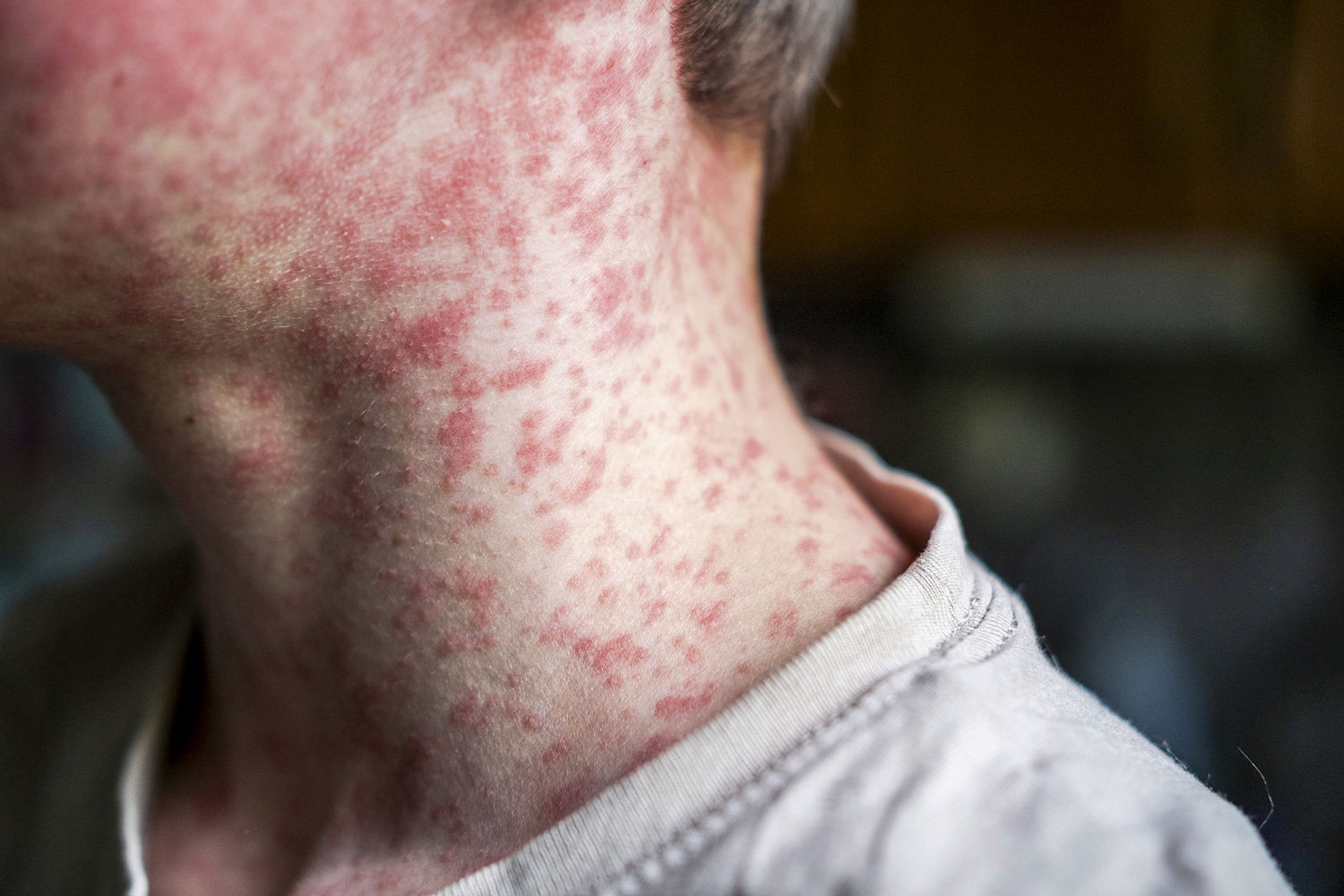
Common symptoms of measles include a spotted rash, high fever, cough, runny nose, pink or watery eyes, and white spots on the inside of the cheeks. Severe cases can progress to pneumonia or brain swelling. The virus can linger in the air for up to two hours after an infected person leaves. Without vaccine immunity or previous infection, about 9 in 10 people exposed to measles will contract it.
State and county health departments continue to emphasize that vaccines are the best way to prevent disease. Two injections are 97% effective and usually provide lifelong protection.


