Todd Blanche says he would not recommend a pardon for Ghislaine Maxwell

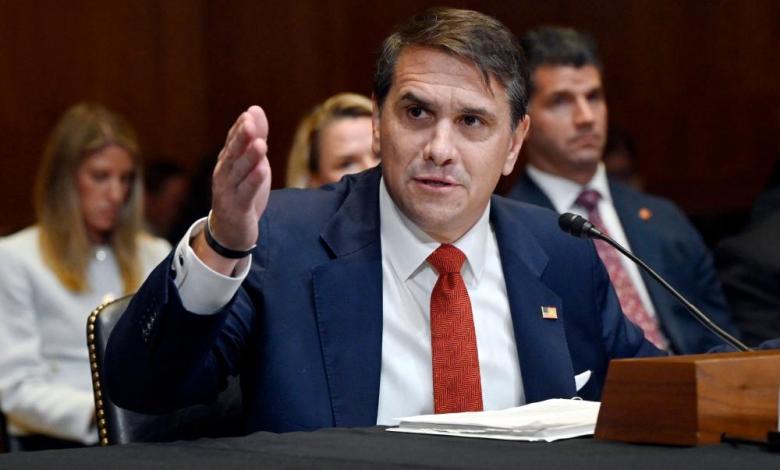
Todd Blanche, the acting U.S. attorney general, told lawmakers Tuesday that he would not recommend a pardon for Ghislaine Maxwell, the longtime associate of Jeffrey Epstein who is serving a 20-year prison sentence for sex trafficking crimes.
Blanche’s comments came Tuesday during a Senate hearing, where he was testifying before the Appropriations subcommittee about budget requests for the Justice Department.
During one exchange, Sen. Chris Van Hollen, Democrat of Maryland, asked Blanche if the Justice Department, and he as acting attorney general, could commit to not recommending a pardon for Maxwell.
“Yes, I can commit to that, of course,” replied Blanche, who is a former personal lawyer for Trump.
The statement comes as Maxwell has exhausted a series of appeals against his conviction, with the US Supreme Court refusing in October to hear his petition.
Earlier this year, Maxwell appeared before the House Oversight and Reform Committee, but invoked his Fifth Amendment right and refused to answer the panel’s questions. Her lawyer told lawmakers she would only speak if she granted him clemency.
And in April, reports emerged that committee members were divided over whether Trump should consider pardoning Maxwell in exchange for his cooperation in the committee’s investigation into Epstein.
Last year, as the administration faced growing pressure to release more documents related to the Epstein investigation, the administration dispatched Blanche, who was then deputy attorney general, to question Maxwell about the Epstein case. The interview, conducted over two days in July, was followed by the release of the transcripts and audio recordings by the Justice Department.
Shortly after that meeting, in August, Maxwell was transferred from a low-security prison in Tallahassee, Florida, to a minimum-security camp in Texas, where most prisoners are serving time for nonviolent offenses and white-collar crimes. At the time, experts called the move “unprecedented.”
Since then, reports have surfaced that Maxwell was “much happier” at the Texas facility than she was at her previous prison, and there have been allegations that Maxwell was receiving preferential treatment.
At Tuesday’s hearing, Blanche denied that Trump personally sent him to interview Maxwell and said he did not know whether she was receiving better treatment at his new facility.
The possibility of a pardon for Maxwell, improbable as it was, has long outraged survivors and their advocates.
Earlier this month, Spencer Kuvin, legal director and litigation director at Goldlaw, which has represented many Epstein survivors, told the Guardian that “any talk of clemency for Ghislaine Maxwell in exchange for testimony subverts justice – it risks rewarding the very person who helped enable the abuse.”
A representative for Maxwell did not immediately respond to a request for comment on Blanche’s.


