Western states miss key deadline as Colorado River impasse persists

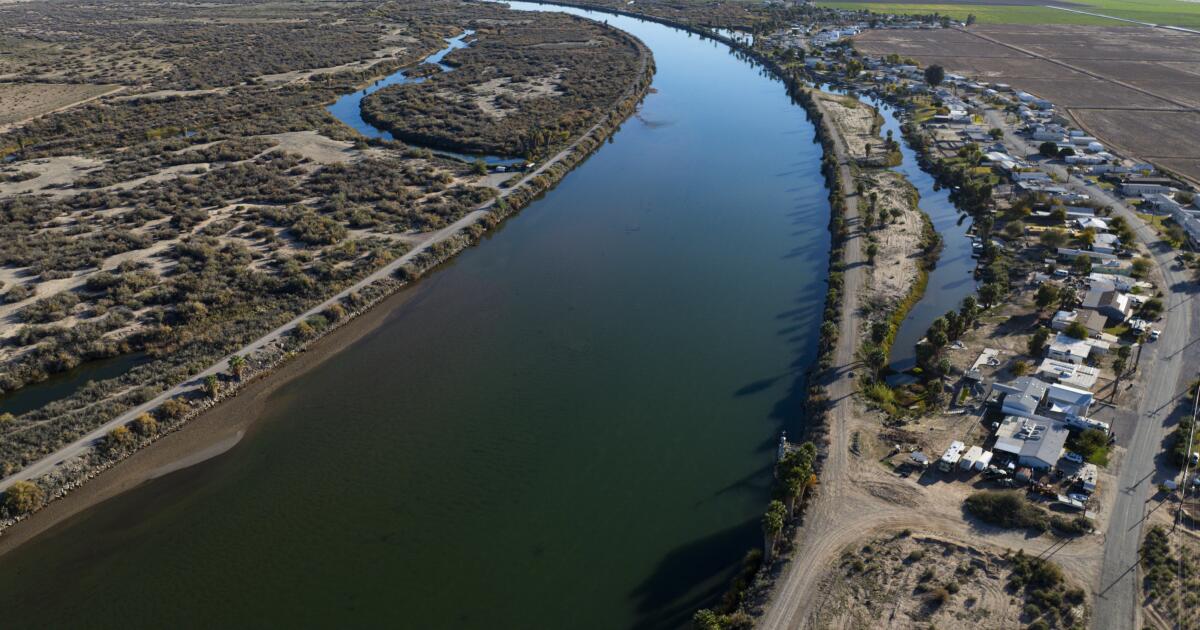
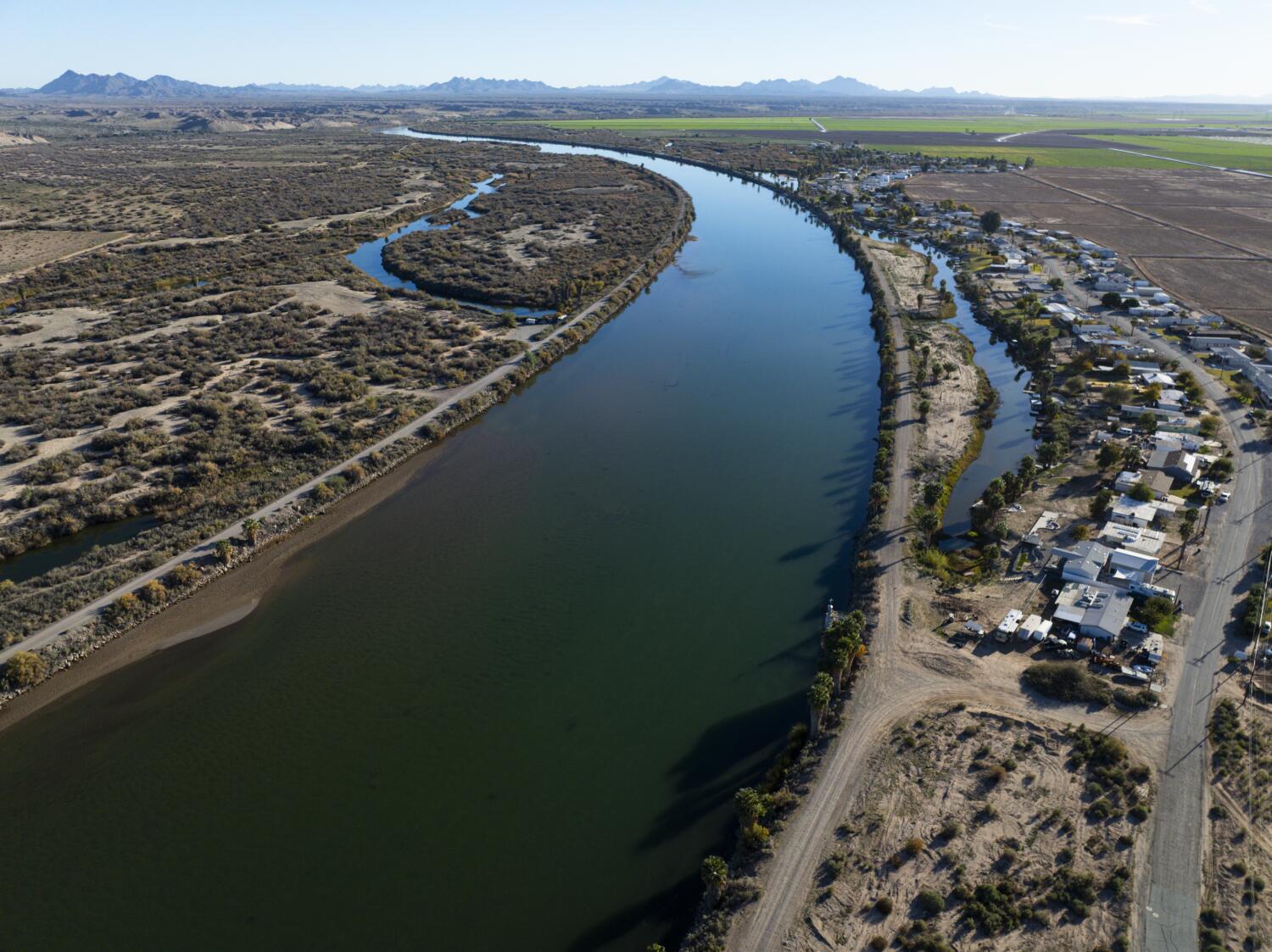
Leaders from seven states announced Friday, a day before the Trump administration’s deadline, that there is still no agreement on sharing the dwindling waters of the Colorado River.
This leaves the Southwest in a quagmire with uncertain impacts as the river’s depleted reservoirs continue to dwindle.
Former U.S. Interior Secretary Bruce Babbitt said in an interview with The Times that the impasse now appears so intractable that Trump administration officials should step back, abandon current efforts and start again.
Babbitt said he thought it would be a mistake for Interior Secretary Doug Burgum to “attempt to impose a long-term solution” by ordering major water shutoffs in the Southwest — which would likely trigger a long crisis. legal battle.
“We need a fresh start,” Babbitt said. “I believe that in the absence of unanimous agreement, [the Interior Department] we should renew the existing agreements for five years, and then we would have to start all over again. We should abandon the whole process and invent a new one.
Officials in all seven states have attempted to increase reservoir levels via voluntary water reductions and federal payments to farmers who agree to leave the fields dry for part of the year. But after more than two years of attempts to develop new long-term rules for water sharing, they remain deadlocked; existing rules are set to expire at the end of this year.
Likewise, states have exceeded a earlier federal deadline in November.
Interior Ministry officials did not specify what their reaction would be. The agency is considering four options to impose budget cuts from next year, as well as for the possibility of taking no action.
Babbitt, who served as Interior secretary under President Clinton from 1993 to 2001, said he believed the Trump administration’s options were too narrow and inadequate. They would place the burden of water cuts on Arizona, California and Nevada, while requiring no for the other four upstream states: Colorado, Utah, Wyoming and New Mexico.
Without consensus, the only reasonable approach is to extend existing water-saving agreements for a few years while making new efforts to find solutions, Babbitt said.
Federal officials have “missed the opportunity” to play a strong leadership role, he said, and it is time to reimagine that effort as a “much more inclusive, public and broad” process.
The river provides approximately 35 million people and 5 million acres of farmland, from the Rocky Mountains to northern Mexico. California uses more water than any other state, but it has reduced it significantly in recent years.
Since 2000, an incessant drought, intensified by climate change, has undermined the flow of the river and left the tanks depleted. This winter’s record heat and lack of storms have left the Rockies with very little snow.
Lake Mead, the river’s largest reservoir, is now 34% full, while Lake Powell is 26% full.
“Our states have conserved large amounts of water in recent years,” California Governor Gavin Newsom said in a joint statement. statement with Katie Hobbs of Arizona and Joe Lombardo of Nevada. “Our position remains firm and fair: the seven basin states must share responsibility for conservation. »
State positions haven’t changed much in the past two years, said JB Hamby, California’s lead negotiator, and reaching an agreement will require everyone to make a firm commitment to reducing their emissions.
Officials representing the four upper basin states said they had offered compromises and were ready to continue negotiations. In a written statement, they noted they were already facing significant water outages and said their downstream neighbors were trying to get water “that simply doesn’t exist.”


