How Iran conflict and Xi meeting delay could reshape US-China leverage


NEWYou can now listen to Fox News articles!
President Donald Trump’s decision to delay a planned meeting with Chinese President Xi Jinping as the U.S.-Iran conflict unfolds raises a new question in Washington: Whether pressure on global oil flows takes into account U.S. influence over Beijing.
The summit was originally scheduled for March 31 to April 2, but Trump said on March 16 that he had asked China to delay it for “about a month,” explaining, “We are at war. I think it’s important that I’m here.
The next day, Trump said the meeting would take place in “about five or six weeks,” adding, “We’re working with China — they were OK with that.”
“The president has some things here at home in May that he needs to take care of,” White House press secretary Karoline Leavitt told reporters on March 16, adding that the two sides would set a date “as soon as possible.”
US INTELLIGENCE SOFTENS CHINA’S THREAT, DECLARES NO INVASION OF TAIWAN PLANNED BY 2027 DESPITE MILITARY BUILDUP
At the same time, U.S. strikes on Iran – and earlier pressure on Venezuela – have affected countries critical to China’s energy supplies, disrupting shipping and increasing costs without completely cutting off flows.
China remains the largest buyer of Iranian oil and shipments continue despite the conflict. But increased risks, rising prices and logistical disruptions are straining one of Beijing’s most important energy lifelines – raising the prospect of leverage by Washington by raising the cost and risk of the oil on which China depends.
Pressure on China’s energy and influence
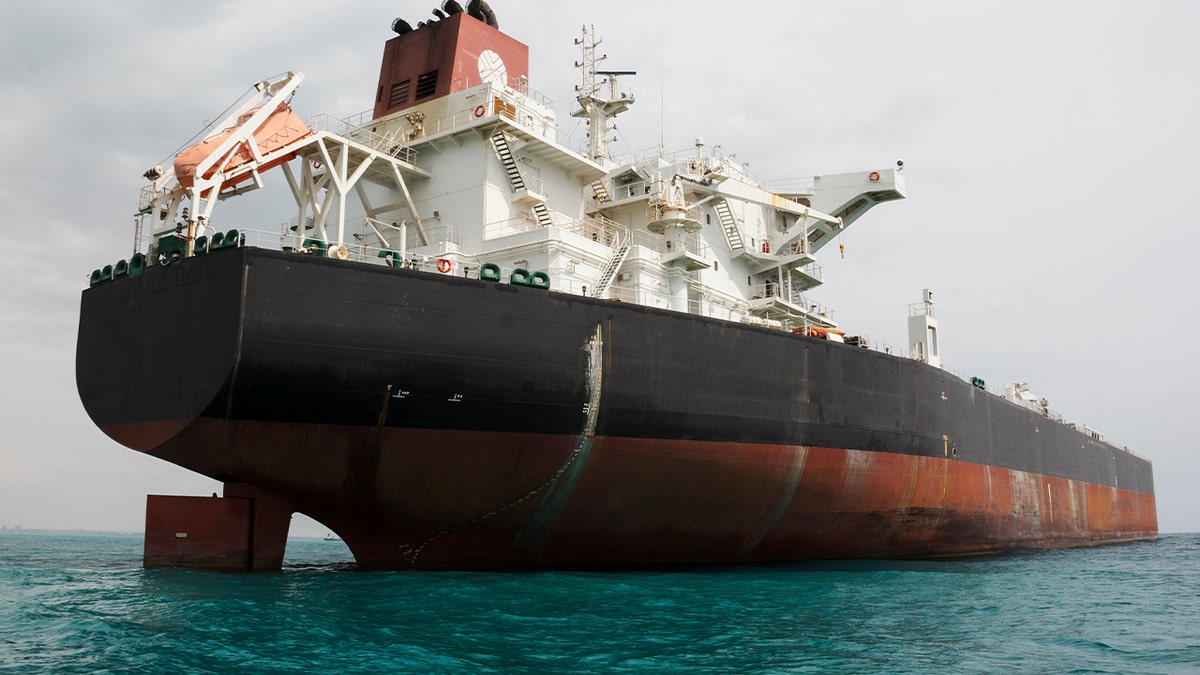
China remains the largest buyer of Iranian oil and shipments continue despite the conflict. (Farzad Frames/Getty Images)
In recent months, U.S. actions have hit two countries with which China has developed deep economic ties: Venezuela and Iran, both linked to Beijing through oil and investment.
In 2023, China helped broker a deal restoring relations between Saudi Arabia and Iran, a move widely seen as a sign of Beijing’s growing influence in the Middle East. That détente is now being tested as the conflict escalates, revealing the limits of China’s ability to maintain stability once fighting begins.
These developments more clearly highlight China’s position: a global power with significant economic reach, but limited willingness – and potentially limited ability – to protect its partners when conflict escalates.
“It’s very connected,” said Brent Sadler of the conservative think tank Heritage Foundation in Washington. “At the end of the day, it’s all about China.”
For Beijing, the issues are above all economic. China is the world’s largest oil importer, and disruptions to Iranian supplies can raise costs, complicate logistics and reduce access to the discounted crude that has helped fuel its economy.
At the same time, the conflict itself is rooted in long-standing tensions with Iran, including over its nuclear program, missile capabilities and support for mandated regional groups.
“It’s not just about China,” said Piero Tozzi of the America First Policy Institute. “It’s mainly about Iran.”
That distinction — between what drives the conflict and what it affects — has shaped the debate in Washington about the extent to which the fallout could influence the broader dynamic between the United States and China.
This delay adds another layer to this dynamic, coming as energy markets tighten and talks between the United States and China continue.
Oil flows disrupted – but still moving
China’s dependence on Iranian oil remains a central vulnerability, even as the conflict disrupts shipping lanes and increases risks in the Strait of Hormuz, through which about half of China’s oil imports pass by sea.
Shipping through the Strait of Hormuz has declined sharply and become much more unstable, with only limited shipments of oil still passing through, despite increased risk.
Iran accounts for around 13% of China’s crude imports, while China remains Tehran’s biggest customer, buying around 80-90% of its exports.
Much of this oil is sold at a discount – often between $8 and $10 a barrel – giving Chinese refiners access to cheaper crude that is difficult to replace elsewhere.
US to destroy 16 Iranian mining boats as Strait of Hormuz oil standoff deepens
Much of the trade is handled by small, independent refineries, allowing Beijing to maintain imports while limiting the exposure of its state-owned energy companies to U.S. sanctions.
In many cases, these transactions are carried out in yuan rather than dollars, with the proceeds often recycled into Chinese goods and infrastructure projects.
“One of China’s long-term goals is to challenge the supremacy of the dollar,” Tozzi said.
Trump orders War Department to postpone strikes at Iranian energy sites, citing ‘productive’ talks to end war
“It’s going to be difficult to turn off the supplier side,” Sadler said, pointing to the well-established networks that keep crude flowing despite sanctions and conflicts.
These networks – built over years of sanctions – allow Iranian oil to be re-routed through indirect channels, often using tankers that operate outside of traditional tracking systems.

Officials have not cited China as a justification for the operation, but the overlapping resources and priorities have fueled debate in Washington over how to balance immediate threats in the Middle East with long-term competition with Beijing. (Li Gang/Xinhua via Getty Images)
For China, this means continued access to supply, but at greater cost and risk as shipments become harder to move and insure.
The result is sustained pressure rather than a cutoff: fewer shipments, higher prices and increased uncertainty around a supply line that Beijing relies on.
The Trump administration also took an unusual step to stabilize energy markets, temporarily easing sanctions on Iranian oil already loaded on tankers to allow the sale of those barrels. The short-term waiver, covering around 140 million barrels, aims to ease supply disruptions caused by the conflict.
But it also expands access to oil that had largely flowed to China, increasing competition for those barrels rather than allowing Beijing to remain the dominant buyer.
The United States has also eased some restrictions on Russian oil in recent weeks, allowing additional supplies to Asia. Taken together, these measures are reshaping global oil flows, forcing China to compete more directly for supplies rather than relying so much on discounted crude.
U.S. intelligence assessments reflect similar limitations, describing the Sino-Iranian relationship as economically important but largely transactional rather than a coordinated strategic bloc.
Combat experience – and pressure on stocks
The Iranian conflict gives U.S. forces real-world experience that cannot be replicated in training environments, allowing different branches of the military to operate together in real-world conditions and test how their systems work.
“You get a lot of real-world experience,” Sadler said. “We are significantly refining our capabilities.”
But these gains come at a cost.
“We also wear out our sailors, as well as equipment, planes and ships.”
The same stockpiles used in the Middle East would be needed to prevent any conflict in the Indo-Pacific region.
“We are not producing munitions at the speed and capacity that we should be producing. This is not a new problem,” Sadler said. “We’re going to eliminate a lot of our interceptor missiles very quickly.”
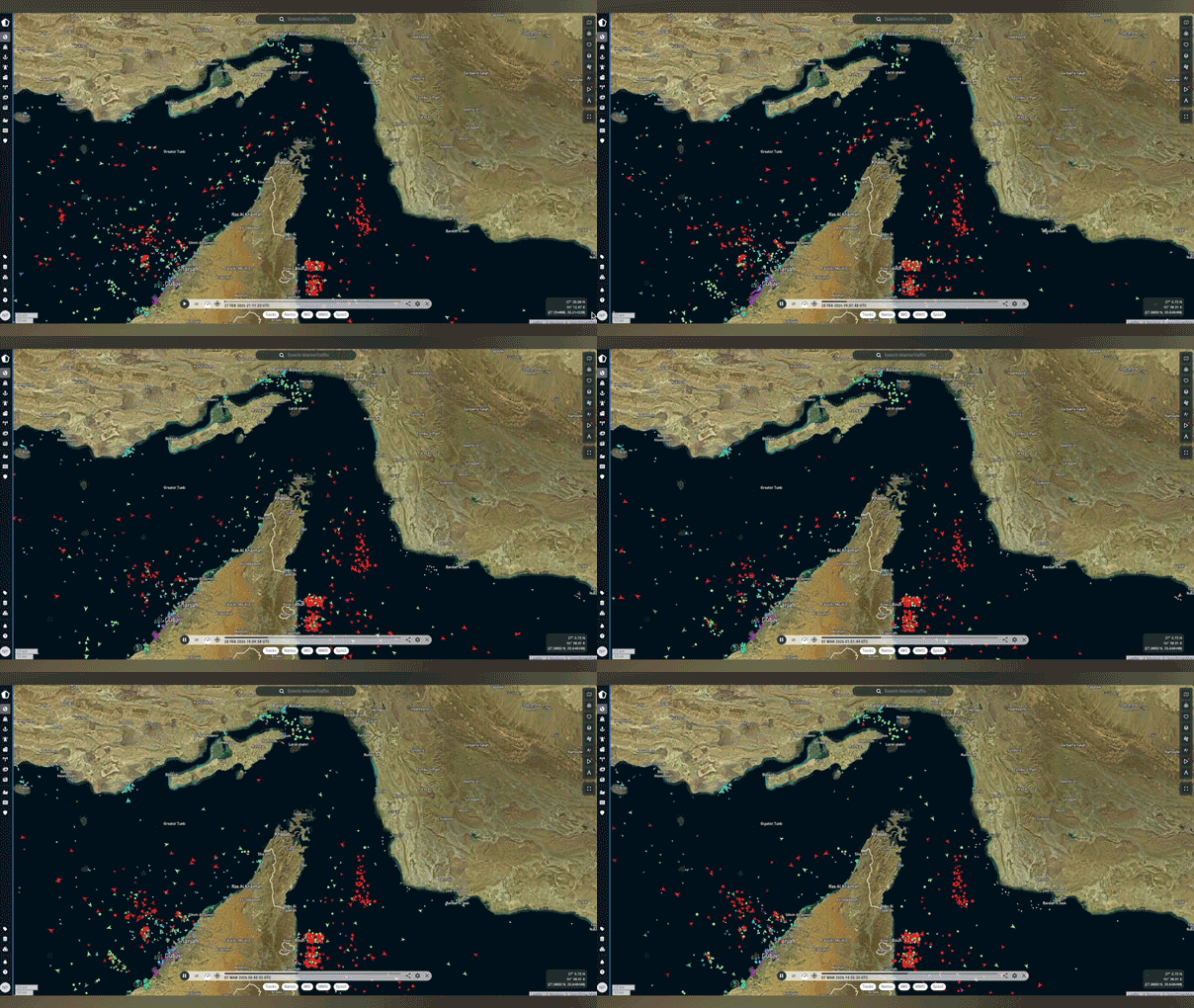
China’s dependence on Iranian oil remains a central vulnerability, even as the conflict disrupts shipping lanes and increases risks in the Strait of Hormuz, through which about half of China’s oil imports pass by sea. (Kpler/Maritime Traffic)
He warned that at current production rates, stocks could last only “maybe a week or two”, provided they are used judiciously.
At the end of 2025, the United States had approximately 414 SM-3 interceptors and 534 high-altitude area defense (THADD) interceptors, according to the Center for Strategic and International Studies. THAAD is one of the main American military systems for intercepting ballistic missiles in their final phase of flight.
These systems have been used extensively in recent operations in the Middle East, and they would also play a central role in any potential conflict with China, particularly in defending U.S. forces and its allies in the Indo-Pacific against missile attacks.
Reducing these stockpiles now raises a practical concern: the more the United States uses these interceptors in the Middle East, the less immediately available they are for a full-scale conflict with Beijing.
China keeps its distance
Beijing has avoided direct involvement in the US-Israeli conflict in Iran, focusing on diplomacy, with its vast oil reserves as a fallback.
“They’re all very opportunistic,” Sadler said. “They don’t want to take excessive risks.”
CLICK HERE TO DOWNLOAD THE FOX NEWS APP
“The more diplomatic noise they make, the more it draws attention to their inability to defend the interests of their partners,” he said.
The conflict’s effects extend beyond the region, testing China’s role as a global power while forcing the United States to weigh its immediate military demands and long-term competition with Beijing.
Chinese officials said they were “very concerned” about the escalation and called for an immediate halt to military operations, while Foreign Minister Wang Yi called the strikes “unacceptable.”
The Chinese embassy could not immediately be reached for comment.


:max_bytes(150000):strip_icc():format(jpeg)/GettyImages-1142669969-dd6eef20561143e5a99784d339086900.jpg?w=390&resize=390,220&ssl=1 "15 Foods To Eat When You're Sick—and What To Avoid")

