The Universe Started as a “Hot Soup of Particles and Photons” 13.8 Billion Years Ago


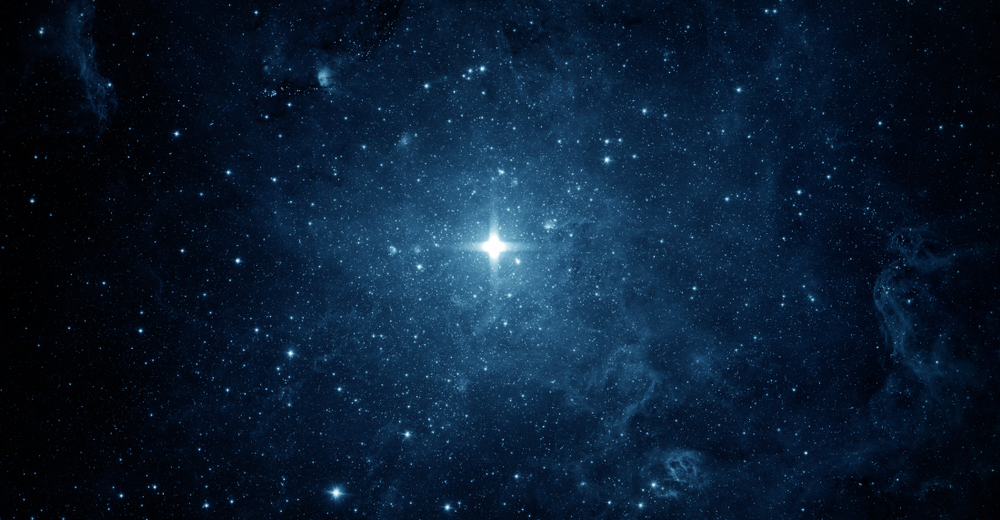
About 14 billion years ago, a tiny precision of heat and extreme density broke out in a large explosion, leading to the creation of 100 billion and 2 billions of galaxies, one of which being our original planet.
Researchers estimate the age of the universe using a variety of cosmological parameters, including the monitoring of distant light, observation of ancient stars and the analysis of normal matter, dark matter and dark energy.
AVI LOEBProfessor of science and founding director of Harvard Black Hole initiativeexplains that even if a large part of the universe remains a mystery, the researchers turn to what is known on the cosmos to determine its age. The Lambda cold black matter model (λcdm) represents the cosmological constant, a term in the theory of general relativity of Albert Einstein which explains the acceleration of the expansion of the universe.
But to understand how the universe has aged, we must first rewind the time of time of billions of years for having started.
The universe began with a “big bang”
Billions of years ago, the universe was condensed at a smaller point than a single atom which finally became warmer and denser, leading to a massive explosion known as Big Bang. This blow created matter and extended it into the universe, cooling and changing its energy over time to form galaxies, stars, moons, suns and planets like ours.
Part of this heat, or radiation, which filled the universe after the Big Bang is still detected in our universe today.
Learn more:: How did the universe started?
The oldest visible light in the universe
According to the Harvard & Smithsonian Center for AstrophysicsDuring the first 380,000 years after the Big Bang, the universe was a “hot soup of particles and photons, too dense for light to move very far”. As the universe developed and cooled down, this “fog” of electrons and free -moving protons was finally cleared, allowing the light to travel. This radiation, or heat, is known as the cosmic microwave (CMB) – a slight residual light representing the oldest light humans can observe.
CMB seems to be very uniform, which means that the observation of fluctuations and subtle changes helps scientists understand how galaxies have been formed over billions of years.
“By analyzing these fluctuations, it is a bit like a rosetta stone.
“The main thing is that we can adapt the parameters of the universe and obtain an estimate of the age of the universe today. By analyzing the fluctuations of the cosmic microwave background using physics, depending on the general relativity and the dynamics of radiation and matter in these early times, to understand how long there is, “says Loeb.
While the CMB represents the first light that we can observe, the cosmic horizon is the limit of the observable universe, allowing scientists to determine the distance and age of a cosmic object.
Our solar system and our land have formed in the last third of cosmic history. The in -depth removal of our own celestial house is a large majority of 200 billion billions of stars. (This is 200,000,000,000,000,000,000, for the file.)
The age of the universe begins with ancient stars
The oldest stars in the universe are close to the current estimated age in the universe, 13.8 billion years, when the first stars were formed.
“We can use the oldest stars as chronometers, as clocks that measure how long has passed like a given distance from us,” explains Loeb.
Earlier this year, the NASA James Webb space telescope observed One of the oldest galaxies that appeared 330 million years after the Big Bang
“The lower limit is the oldest age age, because you cannot have constituents of the universe which are older than the universe itself – it is impossible,” explains Loeb. “It’s like having older children than their parents.”
THE “Matuselah star“Cataloged by NASA as HD 140283, is generally considered to be the oldest known star in the universe, with estimates that put it as old as 14.5 billion years, give or take, put it at the same age as the universe. This divergence in the aging of a star compared to the universe is partly influenced by the way in our universe in our universe.
A large part of the universe is not defined and without characteristic
A large majority of the composition of the universe is unknown to scientists today.
Only 5% of the mass budget of the universe is an ordinary material that constitutes everything we can see, like stars and galaxies. The dark matter, which interacts gravitational, constitutes around 27%, while black energy – a mysterious force stimulating the expansion of the universe – represents around 65%.
The last two, dark matter and black energy, are largely not described.
“All we know is that it exists, and we know that it exists because it affects gravity. We do not see it, it does not interact with light, and therefore we call it dark matter, but we do not know what it is, “explains Loeb, adding that this material could be made of particles that do not interact with light or even small black holes.
It is not surprising to find so much dark matter because the beginning of the universe had very extreme conditions. During Big Bang, temperatures and densities were extremely high, which means that there could have been physical processes that produced non -replicable particles today. The clusters of dark matter, providing “relics” that refer to our understanding of the beginning of the universe.
“It’s a bit like going to a party and you see people regrouping – do you realize that there must be a celebrity around them because if not why would these people come together?” You have a dark matter that causes ordinary material to regroup because of its severity, but we cannot see it directly. We only see the effect that [dark matter] A by gravity on ordinary matter, ”explains Loeb.
Black energy does not come together but is uniform. In its simplest interpretation, dark energy is a vacuum that has a certain mass per unit of volume fixed with the same energy density.
THE Dark energy spectroscopic instrument Survey of the dark energy of the universe to complete the understanding of the cosmic microwave. Using this information, Desi combines other data to further validate the conclusion that the universe has around 13.8 billion years.
Will the universe die one day?
For Loeb, the most interesting question is not the age of the universe, but if it will die.
“Will there be an end to the universe?” he asks. “I can tell you what my age has, but a greater concern for me, how long it has been. This is a completely different question. ”
Assuming what we currently know about our universe, Loeb says that it does not seem that the universe will deteriorate but will rather continue to accelerate forever, leaving the earth in the dark while the distant galaxies leave our cosmic horizon.
“We will be alone in a dark place, in an empty space, if you assume that the components we have at the moment will not change their nature,” explains Loeb.
Again, in the field of theoretical physics, anything is possible.
Find out more: Big Bang sound waves suggest that the earth sits inside a vacuum
Sources of articles
Our writers at Discovermagazine.com Use studies evaluated by high -quality peers and sources for our articles, and our publishers examine scientific precision and editorial standards. Review the sources used below for this article:
Madison reports focus on marine and environmental issues, climate change and new scientific discoveries related to health and technology. Raised on an island in southeast Alaska, Madison is now based in west of Montana. His writing was presented in Time, Snopes, Business Insider, Mountain Journal, Ecowatch and Alaska Magazine, among others. When he does not write, Madison teaches yoga, pupil of chickens and promotes adoptable dogs and cats.


