Kuxiu S4 25W Semi-Solid Wireless 10K Power Bank review: thinnest 10K magnetic power bank


At a glance
Expert rating
Benefits
- The thinnest 10K power bank ever
- Semi-solid technology
- 25W wireless or 30W wired charging
- Crutch
- Smart, bright display
Our Verdict
The Kuxiu S4 is the thinnest 10K magnetic wireless power bank we’ve tested to date. If you want thinner, you’ll have to sacrifice half the battery capacity with a 5K battery.
Price when reviewed
This value will display geotagged pricing text for the undefined product
Best price today
Best prices today: Kuxiu S4 Semi-Solid Safe 25W Wireless 10K Power Bank

When we reviewed the Kuxiu S3 25W 10K Solid State Power Bank, we called it the “fast 25W cordless battery that has it all.” We were impressed with its built-in USB-C cable, built-in kickstand, and ultra-clear digital battery display.
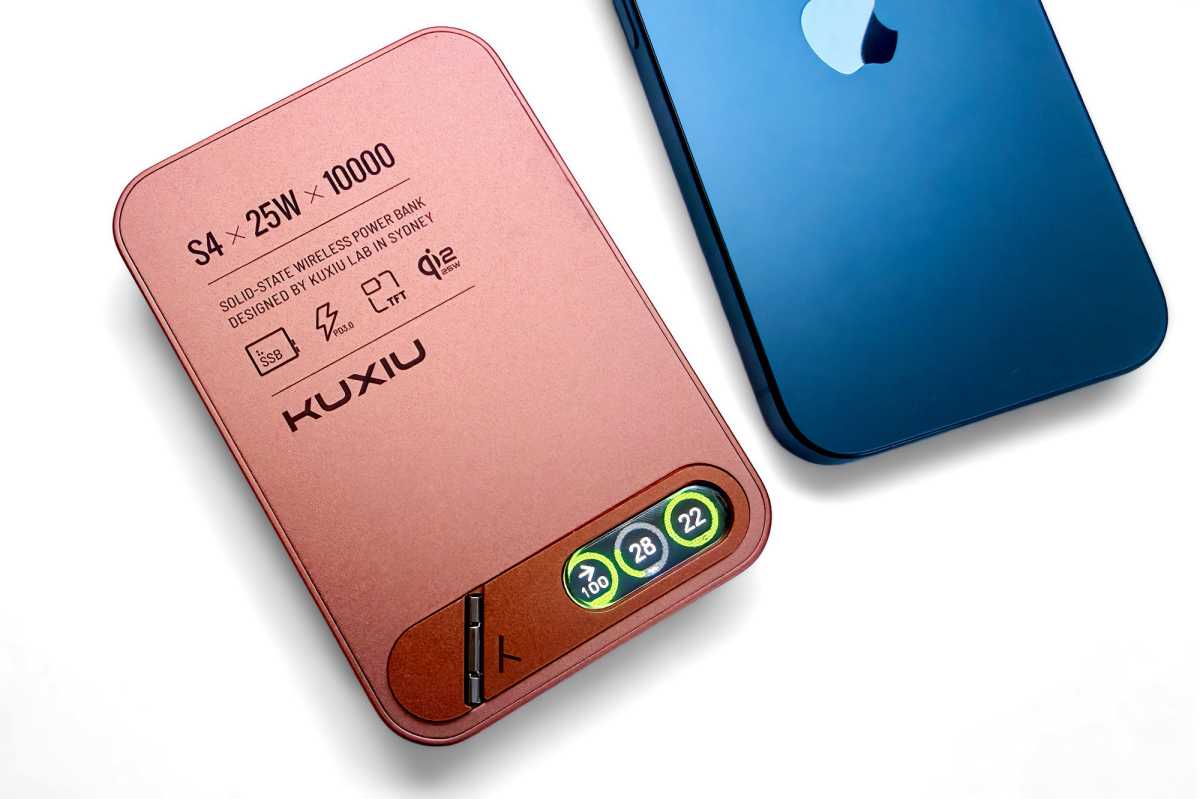
Today, the same company has launched the S4 power bank. It’s not the S3 and a few others. In fact, it’s a bit less than the S3, but in one respect it’s great news: because the Kuxiu S4 is the thinnest 10K magnetic wireless power bank we’ve ever tested. And it’s pretty special in other ways too.
Simon Jarry
Power Bank Specifications
- Ability: 38.5 Wh (10,000 mAh)
- Input charger: USB-C (30W)
- Output charger: Wireless (25W) and USB-C (30W)
- In testing, I charged the iPhone to: 177%
- Weight: 7.55 ounces (214 g)
- Dimensions: 4.1 x 2.7 x 0.53 inches (104 x 69 x 13.7 mm)
- Colors: Cosmic orange, black
Battery capacity: 10,000 mAh (10K) is the largest battery size you can attach to the back of your iPhone MagSafe without it being too bulky to carry around – and smaller pockets will better appreciate a 5,000 mAh (5K) power bank. Read reviews of all the best magnetic power banks we tested, 5K and 10K.
Not all 10K or 5K power banks have exactly the same capacity. To be more specific, you need to look at the capacity in watt hours (Wh). The 38.5 Wh of the S4 is a little below the 39.5 Wh of the S3. The average watt-hour capacity of a 10,000-hour battery is 37.9 Wh.
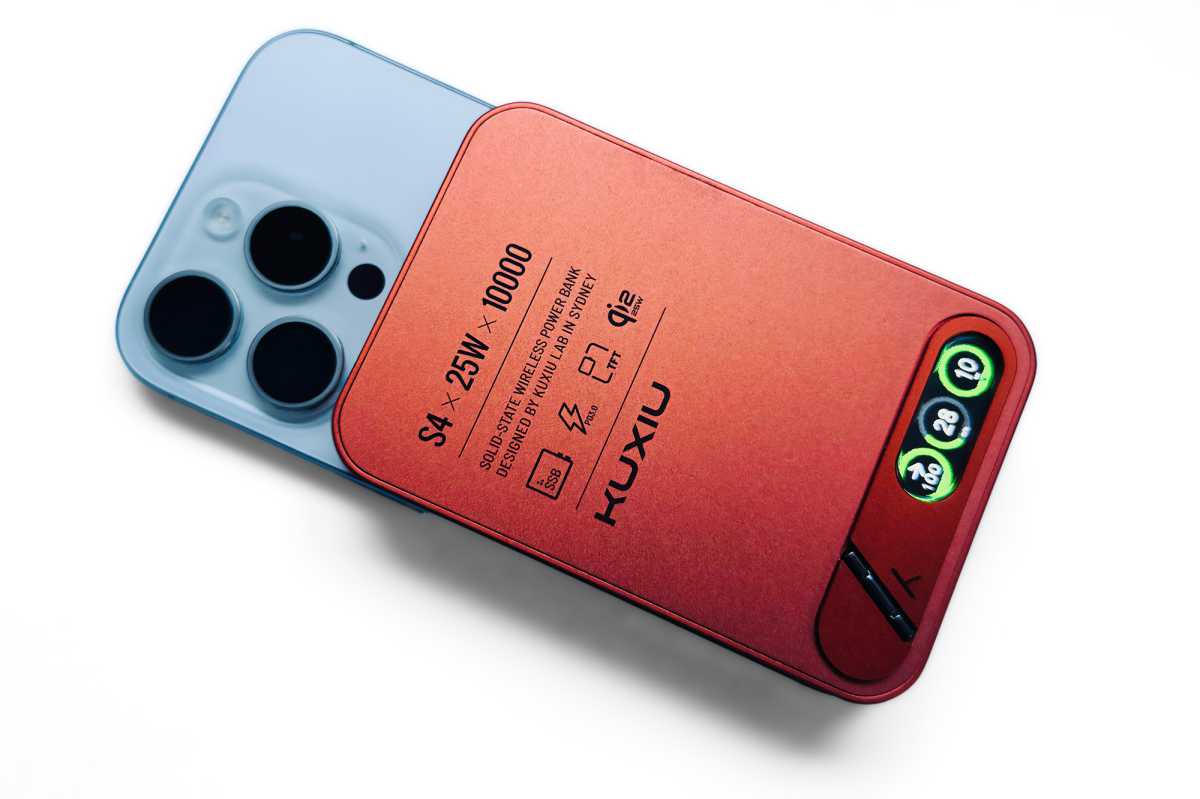
Speed: For power output, the S4 is rated at 25W, using the latest Qi2.2 wireless charging technology. Only the iPhone 16 series and later can take the 25W, with older iPhones pegged at 15W (still much faster than the 7.5W batteries still available). Note that the 17th is also limited to 15W, and the iPhone Air to 20W.
The S4’s USB-C port is rated at 30W, so it will charge your iPhone faster if you need to power it up as quickly as possible, but you’ll need to bring a USB-C cable, unlike the S3 which comes with its own built-in cable. The fastest wired iPhone charging we’ve seen from a magnetic power bank is 45W from the Baseus PicoGo AM52, but the iPhone is unlikely to accept much more than 35W anyway.
When charging the S4 power bank, the power input is 30W, which is the upper end of the range for magnetic wireless power banks.
Simon Jarry
Like the S3, the S4 is built using semi-solid-state (SSS) battery technology designed for superior safety, longevity and thermal stability compared to standard lithium-ion batteries. You can skip the next part if you are not interested in the technical details…
What are semi-solid batteries?
Semi-Solid is a transition technology between traditional liquid lithium-ion batteries and all-solid-state batteries (ASSB). When all solid-state batteries are common, they will likely replace semi-batteries, but semi-batteries are as good as the ones we have today. Once proven in electric vehicles, we expect to see ASSB power banks by 2028.
Why so long? Fully solid-state batteries will require new manufacturing facilities, while semi-solid-state batteries are compatible with existing lithium-ion production lines, requiring minimal new equipment (10-20%). As such, ASSBs will be expensive – perhaps 3-4 times – than traditional batteries and so are unlikely to be seen in mainstream laptops until manufacturing ramps up and costs come down.
SSS batteries replace much of the flammable liquid electrolyte with a gel or suspension, typically only 5-10% liquid remains. Reducing flammable liquids significantly reduces the risk of thermal runaway, leaks and fires. They are more resistant to extreme heat and physical damage. This is why we hope that airlines will only allow solid-state batteries on their flights in the future. This improved thermal stability also means the batteries should perform better at colder temperatures.
In addition to greater safety, solid-state technology allows the battery to have a higher energy density, allowing it to be made smaller. They should also last longer with a greater number of charge cycles possible before their capacity degrades.
Simon Jarry
The thinnest design yet
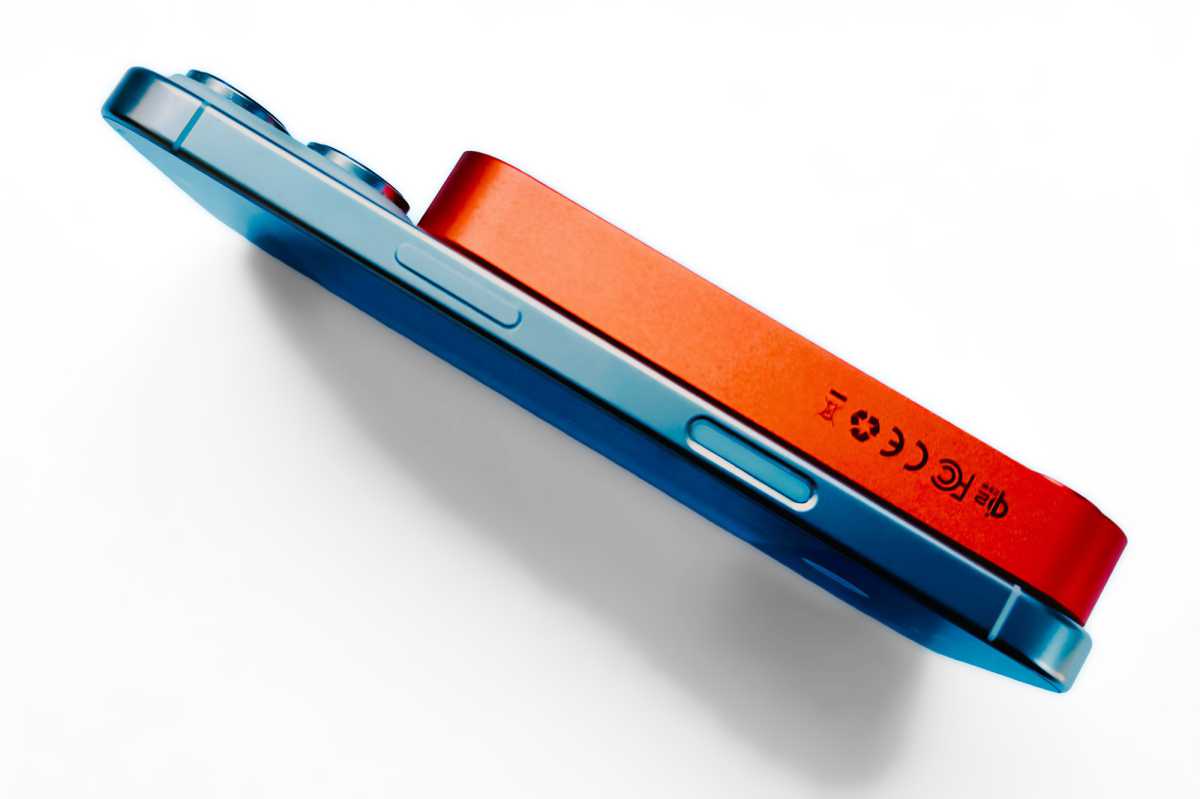
Kuxiu calls the aluminum alloy S4 “the world’s thinnest 10,000 mAh semi-solid cell,” and that’s not wrong.
13.7mm is the thinnest 10K external battery we’ve tested. The previous champion, the Anker MagGo 10K Slim, is a millimeter thicker and only offers 15W power output. The average depth of a 10K power bank is 18.2mm.
Some other 10K power banks are 16 or 17mm deep, but the average is 20-22mm. The S4 is a third thinner than those big beasts. Let’s be honest, this isn’t a power bank – it still feels big compared to the thinnest 5K batteries – but it is the thinnest 10K.
Even the 5K power banks we tested have an average depth of 10.7mm, although the thinnest of them all (the BMX SolidSafe Air 5K) is only 6.8mm deep.
Kuxiu S4 vs Kuxiu S3: slim or cable
The S4 is noticeably thinner than the S3 but lacks its long integrated USB-C cable. This means that Kuxiu has managed to make the S4 more than 35% thinner: 14mm versus 22cm.
While we like a built-in cable on a magnetic power bank (wired charging is always faster and a cable makes it easier to charge the power bank itself), we also want them to be as thin as possible.
This is the major trade-off between choosing between the S3 and S4, but there are other differences. Read our Kuxiu S3 review for more details.
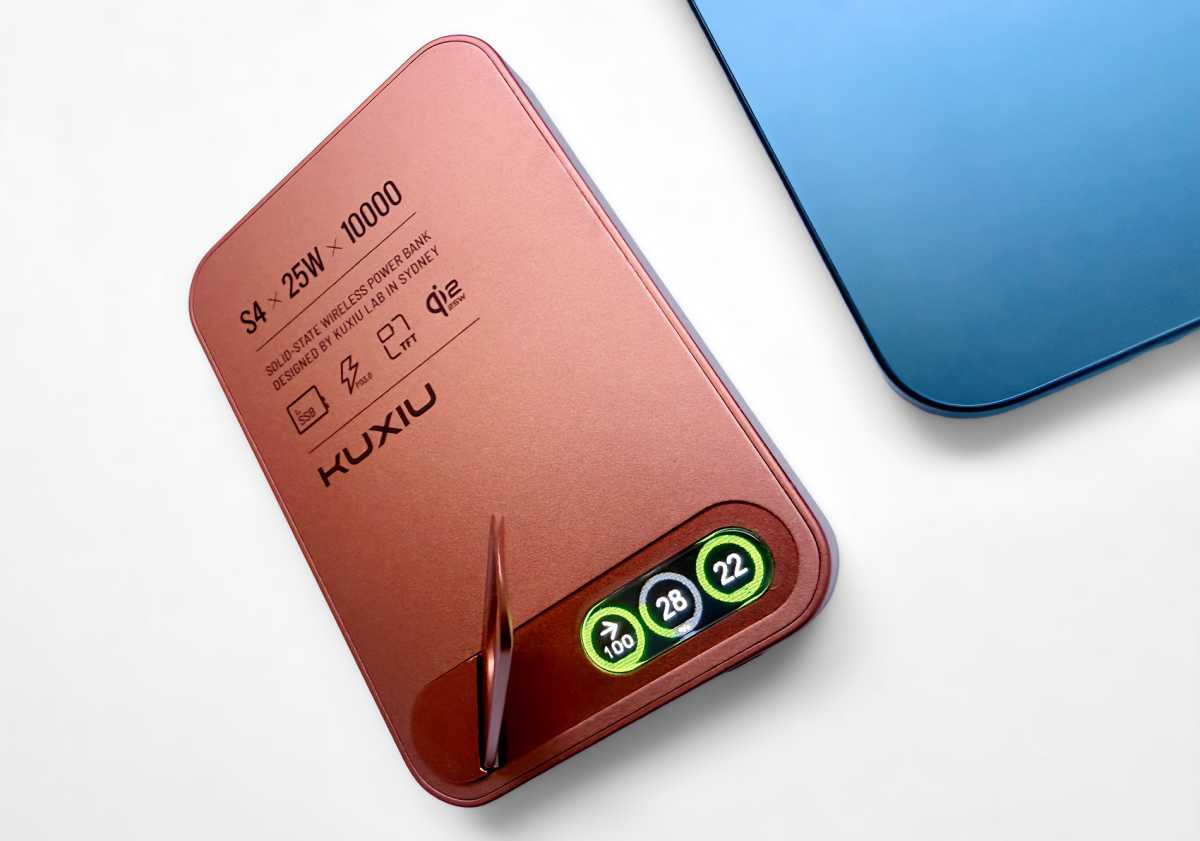
Both power banks have a stand, and the S3’s stand is larger and sturdier than the S4’s bottom-mounted sliding stand, but the S4’s works quite well.
Simon Jarry
Both feature a digital display that lets you see precisely how much power is left in the power bank. Most make do with four tiny LEDs, each of which represents 25% of the battery’s charge, compared to the exact number a digital display gives you.
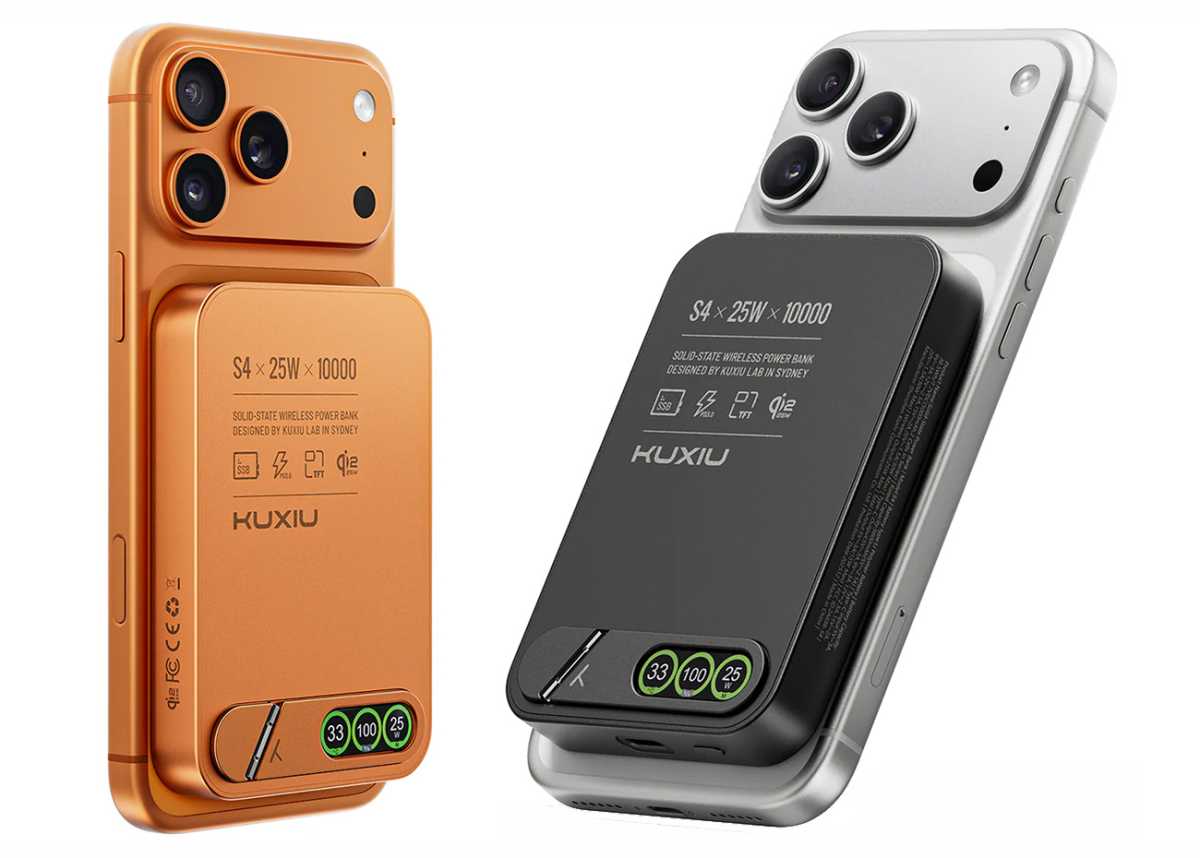
The S3 is clear to read but only displays the remaining battery charge. The S4’s TFT display, tucked behind the stand, is smarter and more colorful, displaying battery status, operating temperature, battery level (remaining charge), wireless charging power and USB-C input/output power as well as battery safety alerts where available.
You may not need to know all of this information, but it’s there, laid out in three number circles.
Finally, the Kuxiu S4 comes in a stunning Cosmic Orange to match the iPhone 17 Pro and Pro Max as well as the same black as the S3.
Charging performance
At Macworld, we produce a battery performance report for all power banks that pass through our labs.
There is nothing extraordinary between microscopes and spectrometers. We simply drain an iPhone’s battery to 0%, connect the power bank and see how many times it can recharge the phone. If it fills the phone with juice, we wait until the phone runs out of juice again and repeat until the power bank is empty.
The best score we’ve gotten with a 10,000mAh (10K) power bank is 190% (the 15W EcoFlow RAPID 10K), with an average score of 166%. The Kuxiu S4 scored above average at 172%, about the same score as the S3.
Kuxiu
Price
The Kuxiu S4 10K Magnetic Power Bank is priced at $84.99 or £64. The S3 is cheaper at $68.99/£54, even with its built-in cable.
If you want the thinnest 10K magnetic power bank, you’ll have to dig a little deeper, but the lining of your pants pocket might thank you in the long run.
For more options, we’ve tested and reviewed the best magnetic wireless power banks.
Should you buy the Kuxiu S4 25W 10K Wireless Power Bank?
First things first: The Kuxiu S4 is the thinnest 10K magnetic wireless power bank we’ve ever tested. If you want thinner, you’ll have to sacrifice half the battery capacity with a 5K battery. The S4 performed above average in our charging tests. If you can sacrifice thinness, consider its S3 sibling with a built-in USB-C cable, but we salute the S4 for being the slim semi-solid champ…and we love the Cosmic Orange option.