Salmonella in poultry issue awaits Brashears’ unscheduled Senate confirmation


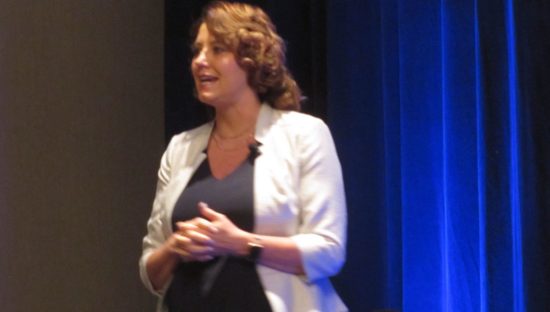
The last time Mindy Brashears waited for almost 700 days to be confirmed by the US Senate as USDA under-security for food security, and be just in time for the country’s pandemic crisis. Nominated for the second time by President Trump on June 2 to be the highest manager of food security in the country, the Senate Committee for Slow Agriculture has not yet planned a hearing for Brashears.
But there is still something that awaits the food security teacher at Texas Tech University. Agriculture Secretary Brooke Rollins, at the opening of a new food security laboratory near St. Louis airport, said the USDA “loads in advance to reduce Salmonella diseases”.
Rollins has instructed the USDA (FSIS) food security and inspection service to find a “more efficient and achievable approach” to contact the Salmonellain poultry products than the “Salmonella executive” of the previous administration, which it lowered in April.
The new administration has cited concerns concerning the abandoned rule which had been raised by industry concerning the regulatory burden and the costs which would have been imposed on poultry producers and transformers.
Ashley Peterson, main vice-president of scientific and regulatory affairs of the National Chicken Council, said: “American chicken producers appreciate the common sense of the USDA and the scientific approach to obtaining food security improvements. We share the ministry’s objectives to further reduce foods of food and promote public health, emphasizing the reduction of regulatory burdens. ”
The best scientist in the CCN also applauded the USDA for withdrawing the proposed settlement of Salmonella introduced by the previous administration earlier this year.
Brashears will probably be responsible for developing a replacement strategy to eliminate salmonella from the most sensitive poultry products. Rollins said that the FSIS begins by summoning listening sessions with key industry players to collaborate in the best approaches in the future.
Peterson said that Salmonella’s frame, as it was proposed, was based on erroneous interpretations of science, would have had no significant impact on public health, would have led to an extraordinary quantity of food waste and increased costs for producers and consumers.
Before Brashears left the government at the end of the first Trump administration, the teacher and director of Texas Tech had published a plan to reduce salmonella with an approach which, she said, would be based on science, focused on data and promoting innovation to reduce pathogen in meat, poultry and egg products.
“This roadmap represents the commitment of the FSIS to direct science and data in everything we do. It puts us on a course to aggressively target Salmonella and other pathogens of food origin,” said Brashears. “I can’t wait to continue the partnership with the food security community in conducting a scientific approach to protect public health.”
The FSIS continued to act on the approach of 2020, but with a determination to declare Salmonella an adulator in breaded priests in breaded priests when they exceed a very low level of contamination by Salmonella.
At that time, Brachears said that the poultry industry should focus on the pathogenic serotypes of Salmonella – those that cause human diseases, not all salmonella.
“Industry can get scientific data faster than FSI and should open the way,” she said. FSIS is not a research agency that exists to enforce public policy. Dr. Jose Emilio followed Brashear as USDA under-secretary for food security.
Between Trump 45 and Trump 47, Brashears returned to Texas Tech University with the additional title of vice-president of research in his previous position as a food security and public health teacher, in the president of food security of Roth and Letch.
She is also director of the TTU International Food Industry Center. She is a member of the National Academy of Inventors and has three spin-off companies according to her work.
BARHEARS holds a BS in Food technology from Texas Tech (MAGNA CUM Laude) and Master of Science and PH.D. Diplomas in Food Sciences of Oklahoma State University.
His university research focuses on mitigation strategies in pre and post-harvest environments, as well as the emergence of resistance to antimicrobial drugs in agricultural ecosystems. She is mainly interested in meat, poultry and vegetable products.
(To register for a free subscription to Food Safety News, Click here.)