U.S. confirms its first human case of New World screwworm : NPR


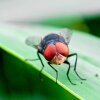
The larva of the screw worm, like that illustrated, will hatch and feed on the flesh of live animals, generally livestock. Cases in humans are rare but can be fatal.
AP / USDA agricultural research service
hide
tilting legend
AP / USDA agricultural research service
The United States has confirmed its first human case of the new screw verge, an eater parasitus of flesh whose flipper to the north of South America has put the country’s cattle industry on alert in recent months.
Centers for Disease Control and Prevention (CDC), in coordination with the Ministry of Health of Maryland, confirmed the case on August 4 at a patient who had returned from travel to El Salvador, spokesperson for the Ministry of Health and Social Services, Andrew Nixon, told NPR on Monday on Monday.
“This is the first human case of the myasis of Verse Verse associated with travel (parasitic infestation of flies of flies) from a country affected by epidemics identified in the United States,” said Nixon. “Currently, the risk to public health in the United States of this introduction is very low.”
David Mallister, spokesperson for the Ministry of Health of Maryland, confirmed at NPR that the individual – a resident of Maryland – recovered from the infection. “The survey confirmed that there is no indication of transmission to other people or animals,” he wrote, calling the detection of “a timely recall for health care providers.”
The new screw worm is a kind of parasitic flies generally found in South America and the Caribbean, according to the CDC. The infestation occurs when the fly larvae feed on the fabric or the flesh of animals with hot blood, mainly livestock and, rarely, humans.
“It is a fly, and it is the larvae that does the damage,” explains Max Scott, professor in the department of entomology and plant pathology at the North Carolina State University.
He says that infestation in humans can be “quite painful”, with high mortality rates if they are not treated.
“Because once an infestation begins, it often attracts more flies that lay more eggs,” he explains. “And depending on where the injury is located, maggots can make their way in vulnerable tissues like the brain, or the wound can become quite important, then you get a septicemia.”
But, says Scott, the screwing worm is an insect, not a virus – so it’s not contagious.
The pest presents a much greater risk for livestock and, in the past year, has been detected in cattle farms in Mexico. While the Vouse à Vis du Nouveau Monde is getting closer to the American border, the federal authorities have taken a series of measures to eliminate the threat – which they made successfully in the middle of the 20th century.
What is the ver to the verge of the new world?

A new fly of the adult screw. They are commonly found in South America and the Caribbean.
Denise Bonilla / US Department of Agriculture
hide
tilting legend
Denise Bonilla / US Department of Agriculture
Verse worms are a type of blue-gray blowing that looks very much like black flies found in the United States
The difference is that screw worms – especially women – lay their eggs in living animals, generally in a wound or other entry point like a nasal cavity.
“Females can arise, like 200 eggs at a time,” says Scott. “And then when the eggs eat, they eat the animal living.”

After feeding, the larvae fall into the ground, dig into the soil and emerge as the adult screw is flies, continuing the cycle.
The parasites are named after the way they sink into the fabrics using their sharp mouth hooks. Their Latin names, Cochliomyia hominivorax“Literally means Maneater,” said Scott.
“He was appointed according to a sort of unhappy number of cases in the French criminal colony of the island of the devil in the 19th century,” he explains.
Human cases are relatively rare these days, although the counts increase in parts of South America.
The United States Embassy in Nicaragua said in July that it had confirmed 124 cases in the past year. In June, the United States Embassy in Costa Rica has confirmed its seventh cases since 2023 – and the first human death “since at least the 1990s”.
How was the Vis Ver eradicated-and why is he spread now?
The Vipe Ver was in the United States, mainly in Florida, Texas and, during the summer, sometimes as north as the Dakotas, says Scott.
In the 1950s, scientists from the American Department of Agriculture (USDA) were the pioneers of a method of fighting the known as the technique of sterile insects, which Scott called “one of the great successes of the 20th century USDA”.
Instead of using wide spectrum insecticides, they decided to use the pest itself as a control agent. This implies breeding insects inside the factories, to sterilize them with radiation and then release them – either from the ground, or, as is the case today, by “planes that roam very precise routes”.
“If the females on the ground mate with a sterile male, at least with a screw worm, that’s all they mate … so that the woman produces no offspring,” explains Scott.
Thanks to this technique, the United States managed to eradicate the level of the world visque in 1966. Mexico followed the plunge in the 1970s and Central America in the early 2000s. The United States also used this method to eliminate what the CDC called a “small epidemic” in Florida Keys in 2017.

“Over a period of 50 years, the Vis Ver was pushed back from the United States across Mexico, through Central America, to the border of Panama-Columbia. It was about 20 years ago,” said Scott. “He was arrested at the border, then was maintained for a long time until the barrier breaks and the Vou à Vis returned.”
Panama, Costa Rica, Nicaragua and Honduras have documented new cases in recent years, fueling the concerns of propagation north.
Scott says there are probably several explanations, including the movement of infested cattle and the possibility that the current strain of sterilized flies is less effective than in the past. Hope, he says, is that a greater harvest of sterilized insects will be able to contain the threat of screw verbings for southern Mexico, before being able to reach the United States

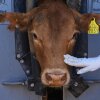
The corrals were empty for the Union Ganadera Chihuahua at the installation of cattle import in Santa Teresa, in New Mexico, in June, after the United States restored its break on cattle imports through the southern border.
Paul Ratje / Bloomberg via Getty Images
hide
tilting legend
Paul Ratje / Bloomberg via Getty Images
What does the United States do about VER à Vis?
The United States briefly interrupted the imports of living livestock from Mexico in November, after a positive affair which was detected there.
He raised the ban in February but restored it on a monthly basis in May, with the Secretary of Agriculture, Brooke Rollins, citing “the continuous and rapid North propagation of New World Screwworm (NWS) in Mexico”. She said it was detected on farms as far north as Oaxaca and Veracruz, about 700 miles from the American border.
During the months that followed, the federal government was faced with the growing pressure of agricultural groups worried about the threat of VER à Vis and its potential impact on the supply chain. In a letter from the beginning of August to Rollins, they used USDA estimates to calculate that a contemporary epidemic could lead to a total economic loss of more than $ 10.6 billion.
The USDA seems to have heard these concerns. Earlier this month, he announced a scan of plans to fight against the spread of the Vipe, in particular the construction of the only sterile flies installation in the United States in an Air Force base in Edinburgh, Texas. He indicates that it will produce up to 300 million sterile flies per week.
Scott says that at its peak, the semi-century eradication campaign was directed by an installation in Mexico which could produce at least 500 million sterile flies per week. It was closed for economic reasons in 2012. There is currently only one of these operating installations, in Panama, with a maximum capacity of around 100 million flies per week.
Announcing the new initiative in Texas, Rollins did not specify when the factory is operational, but previously said that it would take two to three years to build, reports Reuters. The USDA also supports a separate installation in Mexico which should open its doors in 2026.
Others not that the USDA says that it will be necessary, in particular the rise of the hiring of patrol officers mounted on the USDA employees, called “Tick Riders”, to focus on border surveillance; Training dogs to detect vis -à -vis infestations in livestock on the border and to invest $ 100 million in technologies to combat the VER à Vis.
Agricultural groups praised the announcement. Zippy Duvall, president of the American Farm Bureau Federation, said in a statement that the introduction of New Worldwrord in the United States would only exacerbate an already volatile cattle market.
“It took decades to eradicate this interior parasite and next to our borders there is more than a generation, and this is a first proactive step,” he added.


