A decade-long chimp war ended in a baby boom for the victors, scientists discover


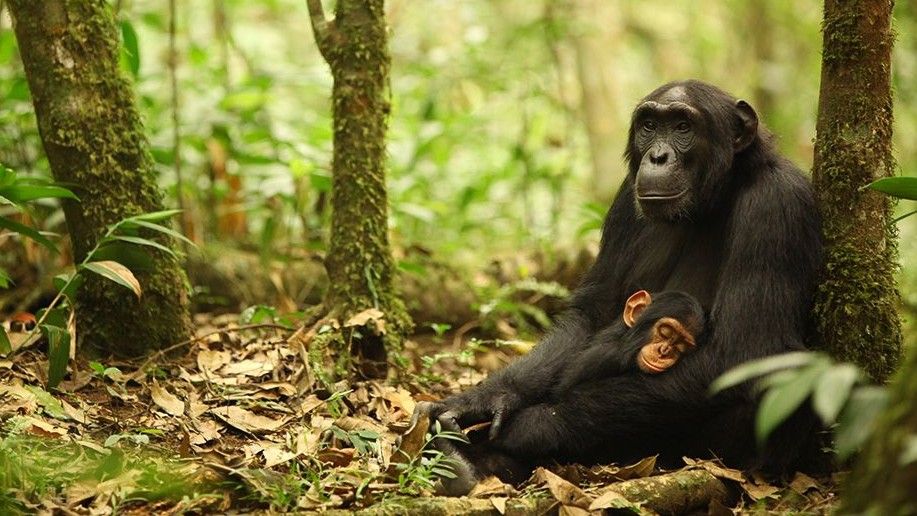
Killing neighbors and grabbing their land has led to a baby boom for a community of chimpanzees in Uganda, potentially demonstrating why it can be beneficial for chimpanzees to start wars.
Chimpanzees (Pan troglodytes) have long been known for violent conflicts or “wars.” It was first documented by an English primate researcher. Jane Goodallwho in 1974 observed the community of chimpanzees in Tanzania’s Gombe National Park split into two warring groups, leading to a four year battle this resulted in the death of all males in a group. But it was unclear why the animals persisted in violence for so long.
Between 1998 and 2008, the Ngogo chimpanzees of Kibale engaged in violent clashes with their neighbors. During this decade of conflict, at least 21 chimpanzees from neighboring groups were killed, and in 2009, Ngogo’s chimpanzees expanded in an area previously inhabited by their rivals, thereby increasing their territory by 2.5 square miles (6.4 square kilometers) or 22%.
Records revealed that in the three years before the territorial expansion, female Ngogo chimpanzees gave birth to 15 young. But in the three years that followed, they gave birth to 37 young people, more than double their fertility rate.
Additionally, infants born after the expansion were more likely to survive: they went from a 41% chance of dying before age 3 to just an 8% chance of dying. The study was published November 17 in the journal PNAS.
“At the time, it was very obvious to field workers that chimpanzees were experiencing a baby boom. We expected to see that in the data, but not in the increase in survival,” Wood told Live Science.
This work provides the best evidence to date that, for chimpanzees, expanding territory after killing rivals can directly boost reproductive success, he said. Chimpanzees’ territorial expansion gave them access to more food, and subsequent improvements in nutrition and health likely led to greater female fertility and better young survival rates, Wood added.
The increase in survival rates could be due to two factors. The first, Wood says, is an improvement in the health and energy of mothers, and the other the elimination of rival males.
“The higher survival rate makes sense because a major source of mortality for baby chimpanzees is being killed by their neighbors,” Michael Wilsonwho studies chimpanzee behavior and biology at the University of Minnesota and was not involved in the study, told Live Science. “This study supports the idea that, under certain conditions, it adapts to defend group resources and kill members of neighboring groups. Chimpanzees essentially watch over their own group.”
Yet while there is a benefit to winners, there will be a cost to losers, Wood said. He thinks it’s probably a zero sum game and there would likely be no overall gain in chimpanzee numbers because while winners benefit, others lose.
The scientists behind the study say the findings could help shed light on the evolution of violence in humans. Because there is deadly violence among our closest living relatives – chimpanzees and bonobos (Pan paniscus) – Some scientists have already suggested that this trait could be present in our common ancestor, who probably lived six or seven million years ago, Wood said.
Competition for access to land and resources is always part of the human condition, he said, but it is usually transformed by the human capacity to arbitrate and avoid conflict.
“The ongoing conflicts around the world over resources echo what chimpanzees are doing, but I don’t think it’s a favorable comparison if you’re involved,” Wood said.
In general, there is a striking difference between humans and chimpanzees when it comes to intergroup relationships, Wilson said. “If a chimpanzee sees a male from a neighboring group, the only way for him to benefit is to impose some cost on that male, take his territory or take his life.”
When people see a stranger from another group, there’s a chance they could benefit from interacting with them, he said.
This is what allowed humans to create multi-tiered societies with trade, kinship, and ritual ties forming larger units of social organization.
“In the modern world, the benefits of interactions between groups have become so enormous and the costs of war have also multiplied so much that it is generally a pretty stupid idea to start a war,” Wilson said.


