A Galaxy Cluster’s Sloshing Spiral Reveals the Story Behind a Chaotic Collision That Began Four Billion Years Ago


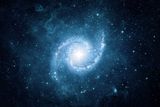
The Abell 2029 galaxy cluster may appear calm and serene at first glance, but a closer look at its features reveals a turbulent past. Recent observations of Abell 2029 showed that it collided with a smaller galaxy cluster about 4 billion years ago. The consequences of this collision are still visible today in a spiral of hot gases formed by a gravitational boost.
In a December 2025 study published in The Astrophysics JournalData collected by NASA’s Chandra X-ray Observatory helped researchers dig into Abell 2029’s past. This data suggests that a smaller galaxy cluster once crossed paths with Abell 2029, leaving behind some remarkable features. Along with the spiral structure, Chandra observed a “bay” in the cluster’s hot gas and a “splash” of colder gas, both remnants of the collision.
Chandra also released a composite image of Abell 2029, showing its shell-like shape. The spiral – neon blue in color due to the X-ray gas observed by Chandra – is one of the longest ever observed, extending two million light years from the cluster’s core, according to a statement from the Chandra X-ray Observatory.
Learn more: The potential presence of ice on the Moon is good news for lunar exploration or habitation
Abell’s chaotic collision 2029
Abell 2029 – located about 1 billion light-years away in the constellation Virgo – is often described as “the most relaxed cluster in the universe” due to the undisturbed nature of the hot gas that envelops its thousands of galaxies. According to Chandra, the cluster also contains an amount of dark matter equivalent to more than a hundred trillion suns.
The gas, heated to millions of degrees and bound to the cluster by dark matter’s gravity, emits X-rays that can be captured by observatories equipped with X-ray telescopes like Chandra.
Based on recent observations of these Then, after the gas was pulled sideways following the first collision, gravity pulled the smaller cluster back for a second collision.
Abell 2029 collision causes sensation
The double collision left Abell 2029 with several other features that now accompany its spiral structure. After the smaller cluster collided with Abell 2029 a second time, it created wake material that became the “splash” region. The collision also appears to have produced a shock wave in the cluster’s superheated gas.
Finally, a “bay” area may have been shaped by the outer parts of the Abell 2029 spiral riding on gas that was extracted from the smaller cluster after the impact. The authors of the December 2025 study, however, believe there could be other explanations for the bay.
A snapshot of a blue spiral
To capture the spiral shape and distinctive features of Abell 2029, researchers looked at a gas that does not appear symmetrical; According to Chandra, most of the gas in the cluster is symmetrical and has a somewhat oval shape.
The researchers removed, or “subtracted,” the symmetrical gas from the original X-ray image taken by Chandra. This resulted in a subtracted image showing the remaining gas, taking the form of spirals, spatters and berries.
The researchers combined the subtracted image with the original to create a composite image showing the blue spiral rotating around the center of Abell 2029.
Learn more: What is the largest object in the universe? Most probable galaxy clusters
Article sources
Our Discovermagazine.com editors use peer-reviewed research and high-quality sources for our articles, and our editors review the articles for scientific accuracy and editorial standards. See the sources used below for this article:

:max_bytes(150000):strip_icc():format(jpeg)/hlt-product-organic-textiles-natural-latex-pillow-cotton-outer-covering-dburreson-017-eb4ddef8f93a4b54ab8fbd0f1b6b655e.jpeg?w=390&resize=390,220&ssl=1 "The 9 Best Hypoallergenic Pillows of 2026, Tested by Our Editors")

