A rainbow of fish dazzles in New Jersey


An oceanic rainbow surrounds visitors who go up to the top floor of the Aquarium adventure in Camden, New Jersey. The Steak sun in the tinted windows of Kaleidoscope Cove, a new exposure where the color is everything. The fish grouped in tanks separated by their respective colors put the rainbow shades of marine life in full glory. Like a colorful shortpoint, household favorites like blue tangs (Paracanthurus hepatus) and orange and white clown fish (Amphiprioninae) shine alongside certain less known fish such as striped harlequin sweetlips (Plectorhinchus Chaetodonoides) and flamboyant red light shrimps (Lysmata debelius). A inviting tactile tactile tactile filled with stars of the Redden Syeful Sea is bearing to young people and young people in heart. Even a brilliant and preferred axolotl of fans (Ambytoma Mexicanum) And various frogs of poisoned darts are fortunate to show up.
“We share these color stories to show all the different ways whose animals present their adaptations to color and pattern,” explains Alicia Longo, conservation and development coordinator Popular science During a recent visit. “And it’s really linked to the public. Anyone can relate to a colored rainbow. ”

Kaleidoscope Cove has more than 100 different species, including at least 10 in the 33 -year -old aquarium just on the other side of the Philadelphia Delaware River.
“I think that for biologists in particular, it is very rewarding to be responsible for learning a new species,” explains Longo. “It’s just a joy to learn these new things and have this knowledge of a new species and share with the public. That’s why we are here, right? “
Crystalline power
Fish use their colors as a means of communication. The mechanics of the way they physically display color occur deeply at the cellular level – and imply certain crystals in serious positions of power.
Cells containing pigments called chromatophores are present in the skin of fish. “Within these chromatophores, chromatosomes,” said Simon Thorrold, fish ecologist at Woods Hole Oceanographic Institution in Massachusetts who was not involved in the creation of the new exhibition, explains Popular science. “These are crystals that come in different colors and within a single cell, you will have a bunch of crystals that will all be the same color.”
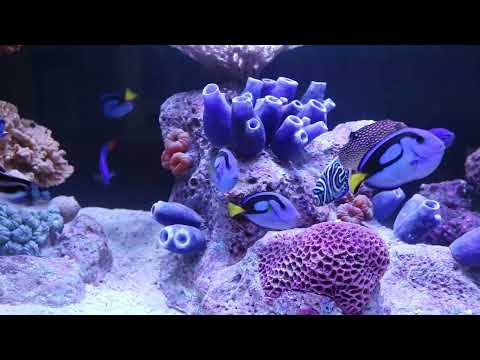
Credit: Adventure Aquarium.
Although each crystal is the same color, the skin cell next to it can express a different color. Adjacent crystals can then determine the amount of light that crosses it by controlling where they are in the cell.
“So, if you spread them, they will shade more and the color will be dark,” explains Thorrold. “If you get them out in the middle, they will less shade and you will have more transparency.”
How fish use their real colors
The color is used for several ends for fish from the world. This can help them find friends, communicate with those of their school and protect themselves. Some fish such as folds use it to camouflage itself along the sandy and rocky seabed. Color could also be a serious warning sign to other organizations.
“Animals that have bright colors are not necessarily toxic, but which can imitate other toxic animals,” explains Longo. “A good representation of this in Kaleidoscope Cove is our soft lips Harlequin.”
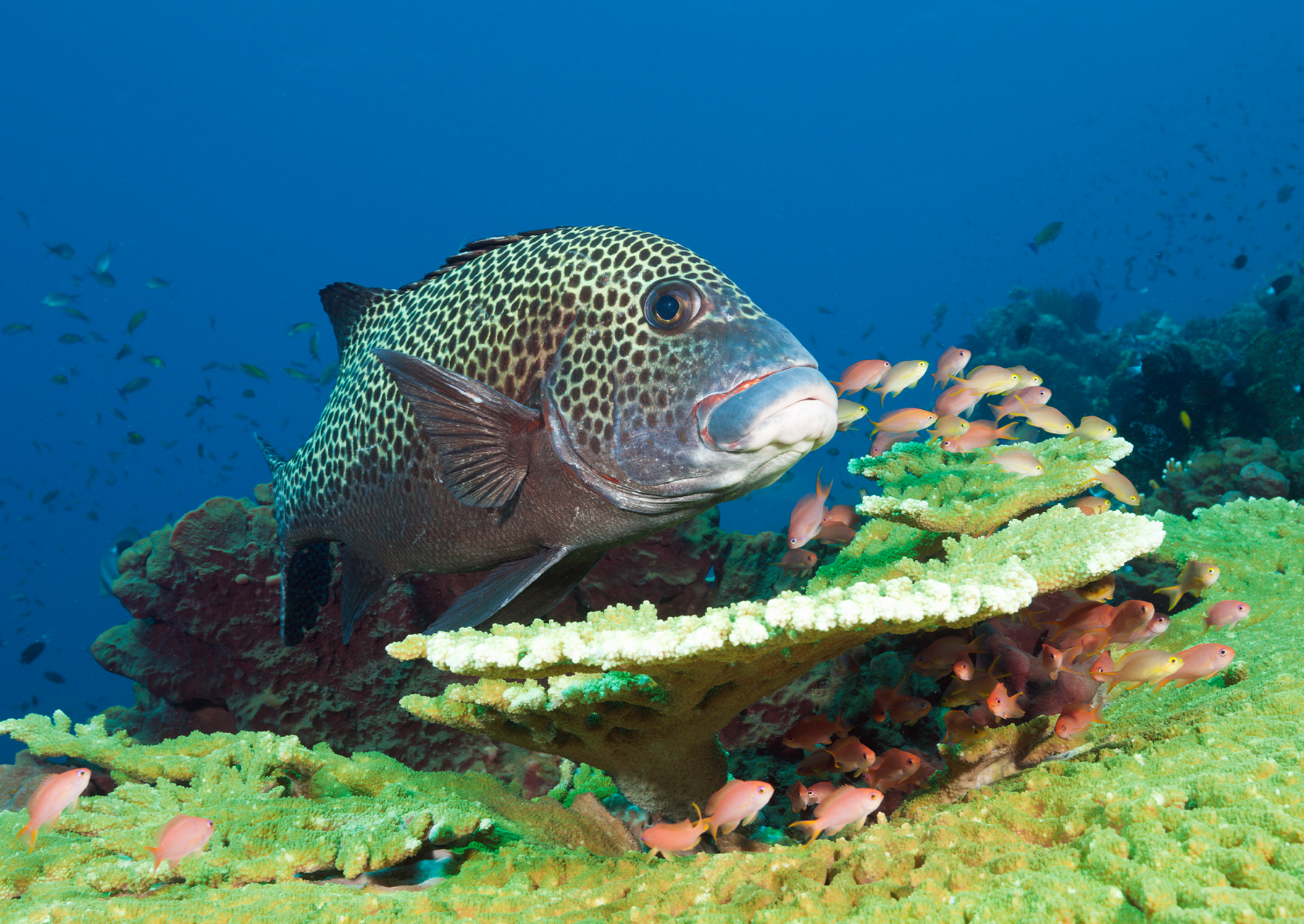
As juveniles, they will imitate the diagram and behaviors of molluscs gastropods with soft body called nudibranches. These molluscs striped without shell also called sea slugs are available in a variety of colors (blue, purple and orange). They also fly the venom of toxic animals and use it to their advantage. By imitating them, the young Sweet Harlequin lips probably send a strong message to swim.
“The fish may be visual in the same way as we use audio clues,” says Thorrold. “So I think they use the color for all kinds of things because they don’t quite have the same sound repertoire as us.”
Blinded by light
In the middle of all the bright colors of Kaleidoscope Cove, a deep and dark dark piece in front of the stifled touch tank the sun stands out. Inside the glowing cave, visitors can see the bioluminescence in action, including brilliant corals and flashing flashing fish (Anomalops Katoptron). This species found in the peaceful ocean is known for the light of the head of the lamp on its head which helps the fish lamp fish to communicate with its school, to confuse predators and to attract prey.
“These are very unique species of reefs, where they live really dark caves throughout the day it is brilliant,” explains Longo. “They therefore remain a little deeper, but they have an organ producing light under their eye. It is called a photophore and inside which is a biolumine bacteria.”
Bioluminescence itself is generated by a chemical reaction within bacteria and not by the fish itself. However, flashlight fish have the capacity to turn on and essentially deactivate these bacteria by moving it in their eyes. This movement creates the “indicators” models they use to survive.
However, the bioluminescence of fish is not controlled by bacteria alone. Some fish have an intrinsic bioluminescence, where they can produce this glow by themselves. Lantern fish (Myctophidae) Living in the deep mesoplagic zone of the ocean uses organs produced with light called photophores which are not based on bacteria or a chemical reaction to radiance.
According to Thorrold, hunting is one of the most interesting ways for lantern fish to use bioluminescence.
“If you are a lantern fish, you are about 500 meters away [1640 feet] deep during the day. It’s very, very dark, but if you look up, you can always see a little light, “says Thorrold.” They are actually evolving to search for silhouettes. And that’s how they hunt, looking for the silhouettes. Their prey only breaks this little descent light enough to make a silhouette. »»
However, this mesoplagic arms race continues. Some prey species use their own photophores to adapt and create light that makes the silhouette disappear – so the fish of the lantern cannot see them.
“So now, predators see nothing. They look up, there is a fish there, but it imitates exactly the downward light. It actually disappears, so it’s camouflage,” explains Thorrold.

Rainbow connection
While our fin friends use color or bioluminescence to communicate with each other, one of the main central human messages of Kaleidoscope Cove is that of conservation. Even with these evolutionary adaptations and advances, these fish need our help. According to the United Nations, the world has lost 14% of its coral reefs between 2009 and 2018 due to the pressures of climate change. And stress did not continue. From January 1, 2023 to August 20, 2025, thermal stress in the laundering had an impact on 84% of the world area of coral reefs. Without these corals, many of these beautiful fish will not have a house.
“The majority of these animals there are species of Indo-Pacific reefs. We are great defenders of coral conservation and sharing the global coral crisis that we are experiencing at the moment, ”explains Longo. “So we share a lot of this with our guests, not only to raise awareness, but give them an action to bring with them that they can easily put in their daily habits.”

These creative, useful and simply fascinating adaptations offer a way to turn on conservation and build bridges between the aquatic and terrestrial worlds.
“All these super cool adaptations according to which life on planet Earth has understood to make it such an incredible place, makes me feel very protective of what we have,” explains Thorrold. “The beauty that is here and the incredible incorporation that the evolution made to generate it makes me feel very small, but at the same time super connected to this planet that we have.”
It is an rainbow connection in full screen in Camden.

More offers, reviews and purchasing guides


