A rare chemical fluke may have made our planet habitable

When you purchase through links on our articles, Future and its syndication partners may earn a commission.

Credit: NASA
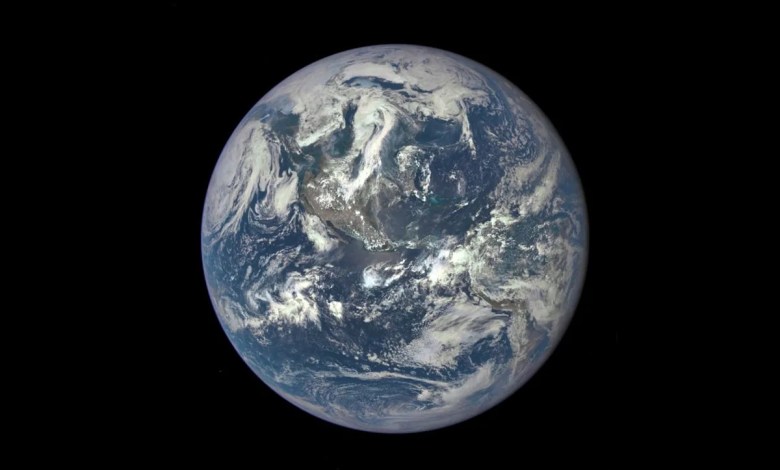
Life on Earth could exist thanks to an incredible stroke of luck – a chemical sweet spot that most planets miss during their formation, but which ours managed to reach.
A new study shows that Earth formed in an unusually precise set of chemical conditions that allowed it to retain two elements essential to life as we know it: phosphorus and nitrogen. Without a perfect balance of these elements, a rocky planet could appear habitable on the surface while being fundamentally incapable of supporting biology, according to the study.
“During the formation of a planet’s core, there must be exactly the right amount of oxygen present so that phosphorus and nitrogen can remain on the planet’s surface,” lead study author Craig Walton of ETH Zurich in Switzerland said in a statement. a declaration.

Artist’s illustration of a disk forming a planet around a newborn star. | Credit: NASA/JPL-Caltech
Earth appears to have reached this delicate chemical sweet spot during its training nearly 4.6 billion years ago, and the new discoveries could change the way scientists search for extraterrestrial lifethe researchers said.
When I’m young planets are formedthey are often partially or completely melted. As heavy metals sink to form a core, lighter materials stay closer to the surface. During this chaotic stage, known as nucleus formation, the amount of oxygen present plays a decisive role in determining where the other elements end up and whether they remain accessible for future life.
The study suggests that oxygen levels must be within a surprisingly narrow range for phosphorus and nitrogen to remain within a reasonable level. mantle and crust of the planet. Too little oxygen, phosphorus binds to iron and is carried into the nucleus, depriving the surface of a key ingredient for DNA, cell membranes and energy transfer. Too much oxygen and nitrogen are more easily lost to space. Regardless, the alchemy necessary for life is never fully realized.
Using models of planetary formation and geochemical behavior, the researchers discovered that Earth lies exactly inside this narrow range of mid-level oxygen, which they called the chemical atmosphere. Goldilocks Zone. Ultimately, our planet retained enough phosphorus and nitrogen to later fuel biology – a result that is perhaps far from common among rocky worlds.
“Our models clearly show that Earth is precisely within this range,” Walton said in the release. “If we had had just a little more or a little less oxygen during basic trainingthere would not have been enough phosphorus or nitrogen for the development of life. »
Conversely, researchers have also modeled the formation of other planets like Marchwhere oxygen levels were outside of this Goldilocks chemical zone. On Mars, for example, models show more phosphorus in the mantle than on Earth, but less nitrogen, creating harsh conditions for life as we know it, according to the release.
The results challenge the traditional focus on the habitable zone, the region around a star where liquid water can exist. Although water is essential, the study suggests it may only be part of the story. A planet could orbit the right distance from its star and still not have the internal chemical inventory necessary for life to emerge.
Crucially, the oxygen conditions that shape this process are linked to the chemical composition of the host star itself. Since planets form from the same material as their stars, stellar chemistry can indicate whether a system is even capable of producing planets suitable for life.
If the researchers are right, Earth might be less of a cosmic norm and more of a happy exception — a planet that hit a rare chemical jackpot early on. Using Earth as a reference could help scientists focus on exoplanets who are most likely to have the perfect balance of life’s essentials.
“This makes the search for life on other planets much more specific,” Walton said. “We should look for solar systems with stars that look like ours sun“.
Their conclusions were published on February 9 in the journal Nature Astronomy.


