Cosmic Rays Could Energize Microscopic Life Under the Surface of Mars


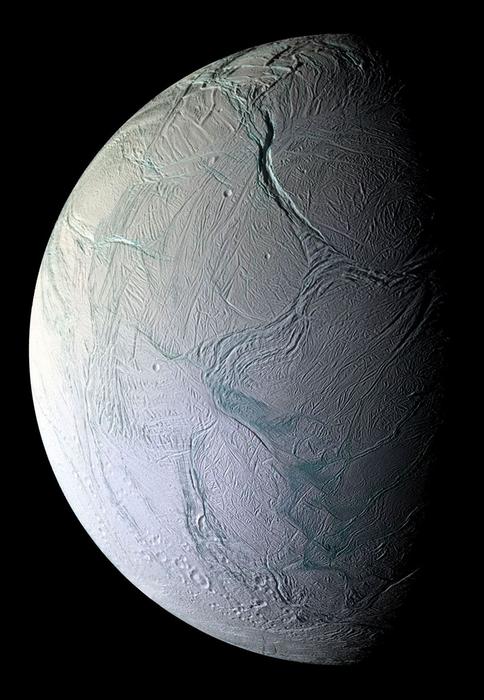
The search for life on Mars and the moons through the solar system may have to start digging a little more to find answers underground. Under the surface of these planetary bodies, there is a chance that biological activity will be under tension by the cosmic rays flowing in space.
A new study published in the International Astrobiology Journal suggests that cosmic rays can lay the basics of microscopic life to thrive in certain extraterrestrial environments. Although the cosmic radiation can inflict a range of harmful effects on humans, on the reverse, it also probably causes chemical survival reactions to Mars, the ice moon of Saturn and the moon of the Moon of Jupiter. As a result, all these places can be in life below the surface.
Radiation through the universe
In space, there is no exhaust Cosmic rays. They are constantly accelerating through the universe from everywhere. Some come from the sun, while others are emitted by black holes and stars that explode distant galaxies.
Particles in cosmic rays – mainly composed of hydrogen – have struck planets and moons in our solar system. Fortunately, since the earth has a protective magnetic field and an atmosphere, it is able to repel most of the cosmic rays.
People are generally protected from cosmic radiation on the surface of the earth, but real dangers enter the upper atmosphere. Once astronauts reach an orbit on low land, radiation Can cause central nervous system problems and increase the risk of life to develop cancer.
Unlike the earth, Mars has no global magnetic field and has a very thin atmosphere, and therefore its surface is flooded with particles which can penetrate underground. Given the dangers placed by cosmic rays to humans, they remain a major concern for future crew missions on the red planet.
Find out more: Europa Clipper of NASA will probe for life in the plugs of iced moon
The invigorating potential of cosmic rays
Cosmic rays are not, however, still as destructive. The new study indicates that when they hit water or ice underground, they release electrons that can become construction blocks for microscopic life. Some bacteria on earth use energy electrons without the need for nutrients such as sugars, supported by a process called radiolysis.
The radiolysis of liquid water is decomposed its decomposition into molecules, and this process can occur in dark and cold environments that do not receive any sun. Since liquid water probably exists below the surface of MarchEnceladus, and Europa, the researchers involved in the study wanted to determine the effects of cosmic rays on each of the planetary bodies.
Go underground to search for life
Using computer simulations to calculate the energy deposit and the production rates of radiolysis electrons, the researchers found that metabolic activity could be maintained at certain depths of the three bodies. They say that Entéladus has the most potential to support life, followed by Mars, then Europa.
This study dismantles the previous views according to which life must always count on sunlight or volcanic heat to exist.
“This discovery changes the way we think about where life could exist,” said the main author Dimitra Atri, principal researcher of the Spatial Exploration Laboratory at New York Abu Dhabi University, in a statement. “Instead of only looking for hot planets with sunlight, we can now consider cold and dark places, as long as they have water below the surface and are exposed to cosmic rays. Life could survive in more places we have never imagined it. ”
Normally, the search for extraterrestrial life focuses on a “Goldilocks zone”, the area around a star where a planet could have liquid water on its surface. However, research can now extend to a region that the study calls for the “radiolytic habitable zone”, the areas where water exists underground and can be energized by cosmic radiation.
This opens up a whole new world of possibilities for scientists looking for life beyond earth. Rather than limiting themselves to the surfaces of planets and moons, they can now expand their inspection to cover darker and colder places in space that can keep a glimmer of hope for life.
Find out more: Constantly changing ice on the moon of Jupiter, Europa alludes to a possible ocean and life
Article Sources
Our writers at Discovermagazine.com Use studies evaluated by high -quality peers and sources for our articles, and our publishers examine scientific precision and editorial standards. Review the sources used below for this article:
Jack Knudson is a deputy editor -in -chief to discover with a strong interest in environmental sciences and history. Before joining Discover in 2023, he studied journalism at the Ohio University Scripps College of Communication and previously interned at Recycling TODAY magazine.