Best 4K monitors 2025: HDR, gaming, budget, and best overall


4K resolution is now within reach of everyday PC users, promising a massive improvement to image quality, with four times the pixels of a 1080p display. A 4K monitor is useful not only in games and movies but also when editing documents or browsing web pages. The extra pixels make text look clear and crisp.
After extensive testing, I’ve determined that the recommendations listed below are the best 4K monitors available today, covering a variety of budgets and use cases.
Dell Ultrasharp U3225QE – Best 4K monitor
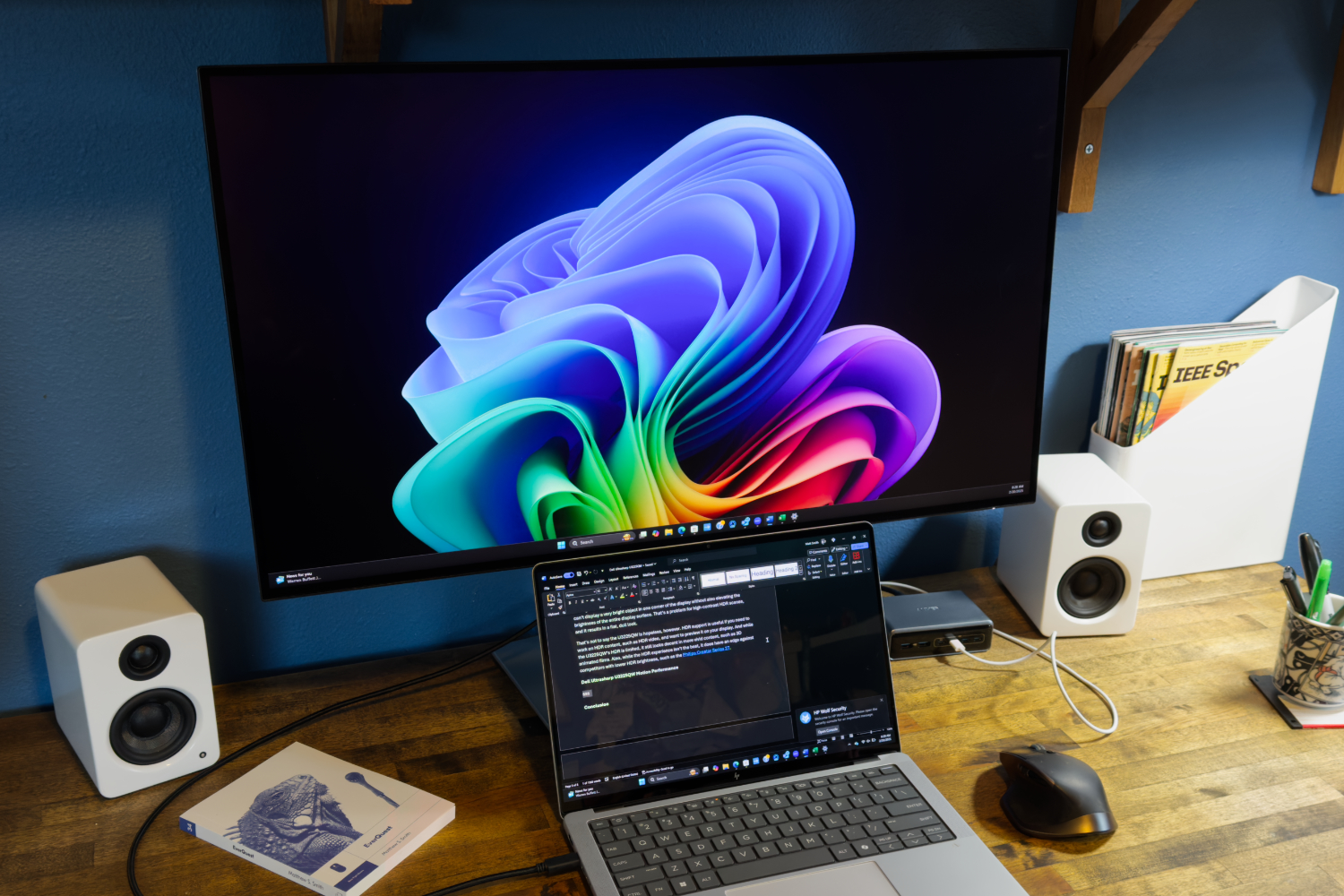
Pros
- Functional, professional design
- Thunderbolt 4, USB-C, Ethernet, and 140 watts of Power Delivery
- New generation of IPS Black boosts contrast ratio
- Excellent sharpness from 31.5-inch 4K panel
- 120Hz refresh rate with VRR
Cons
- Contrast ratio is good for an IPS panel, but still behind VA and OLED panels
- HDR brightness is decent, but contrast remains limited
- Doesn’t have speakers
Best Prices Today:

$899

$1029.99
Who should buy the Dell U3225QE?
Anyone who wants a well-rounded 4K monitor at the center of a home office will be well served by the U3225QE. This is a sharp 31.5-inch 4K IPS Black panel with excellent color accuracy and an above-average contrast ratio for a productivity monitor. The 120Hz refresh rate enhances responsiveness, making tasks like scrolling through documents and multitasking smoother. The ergonomic stand provides height, tilt, swivel, and portrait mode adjustments, and the anti-glare coating ensures comfortable viewing in various lighting conditions.
In addition to its stunning image quality, the U3225QE’s connectivity eliminates the need for external docks and adapters. It features Thunderbolt 4 / USB-C ports with 140W of Power Delivery—enough to charge most laptops—along with HDMI, DisplayPort, and a secondary DisplayPort for daisy-chaining multiple monitors. A built-in 2.5Gbps Ethernet port ensures a fast and stable wired network connection, a rare feature among monitors. It also offers six USB-A ports, a pop-out USB hub with quick-access USB-C and USB-A ports, and KVM switch functionality for seamless switching between two connected PCs.
Dell U3225QE: Further considerations
While this monitor lacks built-in speakers and its HDR performance is limited, the U3225QE’s extensive connectivity and high-quality display make it a standout choice for professionals who need a central hub for their workspace.
Want a smaller version of this monitor? Check out the Dell Ultrasharp U2725QE. It has a similar 4K IPS Black display panel and Thunderbolt 4 / USB-C connectivity.
Read our full
Dell Ultrasharp U3225QE review
Dell S2722QC – Best budget 4K monitor
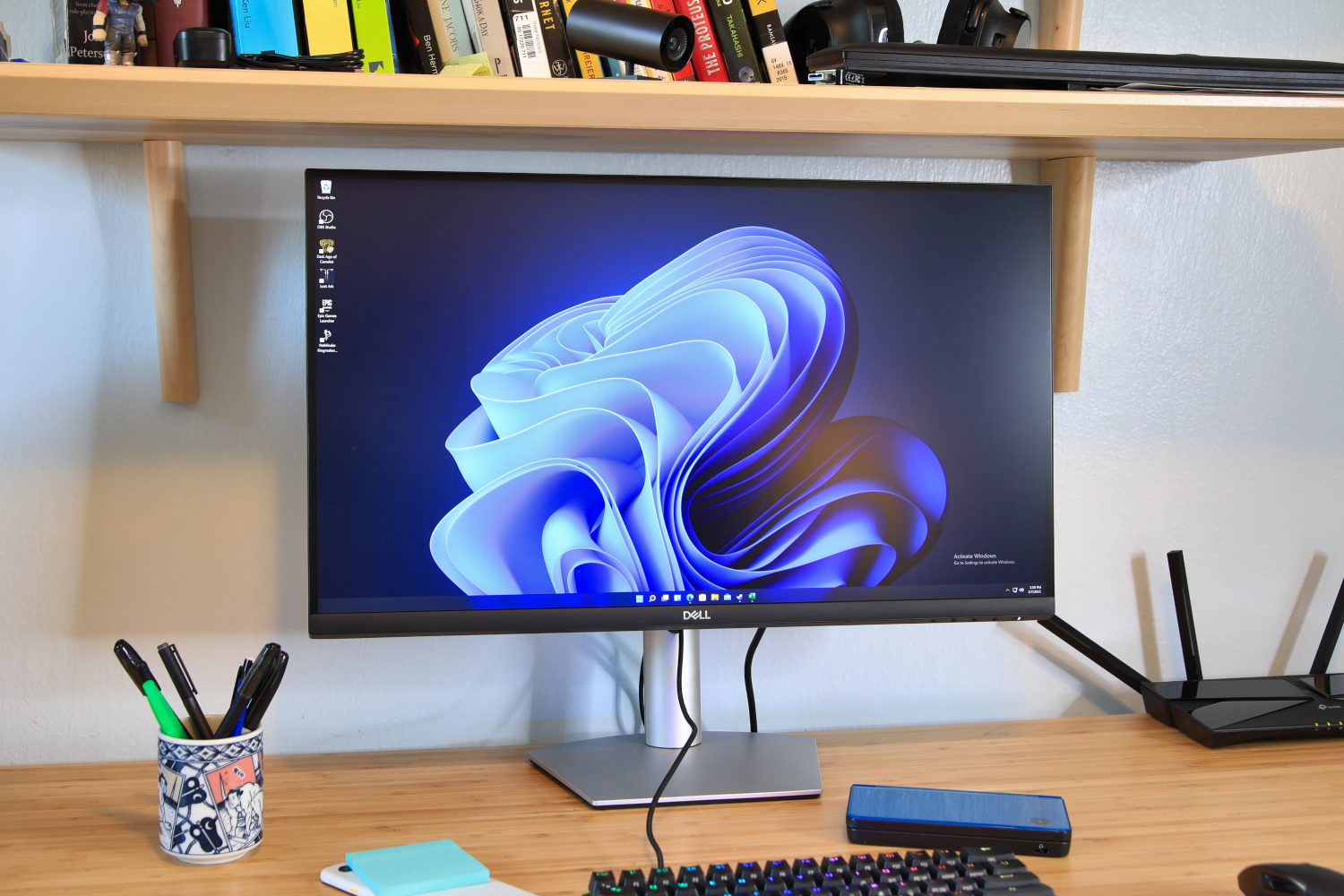
Pros
- Uniquely affordable USB-C monitor
- 4K resolution with HDR option
- High brightness and good color accuracy
- Integrated speakers
Cons
- Low contrast ratio saps SDR vibrance
- Mediocre color gamut
Best Prices Today:
$369.99
Who should buy the Dell S2722QC?
This is the 4K monitor for shoppers who want quality on a budget. The monitor can often be found for less than its $380 MSRP. It stands out by blending this budget price with 4K resolution and USB-C connectivity typically reserved for more expensive models.
Dell’s 27-inch IPS display delivers crisp visuals and a respectable brightness of 296 nits, suitable for most lighting conditions. In addition to an exceptionally clear, sharp 4K image, the monitor delivers color performance that’s more than adequate for everyday productivity, streaming, and light gaming. These perks are paired with a USB-C port with 65 watts of USB Power Delivery for charging a connected laptop or tablet, as well as two USB-A ports for connecting wiring peripherals. The monitor even ships with a sturdy yet compact ergonomic stand that adjusts for height, tilt, swivel, and pivot.
Dell S2722QC: Further considerations
The Dell S2722QC makes a few compromises to keep the price low. The IPS panel’s contrast ratio is low, which can make the image look flat and dull when playing games or watching a movie. It’s better suited for a home office than a gaming den. To be fair, though, quality 4K gaming monitors are usually more expensive.
Dell’s S2722QC offers a lot of bang for your buck. It doesn’t deliver the highest image quality in all areas, but its combination of 4K resolution, USB-C connectivity, and affordability makes it a solid choice if you want a tack-sharp home office monitor at a low price.
Read our full
Dell S2722QC review
Asus ProArt PA279CV – Best budget 4K monitor for creatives
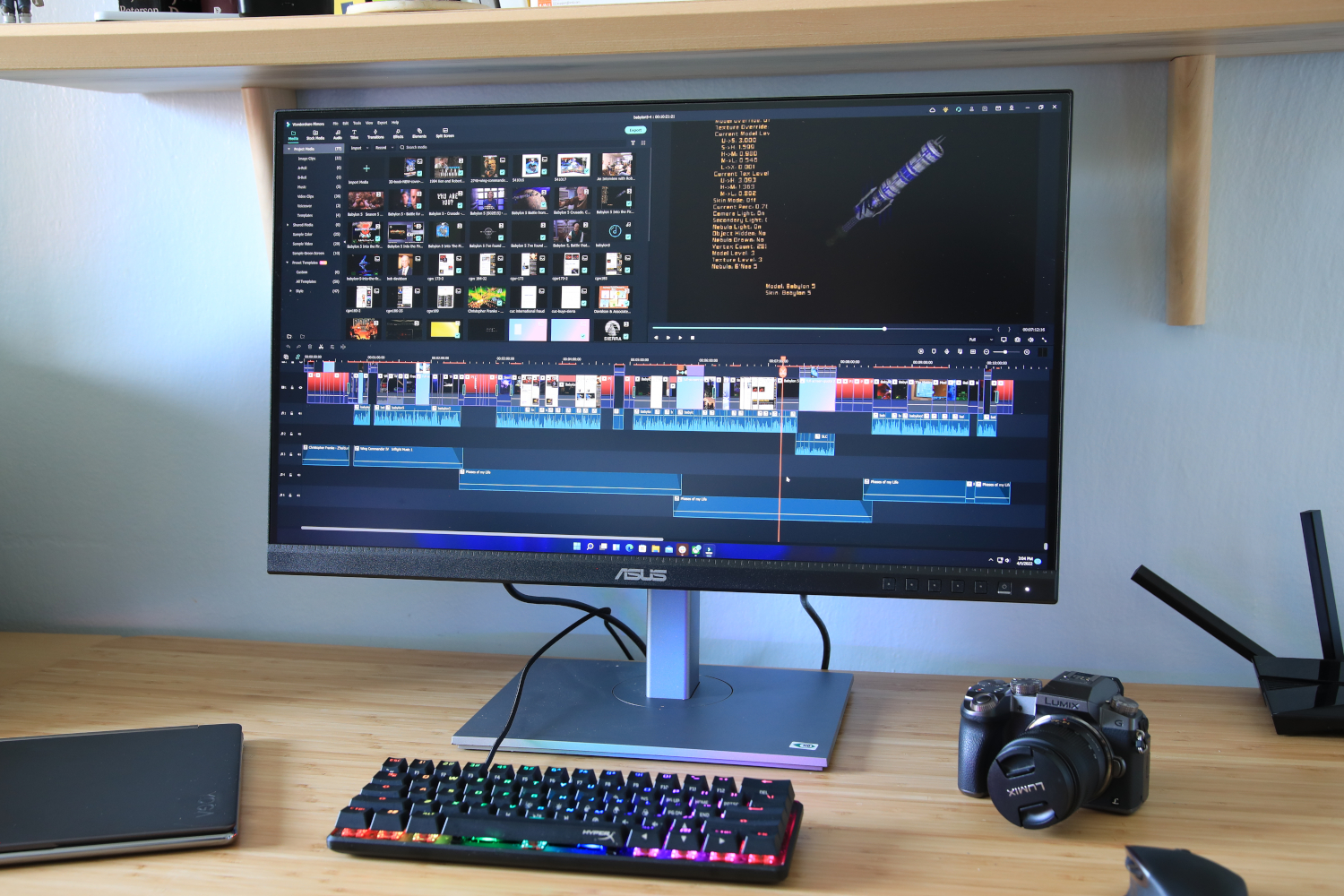
Pros
- Accurate image
- High maximum brightness
- Menu settings allow calibration
- Has USB-C with 65 watts Power Delivery
- Competitive price
Cons
- Unimpressive design
- Luminance uniformity could be better
- HDR is bright but otherwise falls short
Best Prices Today:

$335

$399.99
Who should buy the Asus ProArt PA279CV?
The Asus ProArt PA279CV is an excellent choice for creatives who want an entry-level 4K monitor for professional use, but need to spend less than $500.
The ProArt PA279CV is a 27-inch 4K monitor with excellent color accuracy, high maximum brightness, and a good contrast ratio for an IPS monitor.
This monitor also throws in USB-C connectivity. It’s not a great USB-C hub, as it has only a couple USB-A ports, but it offers 65 watts of Power Delivery for charging a connected laptop or tablet.
Asus ProArt PA279CV: Further considerations
While this isn’t the right monitor for gaming enthusiasts (see below), Asus throws in adaptive sync support compatible with AMD and Nvidia video cards. This prevents screen tearing and provides smooth motion in 3D games. The monitor has a maximum refresh rate of 60Hz.
Read our full
Asus ProArt PA279CV review
MSI MPG 272URX – Best 4K gaming monitor
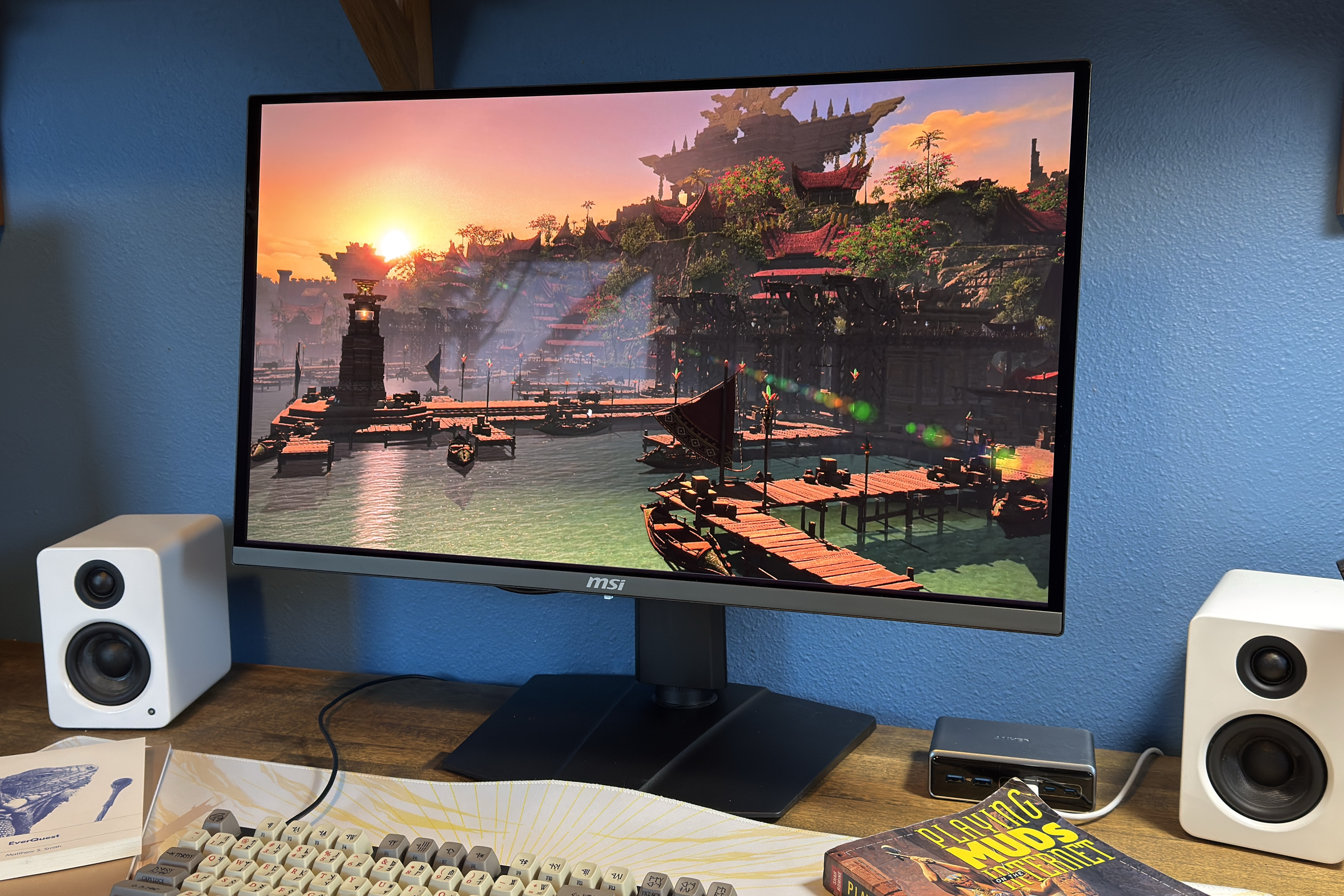
Pros
- 26.5-inch 4K OLED panel looks sharp
- Great contrast and color performance
- Strong motion clarity
- Respectable HDR performance
- Lots of connectivity including USB-C
Cons
- Design is a bit bland
- Gamma, color temperature slightly off-target
- 4K OLED panel carries a premium price
Best Prices Today:
$1,099
Who should buy the MSI MPG 272URX QD-OLED?
The MSI MPG 272URX QD-OLED should be at the top of your list if you’re looking for a high-performance gaming monitor with a 240Hz refresh rate and a cutting-edge OLED panel.
This 26.5-inch display delivers stunning 4K resolution with an ultra-smooth 240Hz refresh rate, making it an excellent choice for gamers who want both visual clarity and fluid motion. Unlike previous 4K OLED monitors that were limited to 60Hz, the MSI is built for fast-paced gaming yet maintains the deep contrast and vibrant colors OLED monitors are known for. It also supports adaptive sync for smooth frame pacing.
MSI MPG 272URX QD-OLED: Further considerations
The monitor isn’t just great for gaming. The QD-OLED panel offers excellent contrast and color accuracy, which makes it a solid pick for creative professionals and anyone who enjoys watching HDR movies. Connectivity is another strong point with HDMI 2.1, DisplayPort 2.1a, and USB-C inputs, along with 98 watts of USB Power Delivery for charging laptops or tablets. While the design is a bit plain, the stand is sturdy and fully adjustable.
The MSI’s many perks come at a premium. Priced at $1,099.99, the MSI MPG 272URX is more expensive than 1440p OLED alternatives, which can be found for under $800. If 4K clarity and a fluid 240Hz refresh rate are what you’re after, however, this monitor is worth the investment.
Read our full
MSI MPG 272URX review
Viewsonic VX1655-4K-OLED – Best portable 4K monitor
Pros
- Excellent image quality
- Useful built-in kickstand
- Attractive and sturdy design
- Extensive image-quality options
Cons
- Flimsy bundled keyboard cover
- Some on-screen menu options are confusing
- Power adapter could be smaller
Best Prices Today:
$519.99
Who should buy the Viewsonic VX1655-4K-OLED?
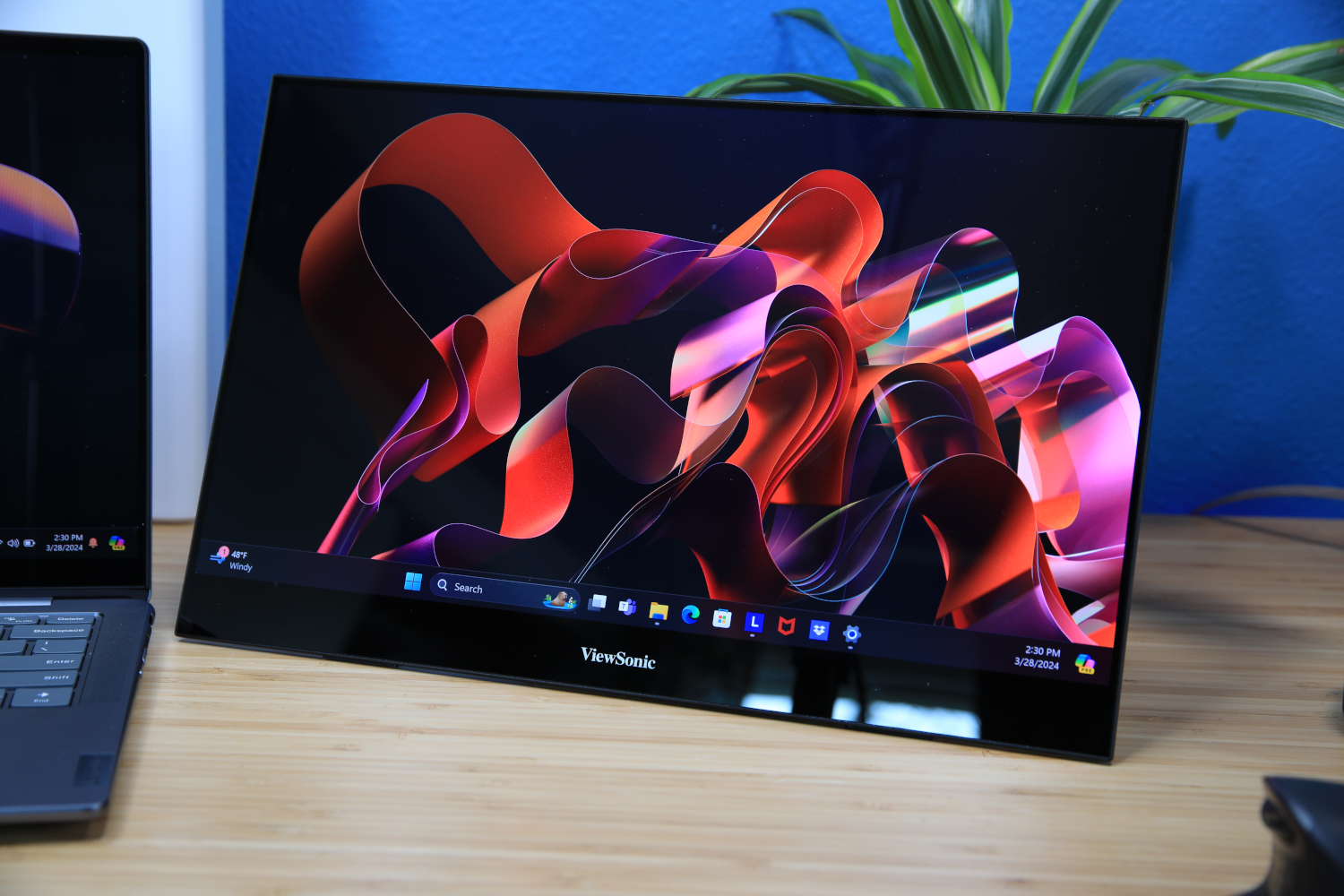
Viewsonic’s VX1655-4K-OLED is our top choice for creators seeking top-notch image quality in a portable display.
This 16-inch OLED monitor delivers class-leading sharpness with 275 pixels per inch (a 27-inch 4K monitor, for comparison, has 163 pixels per inch). It also delivers vivid, accurate colors and deep contrast that make it perfect for both entertainment and creative work. The monitor’s HDR performance also far surpasses other portable monitors, so it’s a good choice if you want to sit back and watch a movie after a busy day.
Unlike most portable monitors, the VX1655-4K-OLED has a built-in kickstand that flips out from the rear of the display. The kickstand is more stable and easier to use than the detachable, folding stands that inexpensive portable monitors rely on. Connectivity is solid, as well, with dual USB-C inputs and one mini-HDMI.
Viewsonic VX1655-4K-OLED: Further considerations
The VX1655-4K-OLED has a few minor flaws. The bundled display cover feels somewhat flimsy, the on-screen menu system can be tricky to navigate, and the relatively large power adapter is more cumbersome than it needs to be.
Yet it’s clear the portable monitor’s perks far outweigh its problems. While shoppers can find cheaper alternatives, the VX1655-4K-OLED stands out for its ability to deliver a professional-grade visual experience on the go.
Read our full
Viewsonic VX1655-4K-OLED review
Samsung M8 Smart Monitor – Best 4K monitor for entertainment
Pros
- Has Samsung’s Tizen OS with smart TV features
- Remote, webcam, and speakers included
- Excellent SDR image quality
- HDR quality is good for the price
Cons
- Limited connectivity
- Annoying to set up and access some features
- No adaptive sync or enhanced refresh rate
- Narrow viewing angle
Best Prices Today:
$499.99

$499.99
Who should buy the Samsung M8 Smart Monitor?
A 32-inch 4K monitor is great for everyday PC tasks like web browsing and document editing, but it can be more than that. Monitors in this category are an ideal substitute for a television in a small mixed-used space like a studio apartment, rented room, or dormitory.
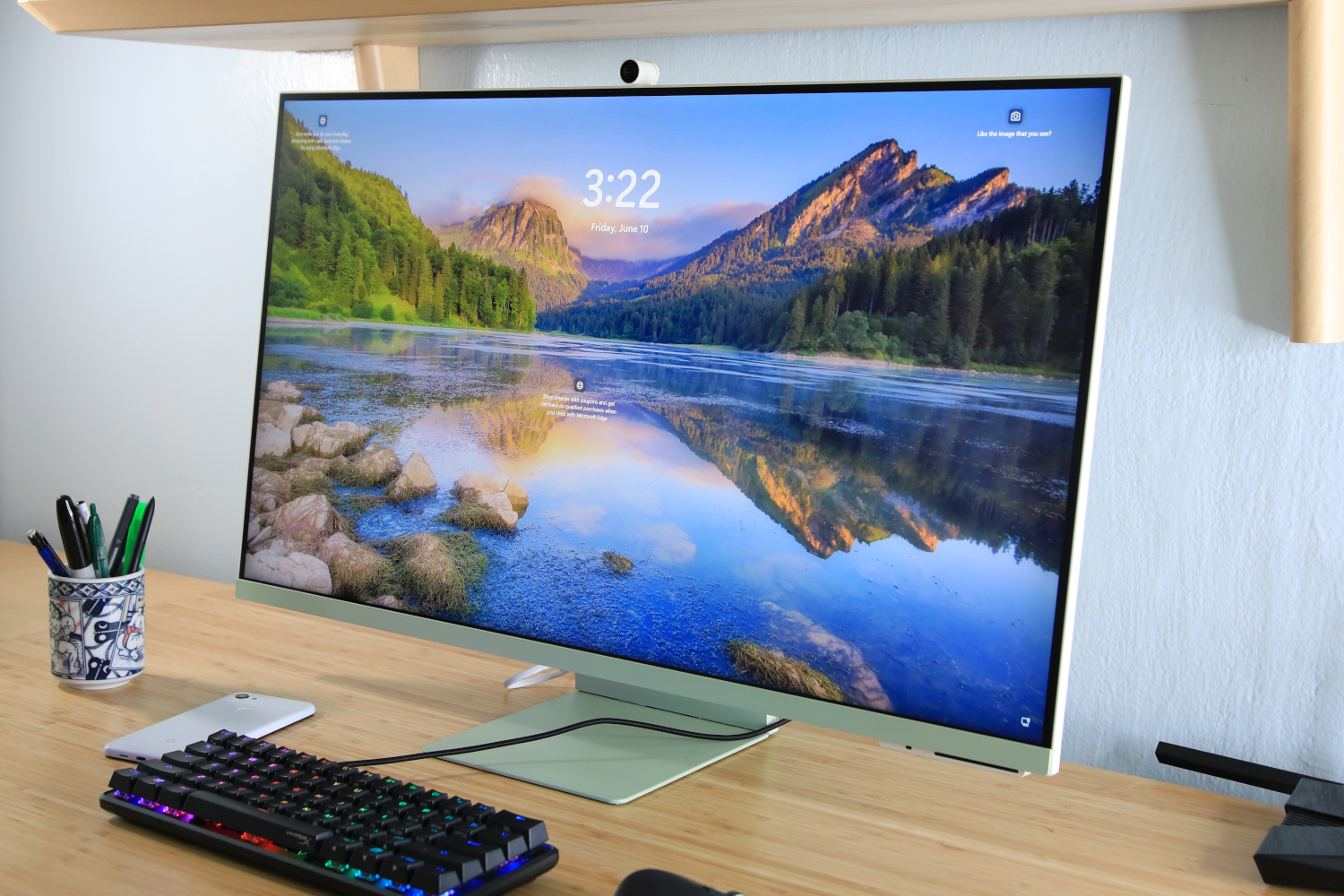
Samsung’s M8 Smart Monitor leans into this by fusing the features of a Smart TV with a traditional 32-inch 4K monitor. The monitor comes with a remote and runs Samsung’s Tizen operating system. You can access streaming content, like Netflix or Hulu, directly from the monitor.
Yet this is still a great PC monitor. A connected PC or other external device can be used by flipping the input source, as you would on a television. Image quality is solid with excellent sharpness, top-tier contrast, high brightness, and attractive color performance.
Samsung M8 Smart Monitor: Further considerations
The M8 Smart Monitor comes in a variety of attractive stand and bezel color options, with a detachable webcam, and has a USB-C port with up to 65 watts of Power Delivery. It supports Bluetooth 4.2 and Wi-Fi 5, too.
Read our full
Samsung M8 Smart Monitor review
BenQ SW272U – Best 4K monitor for photographers
Pros
- Incredible sharpness from its paper-like display
- Wide color gamut and high color accuracy
- Excellent ergonomic stand
- Extensive image quality controls accessible through bundled remote
Cons
- Disappointing contrast ratio
- Modest connectivity for the price
- Very expensive for its feature set
Best Prices Today:
Who should buy the BenQ SW272U?
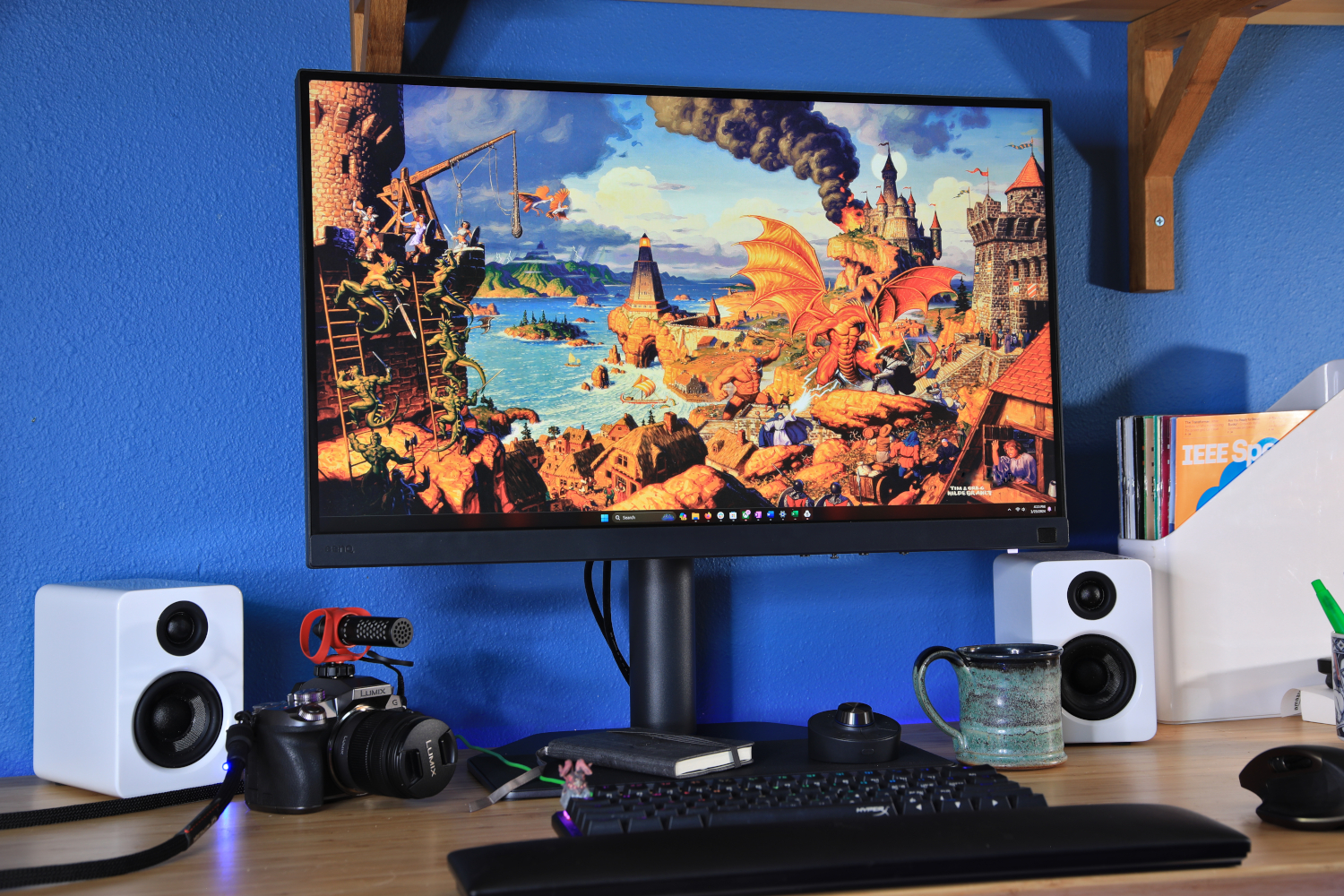
The BenQ SW272U is an excellent 4K monitor for photographers and publishers who prioritize sharpness and accuracy. This 27-inch monitor has a “fine-coated panel” that delivers a simulated paper-like texture and boasts a resolution of 3840×2160 at 60Hz. It also provides a robust, industrial design with ergonomic stand that offers a wide range of adjustment and a glare-reducing hood designed to reduce ambient light.
Connectivity includes standard ports like HDMI, DisplayPort, and USB-C, with the notable addition of an SD card reader, which photographers are sure to like. However, it misses some advanced features like Thunderbolt. The monitor offers an exceptional menu system, accessible through a joystick or a wireless remote, with extensive customization for color gamut, color temperature, and gamma. That’s another key feature for photographers, as it helps users precisely calibrate the monitor’s image based on their needs.
The SW272U also has excellent image quality which, of course, is key for its target market. Its color gamut coverage and color accuracy are defeated only by a few of the best OLED and QD-OLED monitors. The monitor’s sharpness also stands out, offering a high pixel density that, in combination with the fine-coated panel, mimics the quality of printed material. The monitor’s contrast ratio is limited, which proves a downside for entertainment, but it’s less of a concern for its target audience.
BenQ SW272U: Further considerations
There’s only one real issue, and that’s the price. BenQ asks almost $1,500 for the SW272U, and that’s a lot even for a 27-inch 4K monitor. If you’re a photographer hoping to see what your photos might look like in print, though, it’s worth the premium.
Read our full
BenQ SW272U review
Dell G3223Q – Best 4K 144Hz monitor
Pros
- Bright, sharp SDR image
- Good color gamut and accuracy
- Solid build quality and ergonomic stand
- Great motion clarity at 120Hz or 144Hz
Cons
- Disappointing HDR performance
- Odd menu choices for creators
- Modest USB connectivity
Best Prices Today:
$599.99
$649.97
Who should buy the Dell G3223Q?
Want a 4K monitor with a high refresh rate for smooth gaming? The Dell G3223Q is an excellent option.
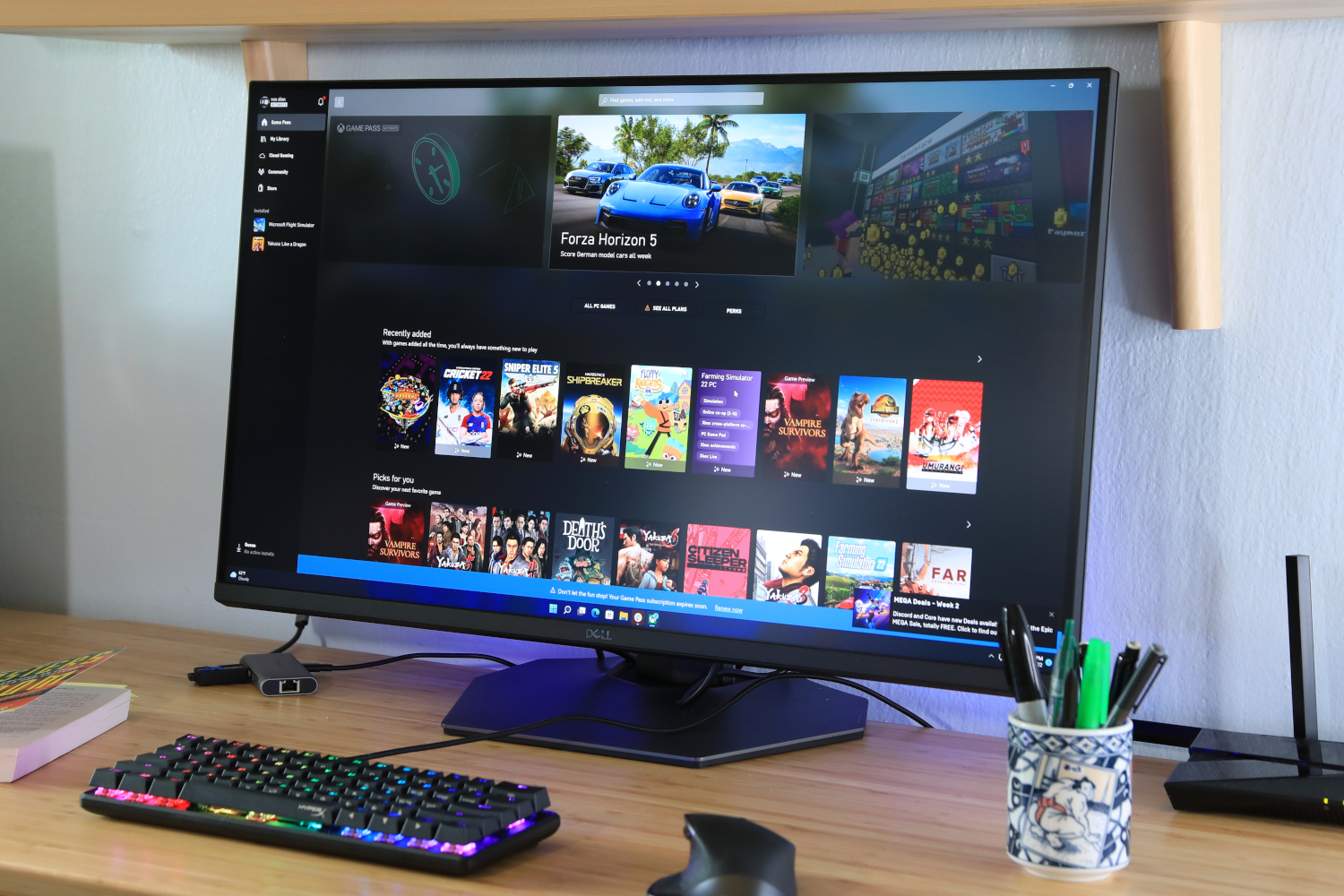
The G3223Q is a 32-inch, 4K monitor with a maximum refresh rate of 144Hz and support for AMD FreeSync Premium Pro (Nvidia G-Sync also works, unofficially). You can play games at high refresh rates with no screen tearing and smooth frame pacing.
You’ll find two HDMI 2.1 ports on the rear. They’re great for connecting a PlayStation 5 and Xbox Series X game console, since you can play at each console’s maximum resolution and refresh rate. There’s also a DisplayPort input for connecting your PC.
Dell G3223Q: Further considerations
None of this would matter if the G3223Q’s image quality wasn’t excellent—but it is. The monitor has great color performance, high brightness, good contrast, and a razor-sharp image thanks to its 4K resolution.
It’s a good value, too. The G3223Q is towards the low end of pricing for a 32-inch, 4K 144Hz monitor but doesn’t sacrifice features or build quality to achieve it.
Read our full
Dell G3223Q review
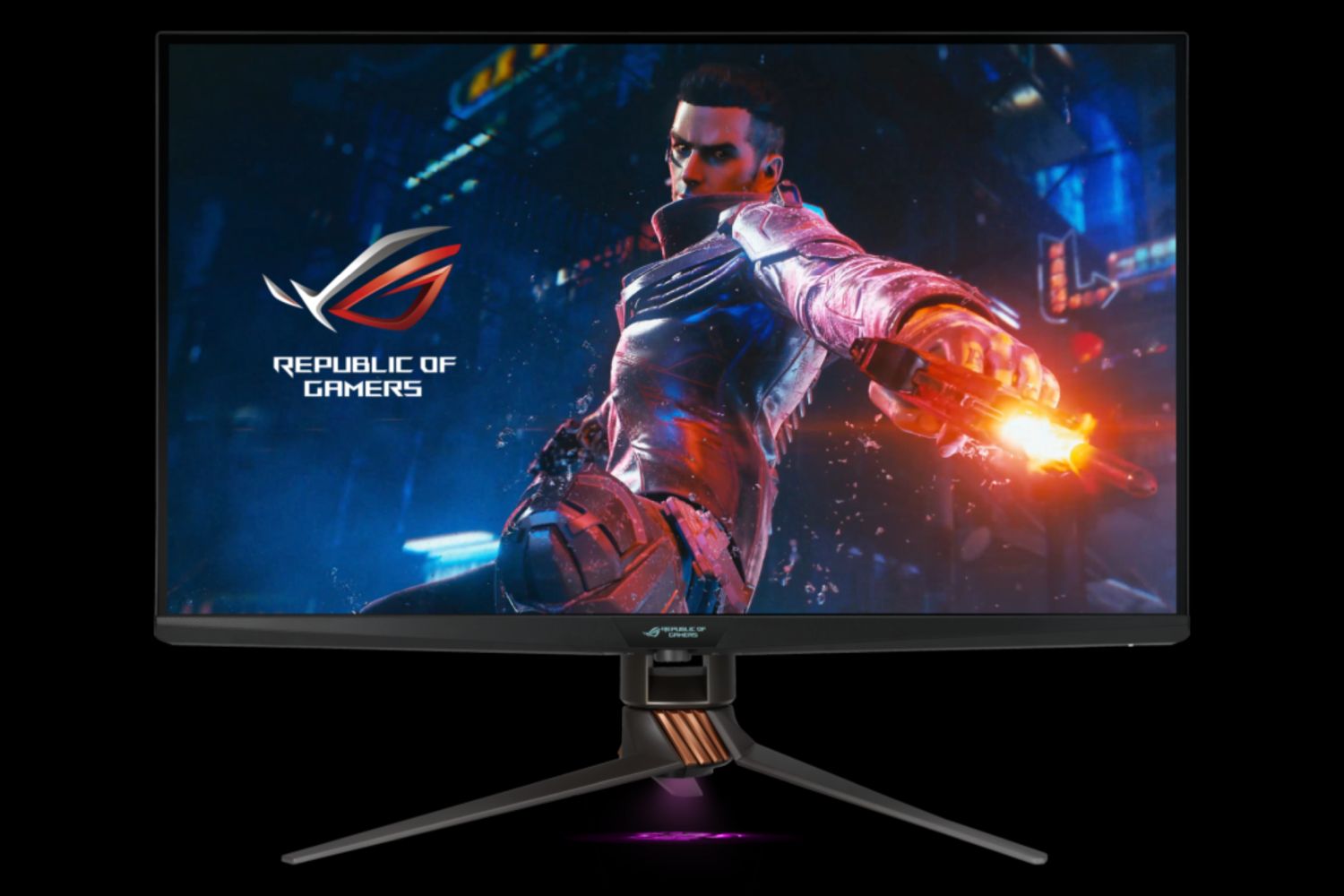
Asus ROG Swift PG32UQX – Best 4K HDR monitor
Pros
- Excellent gaming performance
- 4K resolution
- Dimmable mini-LED backlight
- Ergonomic adjustment options
Cons
- High power consumption
- Extremely expensive
Best Prices Today:
Who should buy the Asus ROG Swift PG32UQX?
Want the last word in high-resolution, high-definition gaming and entertainment? You need a fantastic HDR monitor like the Asus ROG Swift PG32UQX.
This monitor has a Mini-LED backlight with 1,152 independent backlight zones. The backlight greatly improves the monitor’s contrast ratio and achieves eye-searing levels of brightness in small areas of the display. The monitor’s maximum sustained brightness is exceptionally high, as well.
As a result, the PG32UQX delivers excellent detail in bright areas of the screen while maintaining good contrast and black levels in darker scenes. It also has exceptional color, which further contributes to a great HDR experience. Overall HDR performance rivals the best HDTVs and blows away most HDR monitors.
Asus ROG Swift PG32UQX: Further considerations
This is also a 4K 144Hz monitor with support for Nvidia G-Sync Ultimate. HDMI 2.1 is missing, but Xbox Series X|S consoles can achieve 4K 120Hz over HDMI 2.0 through a chroma subsampling mode.
The only problem? You can expect to pay up to $3,000 for this monitor.
Read our full
Asus ROG Swift PG32UQX review
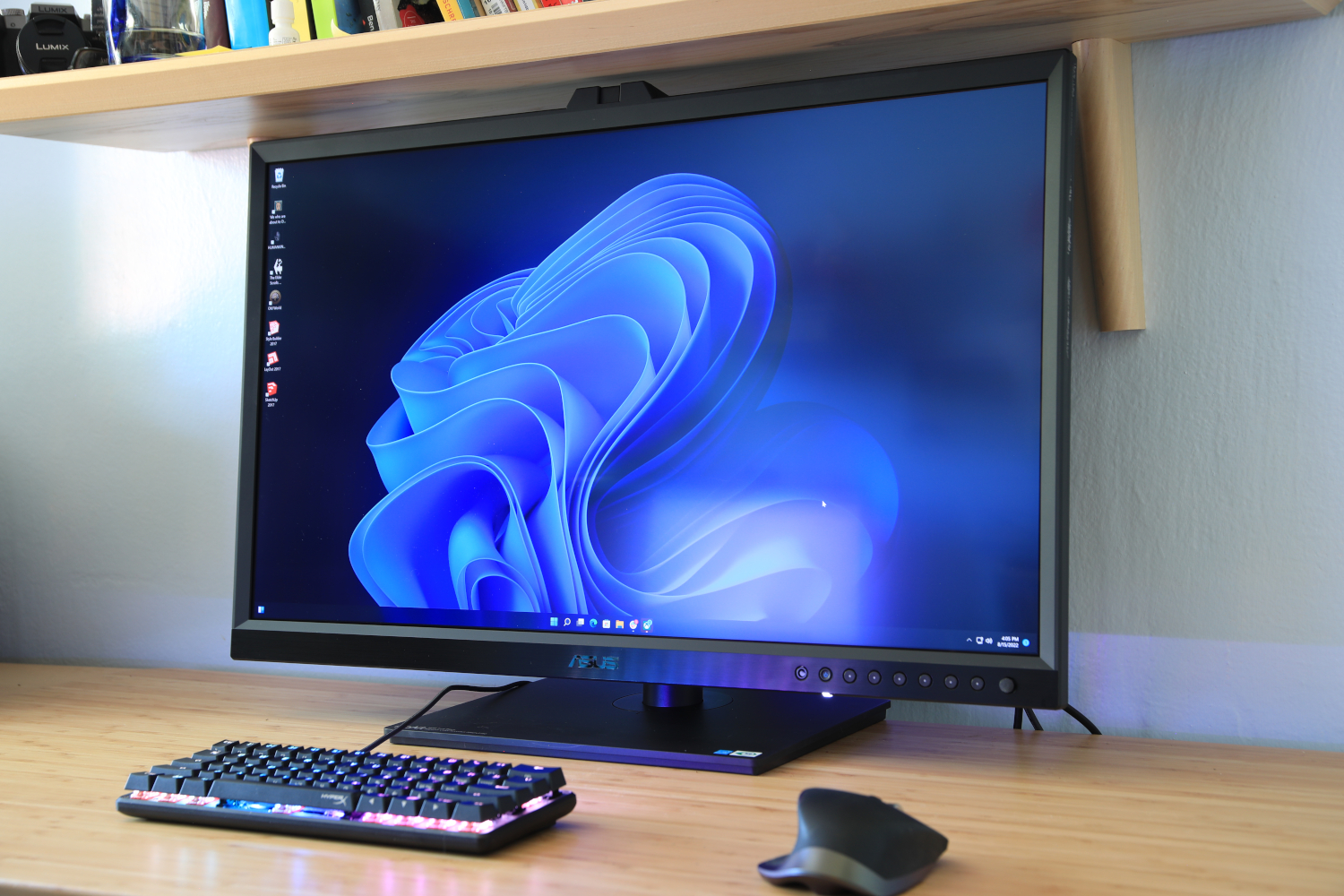
Asus ProArt Display OLED PA32DC – Best 4K monitor for professionals
Pros
- The best SDR image quality yet
- Good HDR performance
- Long list of image quality features
- Exceptionally sturdy
- Numerous inputs, plus USB hub
Cons
- HDR brightness could be better
- Glare can be an issue in bright rooms
- Only 60Hz, no adaptive sync
Best Prices Today:
$3,099.99
Who should buy the Asus ProArt Display OLED PA32DC?
This is the 4K monitor for professionals who want the best. Most professional monitors support 4K resolution, but the Asus ProArt Display OLED PA32DC stands above the pack.
The secret is in the OLED panel. OLED looks fantastic, of course, with excellent contrast, a wide color gamut, and superb color accuracy. What sets the PA32DC apart from less expensive OLED monitors, though, is its use of a conventional RGB subpixel layout. This delivers the best clarity on modern PCs and prevents the color fringing issues that can appear on competitors that use QD-OLED display panels.
Asus provides a long list of image quality presets and options. The monitor has built-in modes for sRGB, DCI-P3, Rec. 709, and AdobeRGB, among others. It also includes multiple, accurate color temperature and gamma modes. A built-in colorimeter can be used to precisely calibrate color accuracy.
Asus ProArt Display OLED PA32DC: Further considerations
This monitor is built for use in a variety of professional settings. It’s a rugged, beefy display with thick bezels and a built-in carrying handle to help with transportation. A standard VESA desk stand is available for use in an office or at home, and the monitor has built-in legs for easy setup at a mobile studio or jobsite.
Priced at $3,000, the PA32DC may seem expensive, but it undercuts competitors like the LG UltraFine 32EP950, Apple Pro Display XDR, and Asus’ older ProArt OLED displays. This is a top-notch professional monitor suited to a wide range of content creation, and those who need excellent color performance will find that it’s well worth the price.
Read our full
Asus ProArt OLED PA32DC review
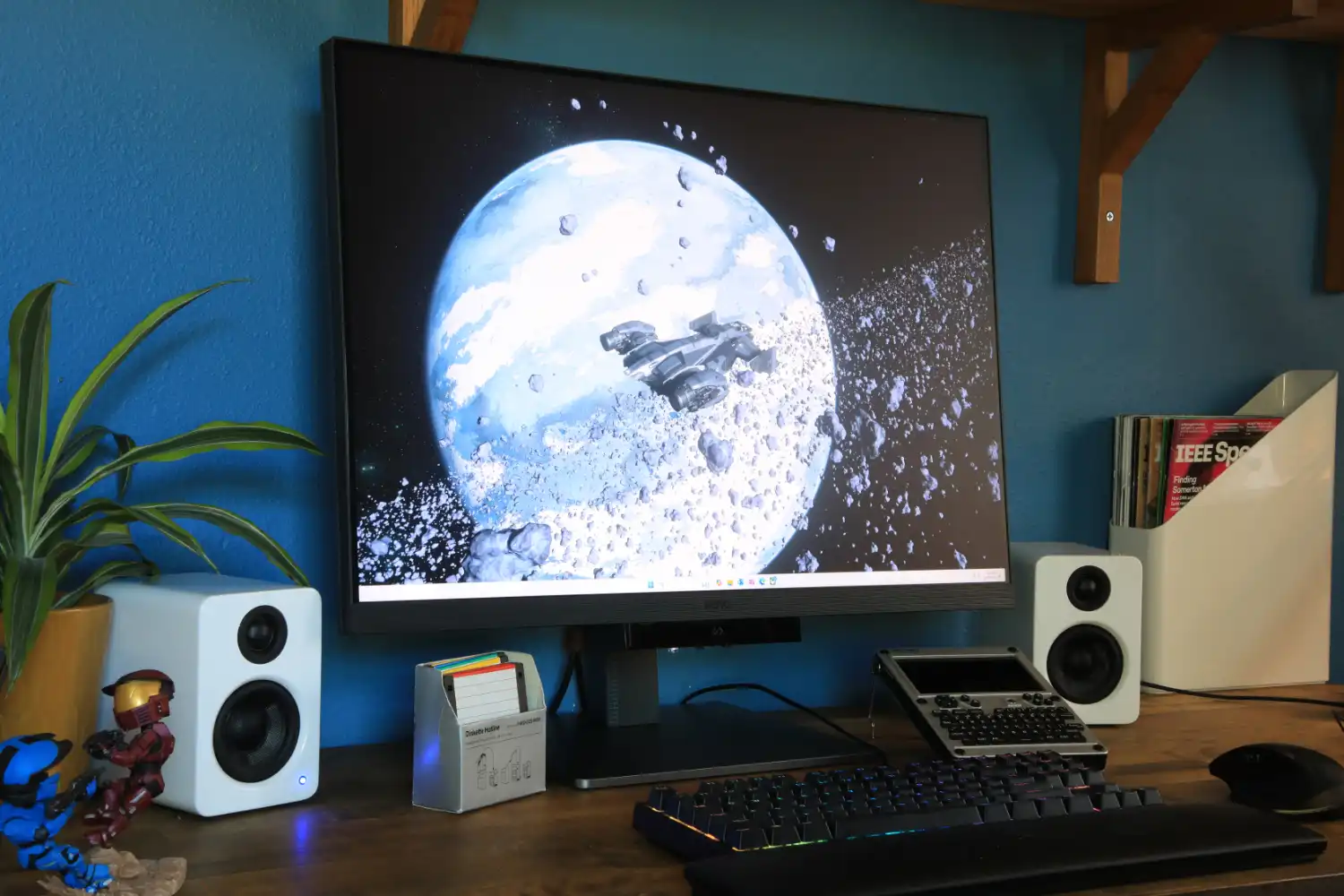
BenQ RD280U – Best 4K monitor for coders
Pros
- 28-inch panel with 3840×2560 resolution
- Attractive and functional design
- Good range of connectivity
- Useful extra features
Cons
- Only a 60Hz refresh rate
- HDR is supported, but sub-par
- Expensive for its size
Best Prices Today:
$659.99
Who should buy the BenQ RD280U?
The BenQ RD280U is a great monitor for programmers, thanks in no small part to its unusual 28-inch display with a 3:2 aspect ratio and 3840×2560 resolution. Its high pixel density, which is equivalent to a 27-inch 4K display, ensures text is rendered with crystal clarity. That make small fonts easier to read and may reduce eye fatigue during long coding sessions. The 3:2 aspect ratio is also notable, as it provides more vertical display space than a widescreen monitor and therefore room for a higher vertical pixel count (most 4K monitors have just 2,160 vertical pixels).
BenQ pairs the monitor’s pixel-dense display with features to support programming. Its IPS panel delivers excellent color accuracy and wide viewing angles, ensuring code remains clear and legible from any position. The monitor’s matte finish effectively reduces glare, making it suitable for various lighting conditions. And the monitor has a “MoonHalo” ambient light and an automatic night mode, both meant to reduce eye strain.
BenQ RD280U: Further considerations
Connectivity is another strength of the RD280U. It has a USB-C port with DisplayPort Alternate Mode and 90 watts of USB Power Delivery. This allows programmers to easily connect and charge their laptops, effectively turning the monitor into a convenient docking station.
BenQ asks a relatively high $599.99 for the RD280U, which is a couple hundred more than a competitive 4K 27-inch widescreen monitor. Still, programmers who code for hours on end are likely to find the extra cost is a good investment, as the RD280U offers many features — including a 3840×2560 display panel — that aren’t available from competitors.
Read our full
BenQ RD280U review
Other notable 4K monitors we’ve reviewed
The Dell Pro 27 Plus is a sharp 4K monitor, but its USB-C hub is the star of the show; the Asus ROG Swift PG32UCDP is an excellent 32-inch 4K OLED monitor with a 240Hz refresh rate, but also offers the unique feature of being able to run in 1080p mode with a 480Hz refresh rate; the Samsung Odyssey OLED G8 all-purpose display offers 4K resolution, up to a 240Hz refresh rate, Adaptive Sync, HDR, and built-in Bluetooth and Wi-Fi to support its Smart TV functionality; the MSI Modern MD272UPSW is not for everyone, but this smart monitor powered by Google TV OS is solid, and less expensive than its peers; the Alienware AW2725Q is an excellent 27-inch 4K 240Hz QD-OLED monitor, and less expensive than the competition; the HP Omen Transcend 32 is pricey even for a 32-inch 4K OLED monitor, but makes up for that with great USB-C connectivity and top-tier SDR image quality; the Acer Predator X32 X3 is a more affordable 4K OLED monitor that packs a nice bonus: USB-C with 90 watts of Power Delivery.
How we test 4K monitors
We test 4K monitors with a Datacolor Spyder X2 Ultra color calibration tool. It provides objective measurements for contrast, brightness, black levels, color gamut, color accuracy, and gamma, among other metrics. These objective results can be compared with other monitors to see how each performs against the competition.
These objective image results are supplemented with our subjective evaluation of a monitor. We evaluate out-of-box image quality, sampling all types of content from gaming to movies. We look at the feature set. We closely consider details like a monitor’s on-screen menu, ergonomic stand (or lack thereof), and overall build quality.
For more details, see our article on on how we test monitors at PCWorld.
Why you should trust us
PCWorld prides itself on PC hardware experience and expertise. We’ve been covering PCs since the 1980s, and we now review dozens of monitors every year. All of our recommendations have been personally tested and vetted by our expert reviewers, who’ve applied not only performance benchmarks but rigorous usability standards.
Who curated this article?
Matthew S. Smith is a freelance technology journalist with 15 years of experience reviewing consumer electronics, including the universe of computer monitors. In addition to PCWorld, his work can be found on Wired, Digital Trends, Reviewed, Lifewire, and other technology publications.
How to choose the best 4K monitor
4K monitors are more expensive than other monitors, so they pack numerous features and a quality display panel. A typical 4K monitor will have features that are optional on a 1080p monitor. Still, there are a few details you should know before buying a 4K monitor.
USB-C
USB-C is an excellent choice for connecting a 4K monitor to a modern laptop with USB-C or Thunderbolt. USB-C can bundle Power Delivery and DisplayPort Alternate Mode, which means the monitor can charge a connected device while it outputs video to the monitor. Some monitors, like the Dell U3223QE, are USB-C hubs that expand connectivity for the connected device.
Refresh rate
Most 4K monitors have a 60Hz refresh rate. Those that go beyond 60Hz may only support an enhanced refresh rate over a specific port, so be sure to check the specifications. A monitor will need to support HDMI 2.1 or DisplayPort 1.4 to handle 4K at up to 144Hz.
HDR
Many 4K monitors support HDR, but most offer lackluster HDR performance. HDR will function, and may look better than SDR, but won’t approach the quality of a good HDTV. If you want quality HDR, look for a minimum of VESA DisplayHDR 1000 certification (or VESA DisplayHDR True Black). See our article on everything you need to know about HDR on your PC to learn more.
FAQ
What is the best 4K monitor?
The Dell Ultrasharp U3225QE checks all the boxes for a great 4K monitor. The 31.5-inch 4K IPS Black panel features excellent color accuracy and an above-average contrast ratio, has a 120Hz refresh rate for enhanced responsiveness, and sports generous connectivity options that eliminate the need for any external adapters or hub. It also has an ergonomic stand and anti-glare coating for comfortable viewing in all lighting conditions.
What is the best budget 4K monitor?
The Dell S2722QC offers 4K, USB-C, HDR, and integrated speakers, making it a good everyday productivity monitor for an affordable price.
Does a 4K monitor need HDMI 2.1?
HDMI 2.1 is only important if you want to connect a PlayStation 5 or Xbox Series X game console at 4K resolution and play titles with 120Hz support. These consoles only support HDMI output, so an HDMI connection is your only option.
Most desktop PCs and laptops also have a DisplayPort output. This is preferable to HDMI 2.1 because it supports higher resolutions and refresh rates, so HDMI 2.1 is not necessary to connect a PC.
Can my PC handle a 4K monitor?
Support for 4K video output went mainstream around 2015. If you have a computer newer than 2015, odds are high that it supports 4K. Most PCs sold prior to 2015 will not support 4K.
Want to be sure? Our guide to checking what graphics card you have will help identify your PC’s graphics hardware. You can then reference its official specifications to find its maximum supported resolution.
Gamers be warned: 4K resolution is demanding in 3D games, so you may struggle to see smooth gameplay unless you have the latest graphics hardware. You’ll need at least an Nvidia RTX 3070 or AMD Radeon RX 6800 to play the latest titles at 4K and 60 frames per second.
Is text too small on a 4K monitor?
Early adopters of 4K monitors often struggled to read small text. That’s because many older applications were programmed such that interface elements have a defined, concrete size in pixels. The higher a display’s resolution, the smaller the interface appears.
Thankfully, this problem is mostly solved. Windows and MacOS have excellent text scaling options and most software developers have updated their applications to properly support 4K displays. It’s still a problem with very old apps that were never updated but, in general, it’s rare to see tiny, unreadable text on a 4K monitor.


