Agrihoods reimagine urban living by putting food at the center


Imagine the small bucolic town from a fairy tale. At its center are medieval buildings, a square where people sell their wares and perhaps a well to provide water. Beyond the defensive wall radiate agricultural fields, where people work hard to bring grain, fruit and vegetables to market.
Flip that for modern times and you have the idea behind “agricultural farms,” communities designed around a central farm. Like a garden in a big city, farms promise to increase food security, reduce temperatures, capture rainwater and increase biodiversity. As climate change intensifies heat, flooding and pressure on food systems, farms could be a way to make urban life more resilient, not just more picturesque.
“Developers are having a hard time providing open space because they would like to build more housing,” said Vincent Mudd, a partner at the architectural firm Steinberg Hart, which designs farms. “One of the few ways to close that gap is to be able to use active open space that actually generates commerce.”
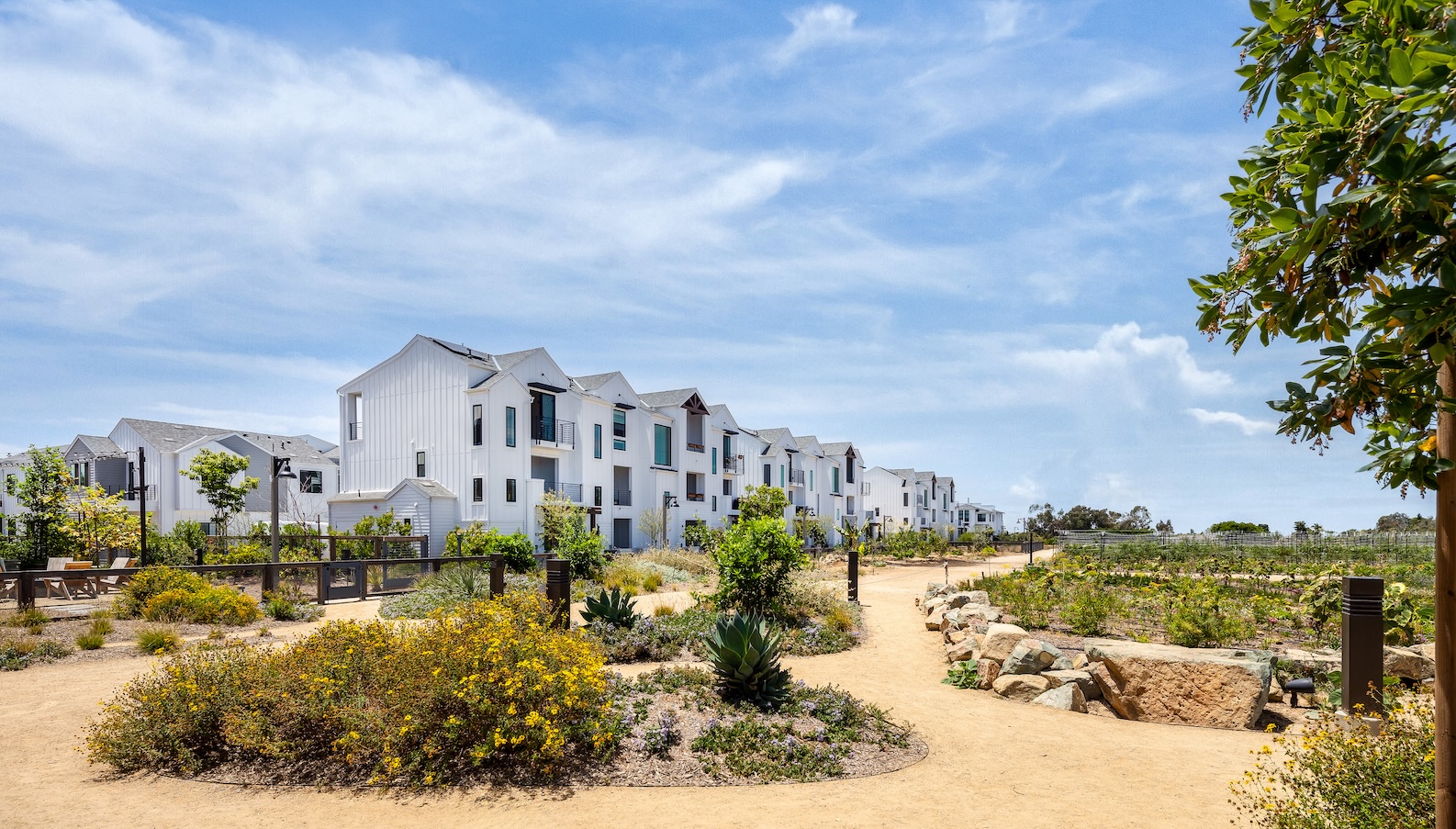
On paper, a farm is a simple concept: a working farm surrounded by single- or multi-family dwellings. Steinberg Hart recently completed two in California – one in Santa Clara and another, called Fox Point Farms, in Encinitas. The first, south of San Francisco, includes townhouses, market-rate and affordable housing, as well as a community center and retail stores. The latter, north of San Diego, adds a farm-to-table restaurant, an events venue and a grocery store, but its homes are primarily for sale rather than rent. “Two different housing programs for two different communities, but built around the sustainability of urban agriculture,” Mudd said.
Although these projects are located in relatively affluent areas, Mudd said the farms can be built almost anywhere, although that might require adjustments to zoning rules. “Almost every city has the ability to make this zoning change,” Mudd said, “because it maintains commerce, preserves jobs, generates retail sales tax revenue and provides accessible mixed-income housing.”
Kyle Jeffers
(Last year, residents of the Santa Clara Agricultural Complex claimed management failures left them living in unsafe and unsanitary conditions, with delayed repairs, poor air quality and other problems. The building’s manager, John Stewart Co., and owner, Core Affordable, did not respond to a request for comment.)
Where it gets more complicated is in the logistics of the farm. Water is the priority: Ideally, a farm captures enough rainwater to keep crops hydrated. Because Northern California enjoys a Mediterranean climate characterized by rainy winters and hot, dry summers, the Santa Clara farm collects precipitation and stores it in a tower. “It automatically fills with city water once it reaches a certain point, but we can get two-thirds of it, or sometimes throughout the summer, without having to do that,” said Lara Hermanson, co-founder of Farmscape, who helped design, install and maintain the community farm.
A rainwater harvesting system, however, carries an upfront cost that a community garden in a low-income neighborhood might not be able to afford. If one year the rains stop and drought sets in, she will have to pay for more water. “Perhaps people with the greatest need for food or nutrition security also face disproportionately higher water costs,” said Lucy Diekmann, an urban agriculture and food systems advisor at the University of California Agriculture and Natural Resources.
Nonetheless, one of the many charms of any farm or urban garden is that greenery, and even bare earth, breaks up the concrete landscape. Historically, cities have been designed to release water as quickly as possible into gutters and sewers before it accumulates and causes flooding. This strategy is struggling to keep up as climate change increases torrential rains, forcing them to dump more water. Green spaces let all of this liquid soak into the ground, mitigating flooding even without a deliberate catchment system.
However, an agricultural farm will not work alone. Early in planning, Hermanson said, a community must decide what it will develop. The general idea is to obtain as much yield as possible because space is limited compared to an industrial farm. So pumpkins are probably not a good idea, because these plants take up a lot of space. Instead, in Santa Clara, Hermanson grows Persian cucumbers, cherry tomatoes and hot peppers because they are small.
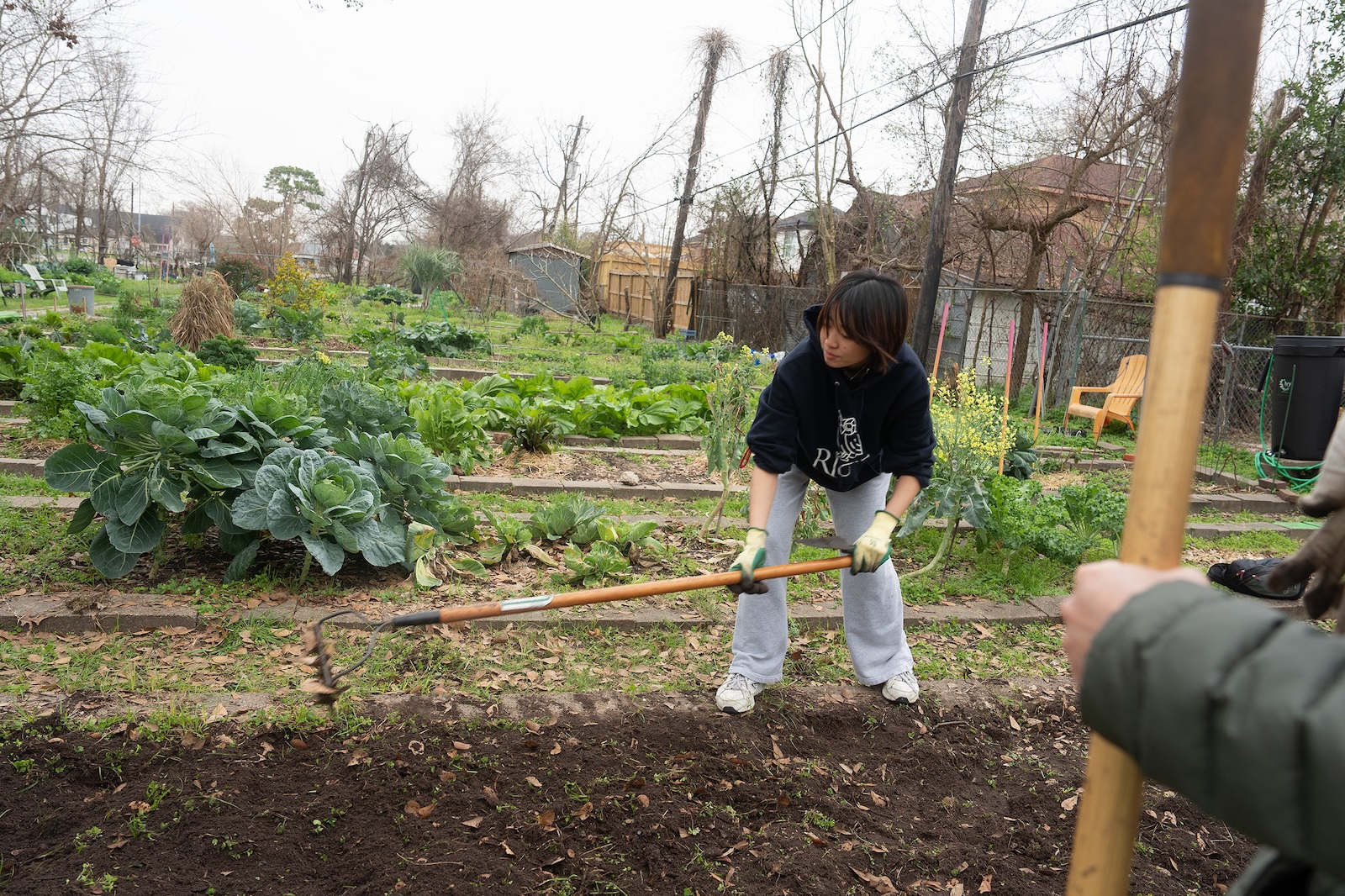
Although a farm cannot provide all the calories residents need, it is a particularly powerful system because the products it produces are very nutritious. Increase that food production citywide, and the impact could be enormous: One study found that Los Angeles could meet a third of its vegetable needs by turning vacant lots into gardens. “It’s amazing what we could do with what we have, and what we could do even more with intentional planning,” said Catherine Brinkley, a social scientist who studies urban agriculture at the University of California, Davis.
How urban farms can make cities more livable and help feed America
In Encinitas, Fox Point Farms farm manager Greg Reese sends food to the farm’s grocery store. So, in addition to size, he also takes into account the value of his crops. A lot of it comes down to speed: Arugula grows faster than cantaloupe, which means Reese can harvest it, send it to market and grow more in rapid succession. (Given Southern California’s pleasant climate, the farm can grow food for 11 or even 12 months a year.) It can also produce the food desired by the on-site restaurant chefs. “What is in high demand, and what is also growing very quickly? » said Reese. “I can plant a seed and they can harvest it in a month, or transplant it in two months, so the turnover is higher.”
These cultures can even benefit from a particularity of urban life: the urban heat island effect. As the sun hits all that concrete, asphalt and brick, the landscape absorbs its thermal energy – raising the mercury far above the surrounding rural areas – and slowly releases it at night. This is a growing problem for city dwellers facing ever-higher temperatures. On the other hand, these green spaces help cool the neighborhood because their plants release water vapor, making summer more comfortable for the surrounding community.
A farm can also support local biodiversity. Planting native flowering species, for example, simultaneously beautifies the landscape and attracts pollinating insects, hummingbirds, and bats (which feed on mosquitoes, an added bonus). Even the flowers produced by crops provide food for these pollinators, who return the favor by helping the plants reproduce.
Once crop varieties are decided, a farm can determine how much refrigeration and storage capacity to develop. Those who live there will also have to decide whether they want to sell their products at a stand or use them in an on-site restaurant. And they’ll need to plan for the costs of hiring outside help to run the farm.
So it’s not as simple as just putting up a few buildings around a green space and being done with it. “All of these things need to be understood before you start putting things on paper and making commitments,” Hermanson said. “Successful farms are well funded and well staffed. Everyone does better with clear expectations, clear budgets, and the community knows what they’re getting, too.”