AI Spots Hidden Signs of Consciousness in Comatose Patients before Doctors Do


August 31, 2025
3 Min read
The stain of hidden signs of consciousness in comatose patients before doctors do it
A machine learning algorithm identified signs of “secret conscience” in coma patients – in some cases, a few days before doctors can do it
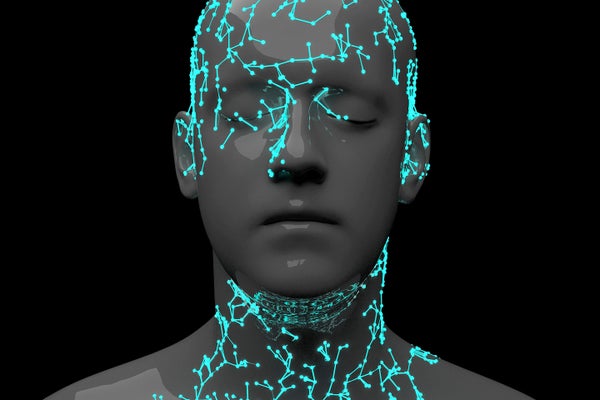
Scientific design / source cells
Imagine lengthening in a hospital bed, awake but unable to move your body to communicate with the people around you. This experience of “secret conscience” is a reality for many people who have undergone brain trauma. In a new study published in Communications medicineThe researchers found that they could detect signs of consciousness in comatose patients using artificial intelligence to analyze facial movements that are too small to be noticed by clinicians.
The secret conscience was detected for the first time in 2006, when the researchers asked an insensitive woman and healthy volunteers to imagine doing specific tasks in a cerebral scanner. The team found that the woman showed a brain activity in the same regions as the volunteers. Last year, researchers using similar brain imaging methods revealed that a non -reactive patient was secretly aware. These tests are not regularly carried out on people in an insensitive state because this type of neuroimagery takes time and its operation requires specialized skills. Instead, doctors generally count on more subjective visual examinations to assess the level of consciousness of a person, testing if they open their eyes, respond to orders or surprise a strong noise.
“We were trying to find a way to quantify how much these patients are aware” using simple and easily available technology, explains Sima Mofakham, computer neuroscientist at Stony Brook University and the main study of the new study.
On the support of scientific journalism
If you appreciate this article, plan to support our award -winning journalism by subscription. By buying a subscription, you help to ensure the future of striking stories about discoveries and ideas that shape our world today.
Mofakham and his team recorded videos of 37 patients with recent brain damage that seemed externally in a coma. They followed the facial movements of the participants in extraordinary details – at the level of individual pores – after they received orders such as “open your eyes” or “put you on the tongue”. The researchers’ AI monitoring tool, which they call seems, detected any facial movement and then analyzed if the movements were specific to the given command. Seems to have documented revealing responses in 30 of the 36 patients and oral movements in 16 of the 17 patients with analyzable videos. Five of these patients did not continue to produce greater signs of movement which were visible for doctors, although most of the others did. On average, Semee detected participants trying to open their eyes and move their mouths respectively 4.1 and 8.3 days before the clinicians identify these signs.
“What we found was: patients develop [small] The movements before going to more obvious movements, ”explains Mofakham. The results suggest that, in some cases, people are aware a few days before noticing it.
This ability to detect consciousness earlier is clinically significant, explains Jan Classassen, a neurologist at Columbia University, who was not involved in the new research. Signs of consciousness can provide another layer of information to doctors and family members who choose between a range of treatments, palliative care with more aggressive therapies. “Each day is potentially important” for these difficult decisions, says Claassen. Previous detection could also allow care teams to start the rehabilitation programs used to improve the motor skills of patients earlier. Distinct research shows that starting rehabilitation earlier is associated with a greater improvement in physical function.
The recovery of consciousness after a brain injury is often progressive and unpredictable. “When someone recovers consciousness, it’s almost like a flickering bulb,” said Claassen. “It does not light up or does not lie down.” The new study only followed participants up to six months after leaving the hospital. But it is possible that certain patients whose conditions have remained more static and who are currently alleged unconscious in long -term care establishments could also show signs of consciousness that could be detected, whether with more advanced neuroimagery techniques or simpler Sepel technology. “We have to experience and see,” says Mofakham. “There is a chance.”
Then, Mofakham plans to examine whether patients can answer questions yes or not using specific facial movements. “It has a great ethical implication” because people who cannot communicate “cannot participate in their care,” she said. “This study opens up a way to communicate with these patients.”
It’s time to defend science
If you enjoyed this article, I would like to ask for your support. American scientist has been a defender of science and industry for 180 years, and at the moment can be the most critical moment of this two -centuries story.
I was a American scientist The subscriber since the age of 12, and that helped shape my way of looking at the world. Sciam Educates me and always delights me, and inspires a feeling of fear for our vast and magnificent universe. I hope that does this for you too.
If you subscribe to American scientistYou help make sure that our cover is focused on significant research and discoveries; that we have the resources necessary to report the decisions that threaten laboratories in the United States; And that we support the budding scientists who work at a time when the value of science itself does not become often again.
In return, you get essential news, Captivating podcasts, brilliant infographics, Maybe not miss newsletters, videos to watch, Difficult games and the best writings and reports in the scientific world. You can even Give someone a subscription.
There has never been more time for us to get up and show why science counts. I hope you will support us in this mission.