A Medical Emergency 250 Miles Above Earth Forces NASA to Make a Rare Decision


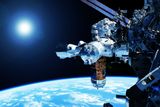
NASA does not often change course mid-mission. Astronaut schedules are planned down to the minute, spacecraft schedules are locked in months in advance, and contingencies are carefully modeled well before launch. That’s why it’s so surprising that they are bringing the SpaceX Crew-11 mission back from the International Space Station (ISS) ahead of schedule due to a medical issue affecting a crew member.
The identity of the astronaut and the nature of his condition have not been released, but NASA has confirmed that the crew member is now stable. The agency also canceled its first planned spacewalk of the year due to the same health concern and plans to announce a target return date in the coming days. This is the first time that NASA has chosen to prematurely end an ISS mission, specifically due to an astronaut’s medical situation.
Why NASA is sending Crew 11 home early
Crew-11 was launched from NASA’s Kennedy Space Center on August 1, 2025. The international crew includes American astronauts Zena Cardman and Mike Fincke, Japanese astronaut Kimiya Yui, and Russian cosmonaut Oleg Platonov. Cardman and Fincke were to carry out the canceled spacewalk in order to prepare the station for a future deployment of new solar panels to increase power.
Although early returns are rare, they are not unprecedented. The last time NASA brought astronauts home early was in 1997, during Space Shuttle mission STS-83, after one of Columbia’s fuel cells failed in orbit.
Still, Crew-11’s return is notable because it is driven by human health, underscoring the seriousness with which NASA treats even potential medical risks about 250 miles above Earth.
What is medical care like on board the ISS?
The ISS is a floating laboratory that doubles as a remote medical outpost. Typical missions last around six months, during which astronauts are continuously monitored by a dedicated team of doctors, psychologists and specialists on the ground.
According to NASA, each crew member is assigned a flight surgeon – doctors specifically trained in space medicine – who oversees health care before, during and after the flight.
The astronauts themselves receive extensive medical training and maintain regular contact with Earth-based doctors. The resort has a robust pharmacy and medical equipment designed to treat everything from minor injuries to more serious conditions. If an emergency exceeds what can be safely handled in orbit, astronauts can return to Earth in the same spacecraft in which they were launched for emergency care on the ground.
Learn more: Baby space mice born from frozen stem cells give hope for human fertility in the cosmos
Dealing with medical emergencies aboard the ISS
One of the most memorable examples of on-orbit medical care came when doctors treated a blood clot in an astronaut’s jugular vein during a mission aboard the ISS, described in a paper published in 2020. It was the first known case of deep vein thrombosis (DVT) in space, and there were no established treatment protocols for managing blood clots in microgravity.
Blood clot expert Stephan Moll, MD, was consulted to help guide the response. For more than 90 days, the astronaut treated his problem in orbit, performing ultrasound scans on his own neck under the guidance of a radiology team on Earth, as well as email and phone discussions with Moll. The clot was discovered accidentally during a study examining how fluids move through the body in zero gravity.
“When I was young, I wanted to be an astronaut, so when NASA reached out to me for help, it was pretty amazing,” Moll said in a press release. “And it’s been amazing to continue working with NASA to research blood clots in space, which will help develop health and safety protocols for future space travel.”
The collaboration between Moll and NASA continues today, their work informing decisions about medical supplies, blood thinners, and risk reduction strategies as humans prepare to venture further from Earth than ever before.
Learn more: Stranded astronauts Suni and Butch expected to leave the ISS and return to Earth
Article sources
Our writers at Discovermagazine.com use peer-reviewed studies and high-quality sources for our articles, and our editors review them for scientific accuracy and editorial standards. See the sources used below for this article:


