Apple without Steve: Most impactful products of the 80s and 90s


Summary created by Smart Answers AI
In summary:
- Macworld examines Apple’s revolutionary products from 1986 to 1995, including the modular Macintosh II, the revolutionary PowerBook 100 series, and the performance-enhancing Power Macintosh 6100 with PowerPC processors.
- These innovations shaped personal computing through the expansion of desktop publishing, the first digital photographs with QuickTake 100, and pioneering mobile computing despite initial limitations.
- Apple’s constant innovation during difficult times laid the foundation for future technologies and significantly influenced the IT industry landscape.
As Apple celebrates its 50th anniversary, there have been many memories of all the great things people are doing with Apple products around the world. But times haven’t always been so rosy at Apple. In fact, just ten years after the company was founded, founders Steve Jobs and Steve Wozniak were absent while the company struggled and nearly fell into bankruptcy.
Yet despite its struggles, Apple still released incredible products that had a lasting impact on the company and the computing landscape. Take a look at some of the innovative new products released by Apple between 1986 and 1995.
January 1986: Macintosh Plus
Apple
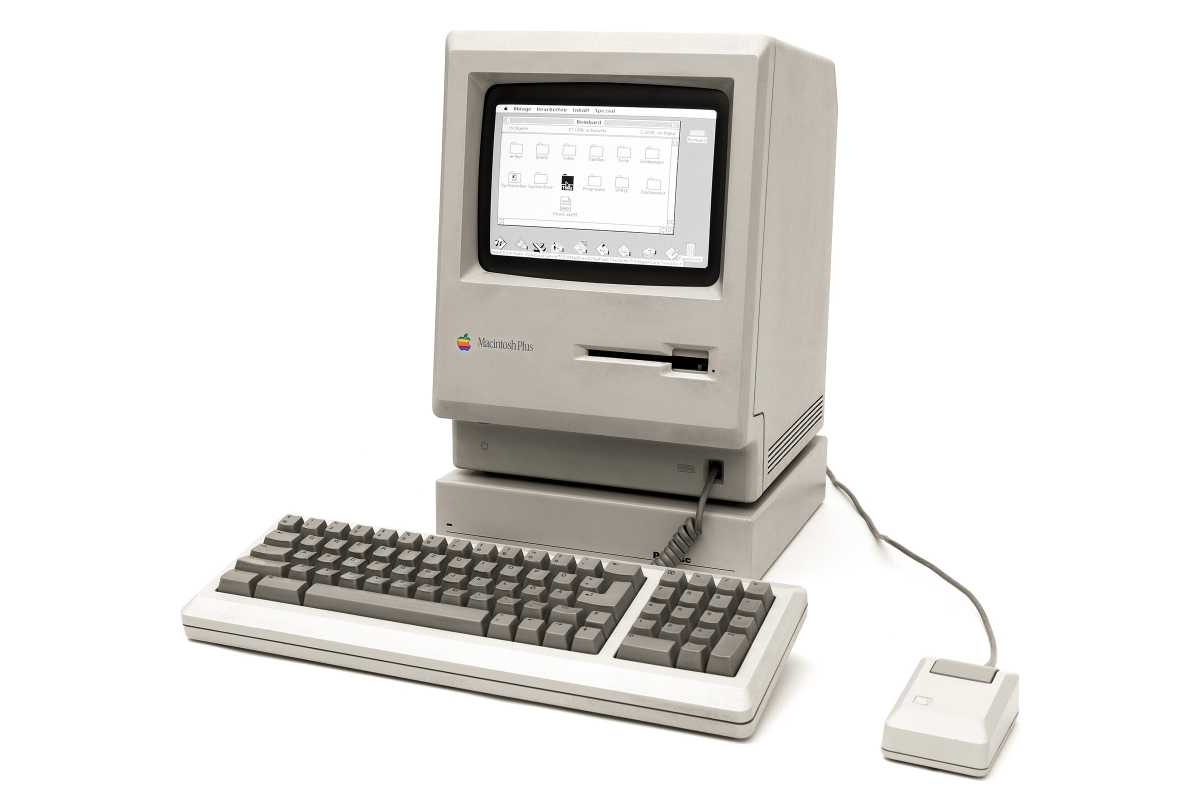
The original Macintosh changed the face of computing when it landed in 1984, and Apple knew it had its work cut out to keep up. But before a true successor arrived, the company released the Macintosh Plus in early 1986.
It wasn’t as flashy as the original Macintosh, but the Macintosh Plus left a lasting legacy of innovation. It was the first Mac with a wide range of features that would later become mainstays among Apple computers: a SCSI port that paved the way for CD drives and hard drives; an 800 KB 3.5-inch double-sided floppy drive and user-upgradable SIMM memory; and an extended keyboard with a numeric keypad and directional arrows.
It was such a substantial Mac that it remained unchanged until October 1990, a total of 1,734 days, one of the longest-lived Macs ever. Combined with frequent discounts, it has remained a favorite among Mac users for years.
March 1987: Macintosh II
Apple
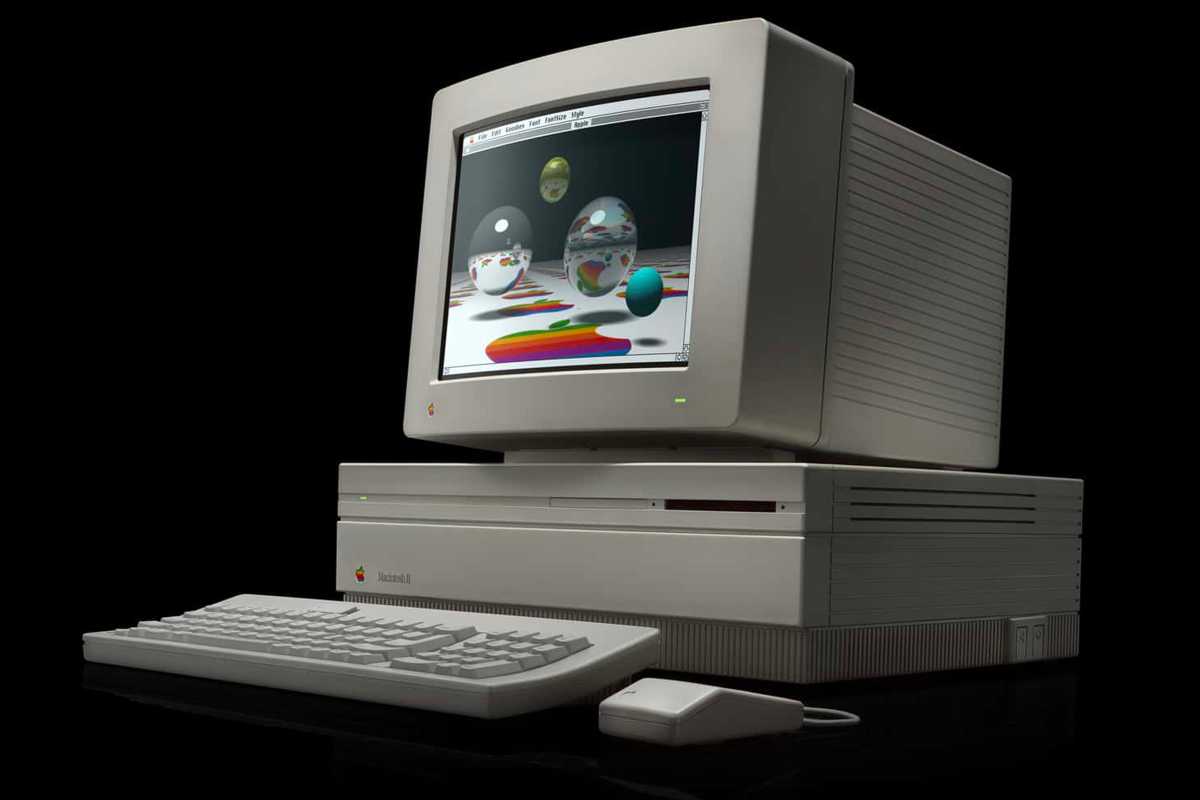
While the Macintosh Plus was something of an interim product, the Macintosh II was the true heir to the 1984 Macintosh. It marked a radical departure from its predecessor in both form and function, and aimed to address major complaints about the first generation model.
While the original Macintosh was a compact all-in-one, the Macintosh II separated its computer and display into modular elements, the first Mac to do this, in fact. This modular design allowed users to provide their own display, but to entice users to stay with Apple, the Macintosh II offered a color display, as well as internal slots for additional hard drives, a feature Jobs originally opposed. But without him, Apple was free to take new risks.
January 1988: LaserWriter II
Apple
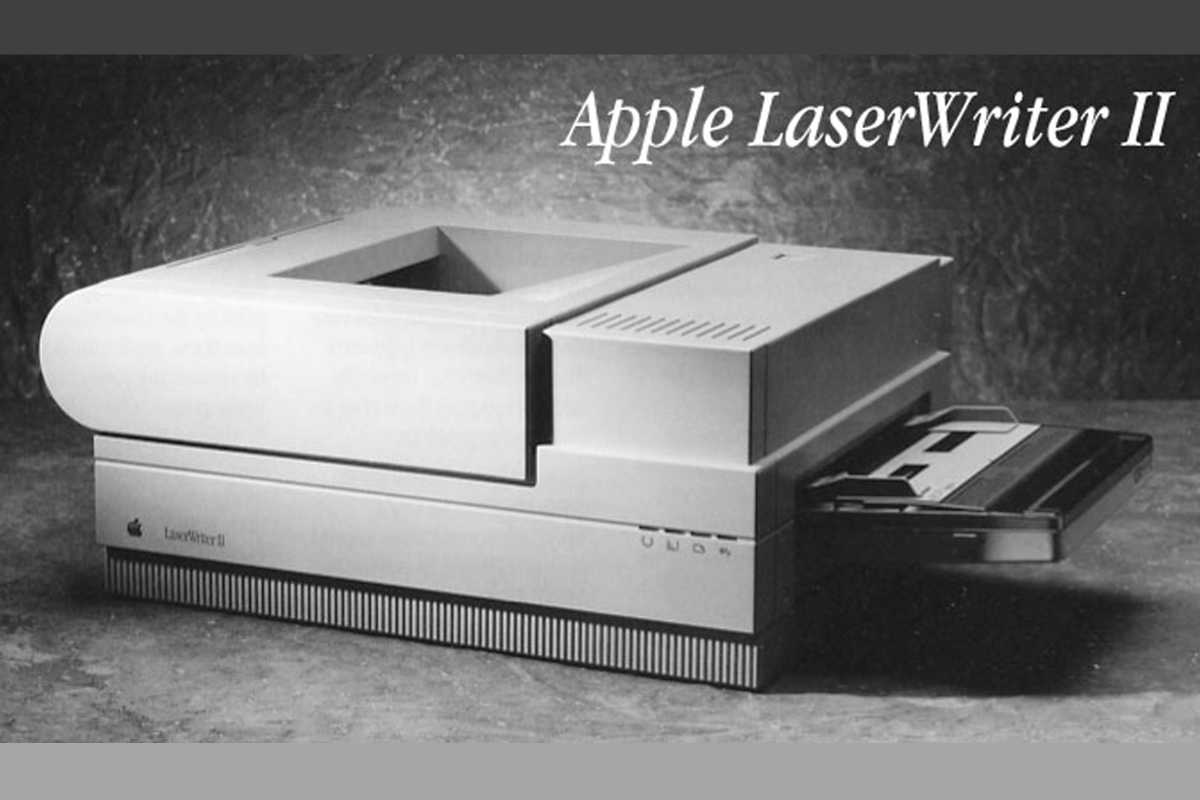
In the mid-1980s, printing documents at home was out of reach for most people. Apple’s LaserWriter helped start the desktop publishing revolution.
The original LaserWriter was launched in 1985 and was an immediate success. The LaserWriter II followed in 1988, and it was intended to expand on its predecessor and solidify Apple’s advantage in this area. It did just that by offering more models at different price points, helping to expand desktop publishing to a wider audience.
The LaserWriter IISC, for example, saved money by omitting PostScript compatibility, meaning Apple didn’t have to pay licensing fees to Adobe. The higher-end LaserWriter IINTX, meanwhile, added a SCSI controller for users wanting to store printer fonts. These products allowed Apple to continue riding the printer wave and partner closely with creative individuals and companies – an association that continues today.
September 1989: Macintosh portable
These days, Apple excels at packing high-end power into thin and light laptops, but that wasn’t always the case. After all, in the late 1980s, the technology simply didn’t exist to make desktop computers truly portable, but that didn’t mean Apple wasn’t willing to try.
The result was the Macintosh Portable, which stands proudly as one of the industry’s first portable computers. Its name might have been a bit misleading, at least by modern standards – this “portable” product tipped the scales at 16 pounds, almost six times the weight of the latest M5 MacBook Air. As the first battery-powered Mac, Apple claimed it would last about 10 hours before needing to be recharged, but it consumed so much power that it needed the battery to start even when plugged in.
Yet it was an undeniably ambitious machine. The Macintosh Portable came with a built-in trackball for mouse use on the go, a high-end active-matrix flip-up display, and a low-power hard drive in an attempt to save battery life. Yet its large, bulky and heavy battery – coupled with its exorbitant price tag which topped $7,000 – doomed it to poor sales and ignominy.
October 1991: PowerBook 100 series
Apple
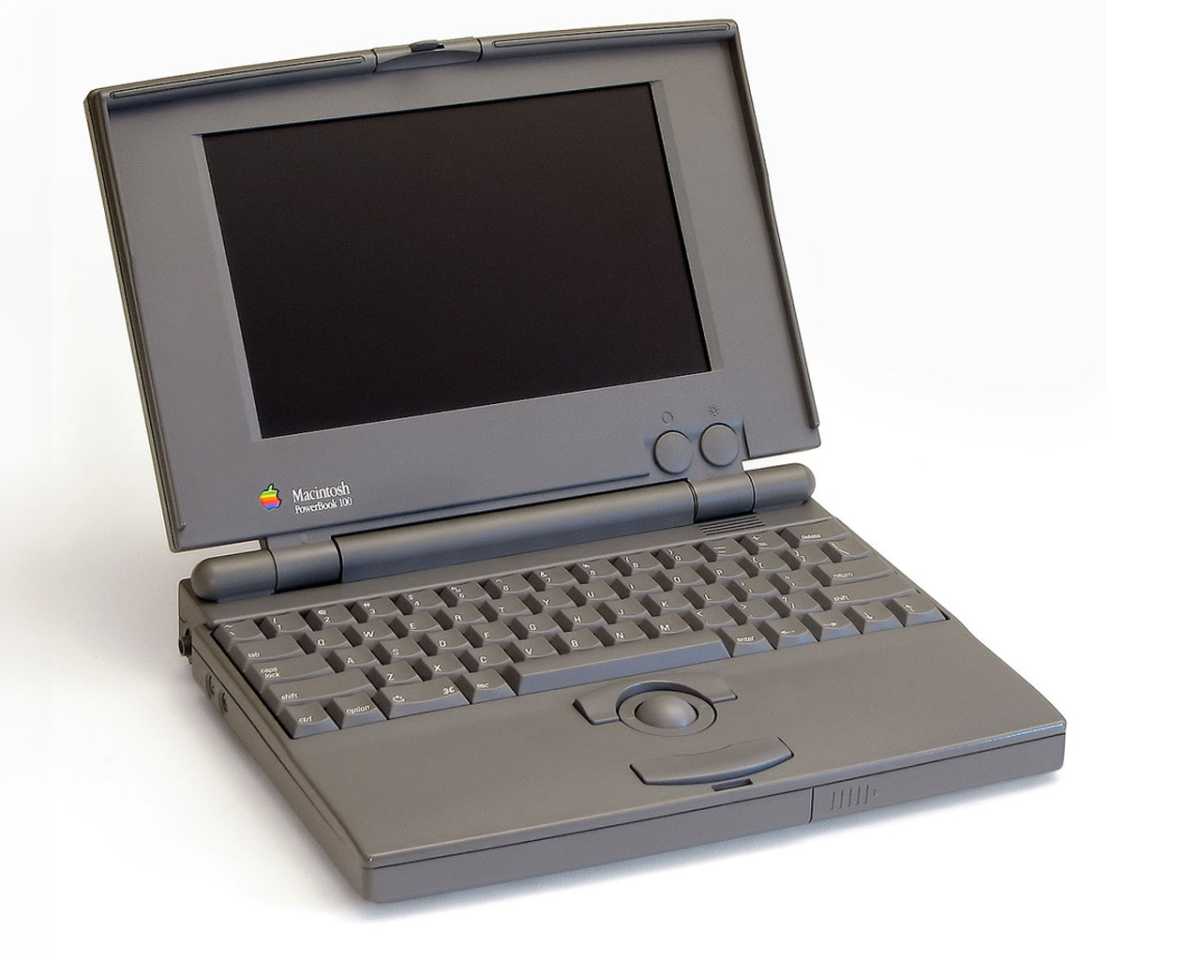
The failure of the Macintosh Portable only proved that there was a market for portable Macs. In reality, the company was just getting started, and it followed with the PowerBook 100 series in October 1991. Comprising entry-level, mid-range, and high-end models, the PowerBook 100 took lessons from the Macintosh Portable and put Apple’s laptop line on the right track.
Indeed, the PowerBook line was everything the Macintosh Portable was not. The PowerBook comes in a sleek new dark gray color scheme and is about a third of the weight of the Macintosh Portable. It also sweated the little things: one of its most lauded innovations was the fact that it included a built-in palm rest under the keyboard, something that’s standard on almost all laptops today.
The initial selection of PowerBooks was an incredible success for Apple and reportedly captured approximately 40% of the laptop market in its first year. The PowerBook 100 was innovative and revolutionary, and is still considered one of its most influential laptops of all time.
May 1992: Newton MessagePad 100
The Newton MessagePad doesn’t have the greatest reputation. However, while Apple’s first PDA was far from perfect, it paved the way for many of Apple’s iconic products.
For example, it was considered one of the most interesting products on display at Apple’s Macworld Expo in August 1993 and sold 50,000 units in its first three months of availability. In the burgeoning world of PDAs, the Newton MessagePad 100 was a visionary product that introduced many of the tools we use today, including handwriting recognition, screen rotation, and adaptive virtual keyboards.
Yet Newton’s initial handwriting system attracted criticism for its inaccurate interpretations of users’ words (although later updates significantly improved its capabilities), while the MessagePad 100’s use of AAA batteries was also suboptimal. But the fact remains that it has had a significant impact on the technological landscape.
February 1994: QuickTake 100
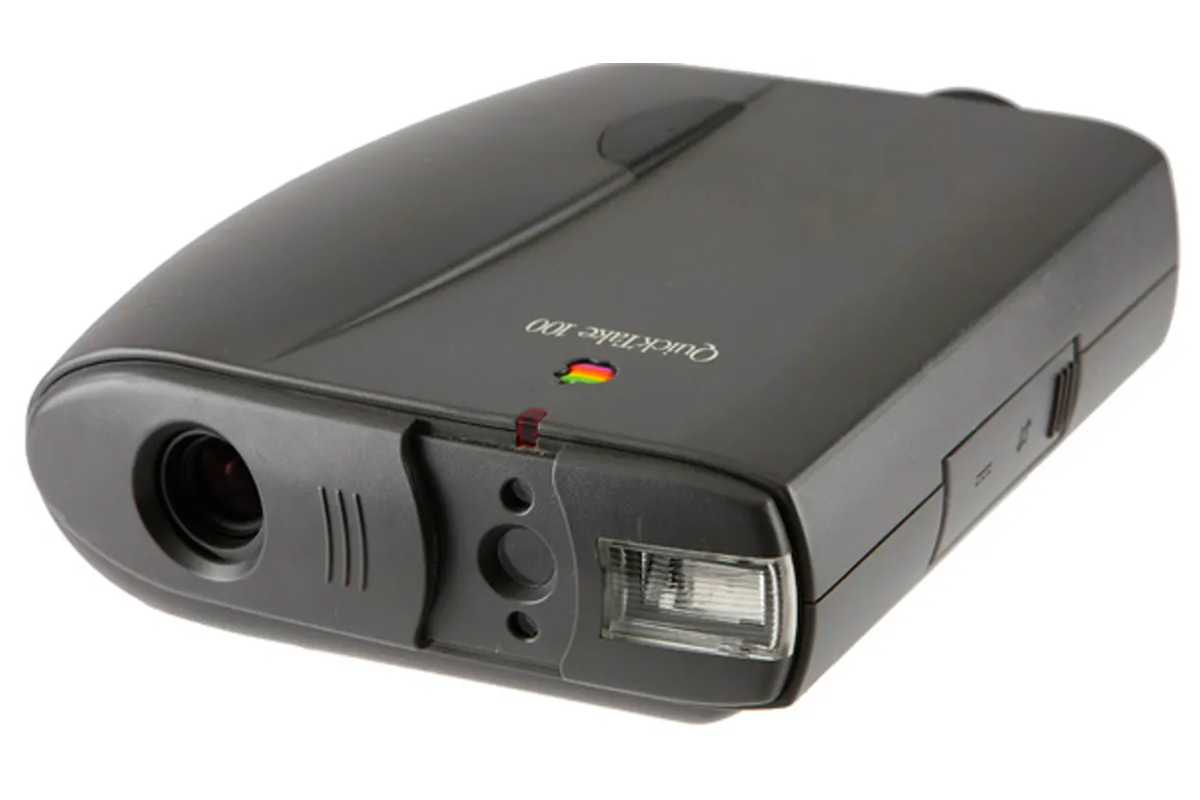
Apple
During the 1980s and 1990s, Apple was more than just a Mac maker, as evidenced by the LaserWriter II and the Newton MessagePad 100. Another product that took Apple’s interests outside of the Mac was the QuickTake 100, one of the first consumer digital cameras and a pioneer in the field.
As is still the case with Apple products today, the QuickTake 100 focused on ease of use as a key selling point, and early reviewers praised its progress in this area. However, by today’s standards, the QuickTake 100 looks somewhat primitive. It could store up to eight photos at 640 × 480 resolution, had no focus or zoom controls, and didn’t even offer a way to preview or delete individual images after capture.
Despite its initial promise and positive reception, the QuickTake line was discontinued – along with other product lines such as the LaserWriter and Newton lines – when Steve Jobs returned to the company in 1997. However, its brief outing showed what was possible when Apple ventured into the world of consumer handheld gadgets.
March 1994: Power Macintosh 6100
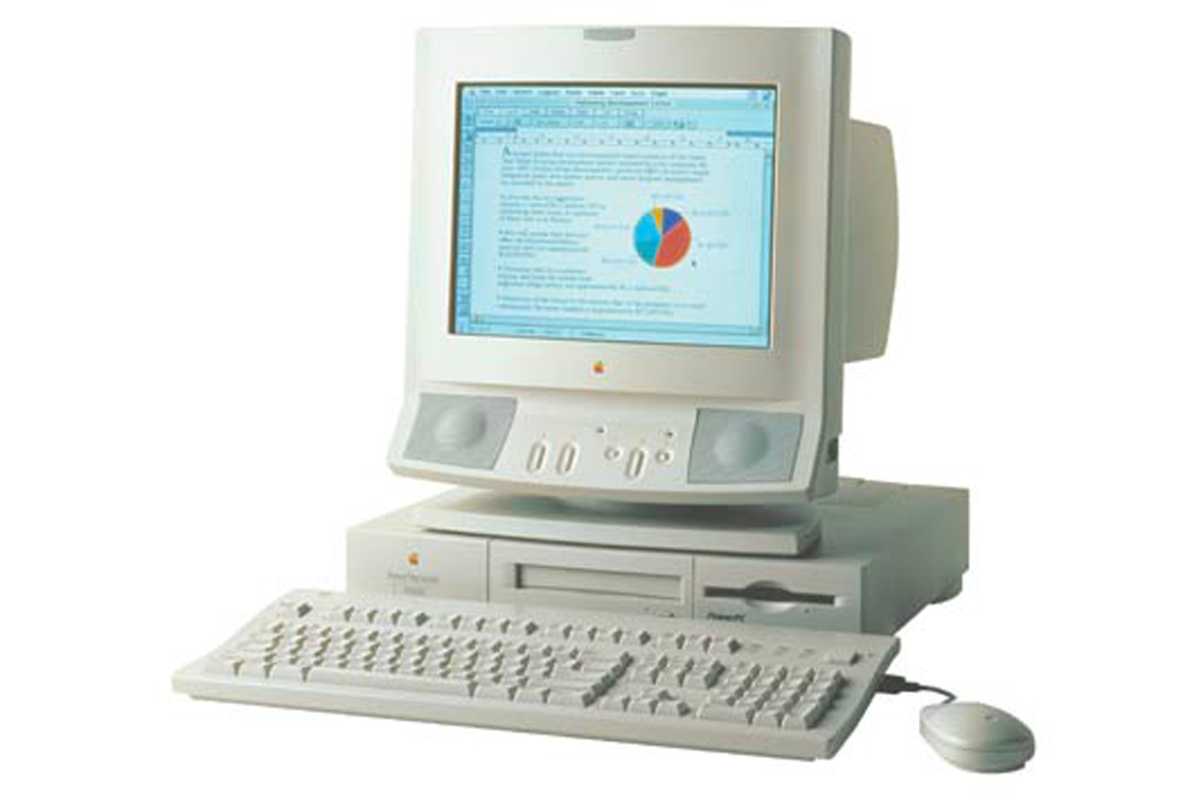
Apple
Since its inception, Apple has a long history of working with Motorola as the primary chip supplier for Apple’s computing lineup. But by the early 1990s, Apple was beginning to become frustrated with Motorola’s inability to keep up with Intel. To remedy the situation, the Apple-Motorola couple called on IBM, the resulting AIM partnership gave birth to the PowerPC processor and the first Mac equipped with these chips: the Power Macintosh 6100.
Named for its 60 MHz PowerPC 601 processor, it has significantly improved performance over the Quadra. As Macworld wrote at the time: “Not only has Apple finally regained the performance lead it lost about eight years ago when PCs appeared using the Intel 80386 processor, it has also pulled ahead.” » A year after its launch, the Power Macintosh line had almost completely replaced all other Mac offerings, while the market for add-on “booster” cards was made redundant due to the reasonable price of Apple’s own booster card. In other words, it was an eye-opening product.
The success of the Power Macintosh underscored Apple’s confidence in its decision to move to PowerPC processors. It was only the first in a series of major architectural redesigns to come, but the Power Macintosh and its PowerPC chips showed that changes (and chip transitions) didn’t have to be painful.


:max_bytes(150000):strip_icc()/Health-GettyImages-1398842526-b1d17d88f1e84e96a9eea5effad5bbca.jpg?w=390&resize=390,220&ssl=1 "5 Ways To Find Out Your Blood Type—and Why You Should Know")