As Glaciers Retreat, Powerful Volcanoes May Erupt More Frequently Across the Planet


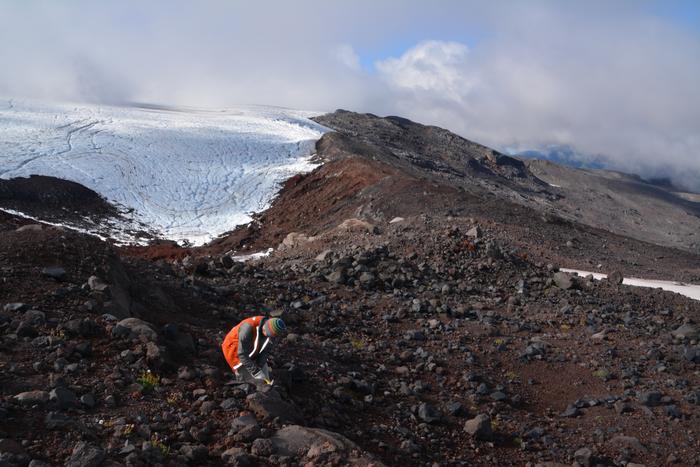
In recent decades, the merger of glaciers and eruption volcanoes have been two events that have drawn the attention of scientists and the general public. But have you ever thought about how these two processes could be linked?
New research presented to Goldschmidt conference suggests that climate change is the link between the merger of glaciers and the explosion of volcanoes. While glaciers continue to withdraw due to global warming, the earth is likely to undergo more frequent and more powerful volcanic eruptions.
This is not the first study to establish links between the behavior of glaciers and volcanoes, as scientists have monitored volcanoes in Iceland for this exact thing. However, this is the first to focus on continental volcanic systems such as those of Antarctica and North America.
“Our study suggests that this phenomenon is not limited to Iceland, where increased volcanity has been observed, but could also occur in Antarctica. Other continental regions, such as parts of North America, New Zealand and Russia, also deserve narrow scientific attention,” said Pablo Moreno-Yaeger, of Wisconsin-Madison University, press release.
Find out more: Volcanic alert systems helped ensure people’s safety during the eruption of Mount Lewotobi Laki-Laki
How are glaciers and volcanoes linked?
Understand the relationship between Melt the glaciers And volcanoes, we have to look back towards the last ice age.
At the height of the last glacial period, about 26,000 to 18,000 years ago, there was a thick ice covering a large part of the earth. This thick sheet of ice has maintained volcanic eruptions remotely, but the magma continued to increase by 10,000 to 15,000 meters underground.
At the end of the ice age and that the glaciers began to melt quickly, it was as if the top had been removed from a bottle of shaken soda. With the weight of the released ice, the built magma was able to develop, forming and exploding volcanoes.
“The glaciers tend to remove the volume of eruptions from volcanoes below. But as glaciers withdraw due to climate change, our results suggest that these volcanoes continue to break out more frequently and more explosively,” said Moreno-Yaeger in the press release. “The main requirement for increased explosiveness is initially a very thick glacial blanket on a magmatic chamber, and the trigger point is when these glaciers begin to withdraw, releasing the pressure – which currently occurs in places like Antarctica.”
Glacial and volcanic behavior
This research project focused on six volcanoes located in the Chilean Andes, where Patagonia’s ice cap has progressed and removed over time. In order to follow the influence of the glacial cap on volcanoes, scientists have used Argon dating and crystal analysis to date both both the previous volcanic eruptions and the rocks that have been left. This double analysis allowed the team to understand how glaciers affected the Magma Deep Underground.
The study also provided new understanding of volcanoes, as well as the way of better predicting when a volcano can become active in relation to the glacial merger. The volcanic eruptions caused by the elimination of ice pressure may seem to occur quickly, but the many changes that occur on the Underground magma take centuries. Monitoring these changes can be used to provide a better Early alert systems.
Volcanoes and climate change: a vicious circle
Volcanoes and climate change have a unique relationship. The merger of glaciers can increase volcanic activity. This activity, in turn, and isolation, can temporarily cool the planet thanks to aerosols released in the air after eruptions.
However, the research team warns that the expected increase in explosive volcanic eruptions will have the opposite effect.
“Over time, the cumulative effect of several eruptions can contribute to long -term global warming due to an accumulation of greenhouse gas.
Learn more:: Iceland uses dirt to protect cities from volcanic lava
Article Sources
Our writers at Discovermagazine.com Use studies evaluated by high -quality peers and sources for our articles, and our publishers examine scientific precision and editorial standards. Review the sources used below for this article:
As a Marketing Coordinator of Discover magazine, Stephanie Edwards interacts with readers through the social networks of Discover and writes digital content. Offline, she is responsible for courses in English and cultural studies at Lakehead University, by teaching lessons on everything, from professional communication to Taylor Swift, and obtained her graduate diplomas in the same department of McMaster University. You can find more of its scientific writing in the laboratory and its short fiction in anthologies and the literary magazine through the kind of horror.


