
A Milwaukee, Wisconsin, detective had an unconventional idea of how to help solve the murder of 19-year-old college student Sade Robinson.
It all began in April 2024, when the charred remains of Robinson’s car were found behind an abandoned building in Milwaukee. At the time, first responders weren’t immediately alarmed for her safety.
Sheena Scarbrough 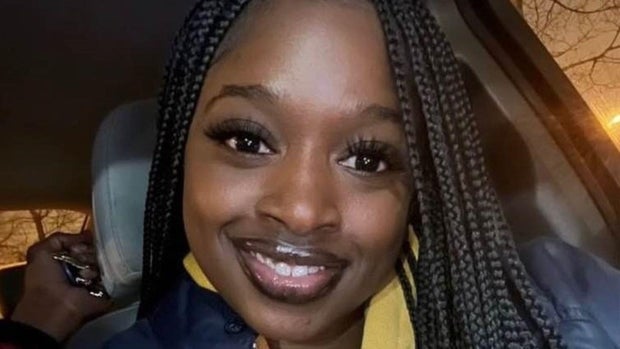
“An abandoned car … on fire doesn’t necessarily mean that the driver’s in danger?” asked correspondent Anne-Marie Green in “Sade Robinson and The Secret Beach,” an all-new “48 Hours” now streaming on Paramount+.
“No, no,” replied lead Detective Jo Donner of the Milwaukee County Sheriff’s Office.
But then the fire investigator noticed that the passenger side of the vehicle smelled heavily of a petroleum distillate.
This was arson.
CBS 58/Trial pool 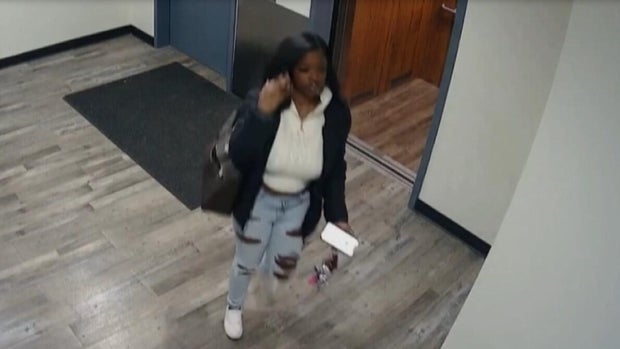
Law enforcement learned that the night before the car fire, Robinson had gone on a first date but had not been seen since.
Donner and her team examined Robinson’s damaged car for clues. Though the fire had ruined any chance of obtaining DNA or fingerprints, investigators were able to recover crucial evidence.
“Underneath the driver’s seat, Sade’s purse was tucked under there,” Donner pointed out. “To me it definitely eliminates a robbery, right?”
CBS News 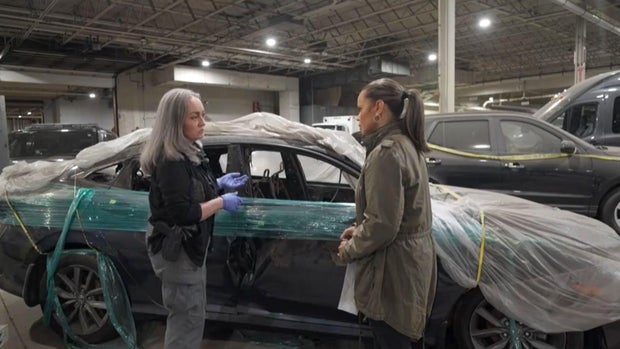
The position of the car’s driver’s seat caught Donner’s attention.
“I noticed that the level of fire damage … that’s gonna lock that seat in,” the detective said. “That seat position is kind of frozen in time.”
This led Donner and her team to wonder if someone else had driven Robinson’s car to that abandoned building. Donner decided to perform an experiment.
“We take note of the seat positioning, cause that’ll give height indicators,” Donner explained. “I was able to determine about how far back that seat was. I then went to a dealership and found an identical model.”
With the driver’s seat in the same position as the one in Robinson’s vehicle, Donner found a deputy who was about Robinson’s height.
Milwaukee County Sheriff’s Office 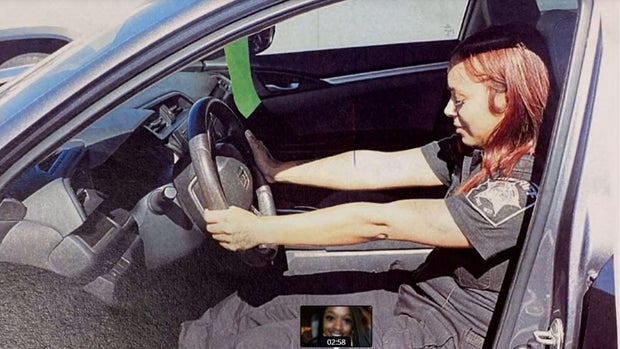
“And when she sat in the car, she couldn’t touch the pedals. Her arms were straight out and she’s like, ‘There’s no way. I can’t drive like this without perching on the very edge of the seat,'” Donner said.
Donner also had a taller detective sit in the car.
Milwaukee County Sheriff’s Office 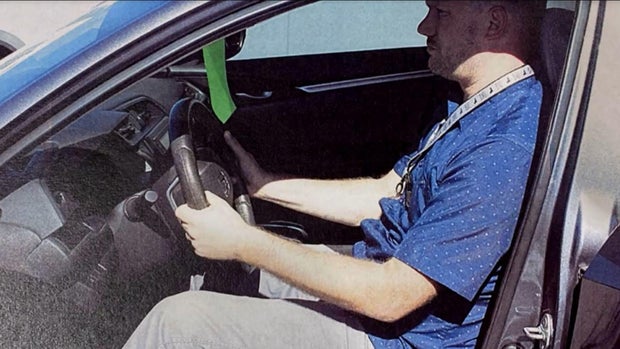
“It was a very comfortable seat position for him,” said Donner.
Based on her experiment, Donner says the last person to drive Robinson’s car had to be at least 6 feet tall.
“There’s no way Sade was the last person in that driver’s seat,” said Green.
“No way. No, no,” Donner confirmed.
As investigators worked to find Robinson, they quickly tracked down the man she had gone on that date with: a 6-foot-1-inch bartender named Maxwell Anderson.
On April 12, 2024, law enforcement confirmed that Robinson had been killed. That same day, Anderson was charged with Robinson’s murder.
Anderson would later say he had nothing to do with Robinson’s death.


