As tetanus vaccination rates decline, doctors worry about rising case numbers

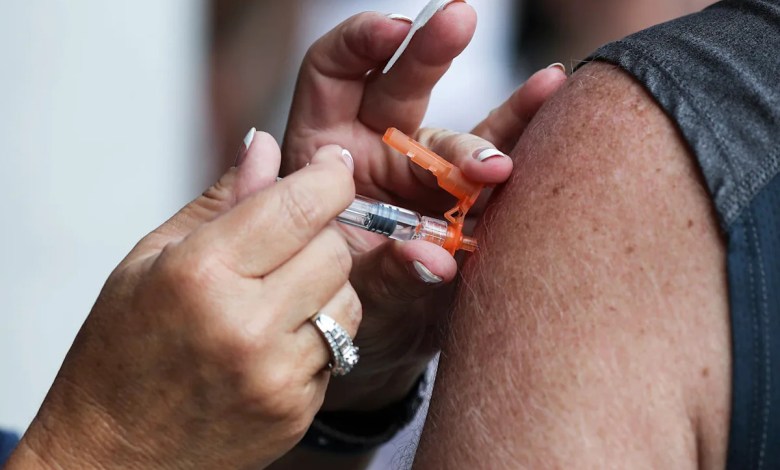
Every doctor wants to see a smile on a patient’s face, but there’s one that no doctor ever wants to see: risus sardonicus, sometimes known as a sardonic smile or devil’s smile, the cruel mark of a tetanus infection.
After decades of success against tetanus in the United States, there are worrying signs that the deadly bacterial infection may be making a comeback, a result of declining vaccination combined with an increase in natural disasters linked to climate change that can increase the risk of exposure.
In 1948, when the tetanus vaccine was first linked to diphtheria and whooping cough, 601 cases of tetanus were reported in the United States. In recent years, this figure has fallen to around 15 to 28 cases annually.
In 2024, however, there have been 32 cases. This year there have been at least 37 confirmed cases, the highest figure in more than a decade.
An NBC News/Stanford University investigation found widespread declines in tetanus vaccinations in preschools. In states that provided data dating back to 2019, more than 75% of U.S. counties and jurisdictions saw a downward trend in the number of young children receiving the diphtheria, tetanus, and pertussis (DTaP) vaccine series. The vaccine is first given to babies at 2 months of age.
Because tetanus is not spread from person to person, there is no threshold for herd immunity, but reduced vaccination rates make more people vulnerable to the disease.
Doctors are even worried about a slight increase in this terrible infection, often called tetanus. Symptoms, which can take three to 21 days to appear, include muscle spasms that make breathing difficult. As the infection sets in, the patient’s jaw clenches, forcing the face into what appears to be a wide smile, and the back muscles twist into a painful arch.
“It looks terrible,” said Dr. Mobeen Rathore, chief of pediatric infectious diseases and immunology at the University of Florida College of Medicine in Jacksonville.
Tetanus bacteria lives in soil and manure. Infection may occur following a puncture wound, and illness may persist for weeks of medical care.
Treatment can be arduous and expensive. An unvaccinated 6-year-old boy in Oregon racked up nearly $1 million in medical bills after contracting tetanus in 2019, according to a case report from the Centers for Disease Control and Prevention.
Rathore compared the cost of vaccines to the cost of intensive care.
“It’s not even pennies to dollars, it’s pennies to hundreds of thousands of dollars,” Rathore said. “It’s very expensive.”
When an unvaccinated 9-year-old patient arrived in Rathore with muscle spasms in Florida this year, he recognized the signs. He remembered the tetanus wards from his years in medical school, where patients were treated in dark, silent isolation.
“The slightest noise would cause spasms in many of these patients,” Rathore said.
Tetanic spasms, which can also be triggered by light (called “photophobia”), are extremely painful and can tighten the muscles around the airways.
Amid the bright lights, loud noises and incessant beeping of the hospital’s intensive care unit, options were limited to minimize stimulation for Rathore’s young patient. The 9-year-old was sedated, intubated and given tetanus antibodies and the vaccine to reduce future risk of illness.
The child was hospitalized for 37 days.
Dr. Matthew Davis, chief medical officer and scientific director of Nemours Children’s Health in Florida and Delaware, said that “it wasn’t until we had widespread vaccination that we saw a decline in tetanus cases and therefore a reduction in mortality risk from that.” »
John Johnson, immunization and epidemic response advisor at Médecins Sans Frontières, works in countries like the Democratic Republic of Congo (DRC) where tetanus remains a concern. Last year, there were 540 cases in the DRC, according to the World Health Organization.
“It’s one of those things that’s so stupidly easy to prevent,” Johnson said. “If you see a case of tetanus in the United States, that’s too bad. There’s no reason why we should still be dealing with this disease.”
“My jaw was completely shut.”
After the first series in childhood, a booster dose is recommended every 10 years for adults, although many are unaware of the need.
Nikki Arellano, 42, hadn’t received a tetanus shot since 2010, when she was injured while helping her friend plan a wedding last month. An accident with a metal arch near the altar left him with a slight cut to his leg. The following week, she had difficulty chewing during lunch at work due to jaw pain.
Two days later, she could no longer open her mouth.
“My jaw was completely shut,” said Arellano, of Reno, Nevada. “I went to the emergency room and they tried to give me a bunch of sedatives, painkillers and muscle relaxers to open my jaw, but nothing would make it open.”
Arellano was diagnosed with tetanus and admitted to the hospital. She was connected to an IV pump so she could receive antibiotics.
“Every time it wore out, it was like a really, really loud beep. When it started, that’s when my muscle twitches broke out,” she said.
Arellano said his spasms first started in one arm, then progressed to both arms and then to full-body spasms. “It would really arch your back, like it was really really painful muscle spasms.”
Arellano began having difficulty swallowing, leading to concerns that his airway might be compromised.
“It was very scary,” she said.
She was hospitalized for almost a week and is still recovering.
Increased risk with climate change
Natural disasters such as hurricanes, tornadoes and floods are known risk factors for tetanus outbreaks. When people dig through rubble, they also risk being injured by loose nails or shards of broken glass.
“As the Earth warms, there are already documented increases in the frequency, intensity and duration of many extreme weather and climate events,” said Kristie Ebi, an epidemiologist and professor of global health at the University of Washington who studies the health effects of climate change. “And as there are more floods, fewer vaccinations against diseases like tetanus mean people are at greater risk. »
Some states at highest risk of significant natural disasters, including Florida, Texas and Kansas, are seeing notable declines in tetanus vaccinations, according to NBC News data.

A woman walks down a flooded street in Osprey, Florida in 2024 following Hurricane Milton. (Sean Rayford File/Getty Images)
Florida, where Rathore practices, suffered the most damage last year in the United States from billions of dollars’ worth of weather and climate events, according to the National Centers for Environmental Information.
Meanwhile, NBC News data reveals that kindergarten DTaP vaccination rates have declined in the state, from a high of 94.1% in the 2016-17 school year to 88.8% in 2024-25. Broward County, for example, is one of the most hurricane-risk counties in the United States, and it saw an overall vaccination rate of 82.2% during the 2024-2025 school year.
In Texas, which has experienced severe weather and climate disasters in recent years, NBC News data shows that 85% of counties have seen a decline in DTaP rates in preschools since 2019.
Several Central Texas counties have seen a sharp decline in DTaP vaccination rates over the past decade.
Kansas is hit by about 81 tornadoes per year, according to the National Weather Service. In Ford County, which experiences the most tornadoes in the state, 83.98% of kindergartners were vaccinated against tetanus during the 2024-25 school year.
Ford County experienced the most tornadoes in Kansas. In the 2024-25 school year, 83.98% of kindergarten students were vaccinated against tetanus.
A recent case report from Kansas details the illness of an unvaccinated 16-year-old boy after a puncture wound on his foot became infected. Initially treated at home with burdock leaves and bread mold, his spasms worsened and he began having difficulty swallowing. He was hospitalized a week later.
For 40 days he underwent intensive care with sedatives and muscle relaxants. He developed pneumonia and pressure sores associated with ventilation. He also required physical and speech therapy to help him recover.
He received a tetanus shot as part of his treatment, but his family refused further shots when he left the hospital, the report said.
Rathore worries about a ‘post-vaccination era’.
“It’s a shame that the children are suffering.”
This article was originally published on NBCNews.com


